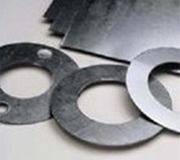
Kaxite Sealing manufactures the tanged metal reinforced graphite gasket category at our Ningbo plant. The KXT-1010 is produced from 98% pure exfoliated graphite reinforced with a central layer of 0.1 mm tanged stainless steel, compressed without adhesives. That mechanical tanged core is what lifts the pressure rating to 200 bar — five times the pure graphite limit — while keeping the same −240 °C to +550 °C temperature range and pH 0–14 chemical range. UL certified. Sheet and finished gaskets produced in-house, not traded.
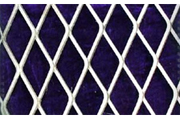
Graphite is mechanically interlocked into the tanged perforations — no adhesives used anywhere in the construction.
The tanged metal reinforced graphite gasket is the workhorse of the Kaxite graphite family. It is the version most often specified when a pure graphite gasket has been blamed for a blow-out, a crushed joint, or a leak after a pressure spike — because the failure was really the missing metal core, not the graphite itself.
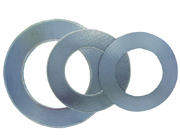
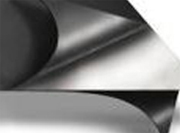
Standard expanded graphite on both outer faces. Conforms to flange imperfections and delivers the full temperature and chemical range. Nothing has been added or blended into the graphite.
A very thin perforated stainless sheet with raised tangs. The graphite is compressed into the perforations and locked behind the tangs — this is what resists blow-out and crushing without any adhesive layer that could delaminate in service.
Because the bond is mechanical, the gasket does not split into layers when the flange is opened, and the graphite cannot peel off the core during thermal cycling. That is why the KXT-1010 is the standard choice on flanges that will be opened for inspection more than once.
All four graphite gasket categories in the Kaxite family use the same expanded graphite sealing material and cover the same −240 °C to +550 °C and pH 0–14 range. What changes is the reinforcement — and the reinforcement is what decides the pressure rating and the correct flange.
| Property | Tanged Metal KXT-1010 — this category | Pure Graphite KXT-1000 | Flat Foil KXT-1020 | Metal Mesh KXT-1030 |
|---|---|---|---|---|
| Core type | 0.1 mm perforated tanged stainless steel | None | Solid flat metal foil | Woven stainless steel mesh |
| Pressure rating | 200 bar | 40 bar | 200 bar | 200 bar |
| Recovery | ≥ 20 % | ≥ 10 % | ≥ 20 % | ≥ 20 % |
| Compressibility | 15 – 35 % | 30 % | 15 – 35 % | 15 – 35 % |
| Blow-out resistance | Strong — tangs mechanically lock the graphite | Low — no reinforcement | Moderate — foil is a barrier not a lock | Strong — mesh interlocks the graphite |
| Handling rigidity | High — holds shape without support | Low — large gaskets may need a carrier | Moderate | Highest — DN1000+ handled without support |
| Effect on flange face | Standard — no scratches on hardened faces | Standard | Gentle — protects soft faces | Standard |
| Temp × pH range | −240~+550 °C / 0–14 | −240~+550 °C / 0–14 | −240~+550 °C / 0–14 | −240~+550 °C / 0–14 |
| Eyelets | With or without | Not applicable | With or without | With or without |
| Dimension standard | ASME B16.21 / DIN 2690 / drawing | ASME B16.21 / DIN 2690 / drawing | ASME B16.21 / DIN 2690 / drawing | ASME B16.21 / DIN 2690 / drawing |
Four graphite gasket categories, four different reinforcement cores. Use the cards below to decide whether this category is the correct choice for your flange, or whether one of the other three belongs on the job instead.
No metal reinforcement. Standard for non-standard shapes at the chemical or temperature extreme.
0.1 mm perforated tanged stainless core. Highest blow-out resistance on hardened steel faces at 200 bar.
Solid flat foil core keeps both sealing faces smooth. Protects soft, machined or glass-lined faces at 200 bar.
Woven stainless mesh core — highest handling rigidity in the family. Standard for DN1000+ and manway covers.
Boiler and superheater flanges above the pure graphite 40 bar limit, where the flange face is hardened steel and blow-out is the primary risk.
Hydrocarbon and hydrogen flanges that combine high pressure with thermal cycling between shutdown and operating temperature.
Acid and alkaline service across pH 0–14 at pressures that would deform a pure graphite gasket — one material covers the whole chemical range.
Shell-side flanges under pressure spikes during start-up and shutdown, where the gasket has to recover after thermal cycling without losing the seal.
Gaskets that will be disassembled for inspection between service intervals — the mechanical lock means no delamination after the first re-open.
Turbine auxiliary and combined-cycle steam flanges where high pressure and high temperature occur together on hardened flanges.
Confirm ASME B16.21 or DIN 2690, nominal size, pressure class, thickness and whether eyelets are required.
Standard sizes need no drawing. For non-standard flanges, our engineers confirm bolt circle, gasket OD and eyelet positions before cutting.
Die cut or CNC cut to the confirmed dimensions, then eyelets fitted if ordered. Core integrity is checked after cutting — a damaged tanged core is a rejected gasket.
Dimensional check against the ordered standard. ASTM F36A test report, material certificate and dimensional report available per shipment.
98% pure exfoliated graphite compressed around a 0.1 mm perforated tanged stainless steel core. The graphite is mechanically interlocked into the perforations during sheet forming — no adhesives are used at any stage of the construction. That is what lets the gasket carry 200 bar and resist blow-out without the delamination risk of an adhesive-bonded composite.
Temperature range (−240 °C to +550 °C) and pH range (0–14) are identical, but the pressure rating and recovery are not. The tanged metal gasket is rated 200 bar versus 40 bar for pure graphite, and recovers ≥20% versus ≥10%. That is a 5× pressure increase and a 2× recovery improvement, coming entirely from the tanged stainless steel core.
Tanged metal is the correct choice when the flange face is hardened steel and the priority is blow-out resistance under pressure spikes. Choose flat foil instead when the flange face is soft, machined, non-metallic or glass-lined and must stay scratch-free. Choose metal mesh instead when the gasket is DN400+ or a manway cover that has to stay flat during vertical lifting — the mesh core gives higher handling rigidity.
Yes. Non-standard flange, oval handhole, rectangular access cover and manifold gaskets are cut to a DXF or PDF drawing. Because the tanged core must not be damaged during cutting, our engineers confirm bolt circle, gasket OD and eyelet positions before cutting starts. Send the drawing with the inquiry for a feasibility check.
Material certificate and dimensional report against the ordered standard are available per shipment on request. ASTM F36A test report including compressibility and recovery can be supplied for critical service. UL certificate reference is available on request. Gaskets are packed flat between rigid boards to protect the sealing faces.
Standard ASME and DIN sizes ship from stock sheet. Custom-cut shapes, eyelet versions and split gaskets are produced to order. For the MOQ and lead time on your specific size, send the standard, nominal size, thickness, eyelet requirement and quantity through the inquiry form — our engineers reply within one business day with pricing and delivery.
Include the gasket standard (ASME B16.21 or DIN 2690) or a drawing, the nominal size and pressure class, the thickness, the eyelet requirement and the quantity. Our engineers reply within one business day with pricing, core confirmation and lead time.

Kaxite Sealing manufactures the KXT-1010 tanged metal reinforced graphite gasket from expanded graphite mechanically bonded to a perforated tanged metal core on both faces — no adhesives. Rated 200 bar pressure (5× the pure graphite rating) with recovery ≥20% and compressibility 15–35% to ASTM F36A, while keeping the same −240 °C to +550 °C temperature range and pH 0–14 chemical range as pure graphite. Supplied with or without eyelets, cut to ASME B16.21 or DIN 2690 or to drawing. UL certified. Dimensional report and material certificate per shipment on request.