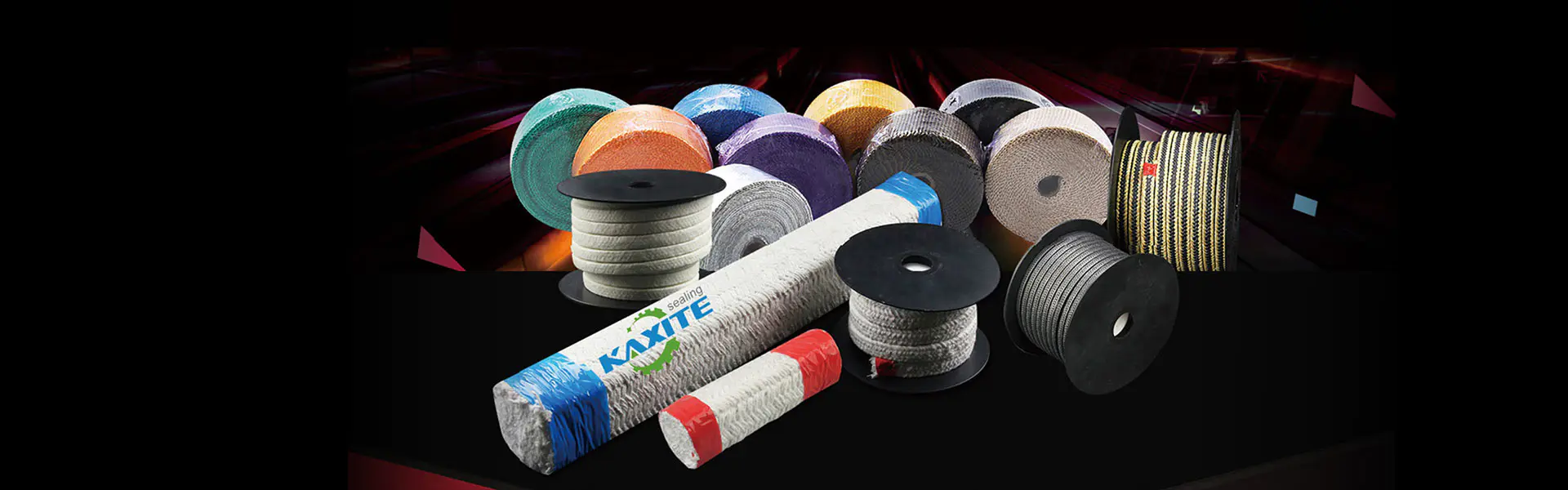
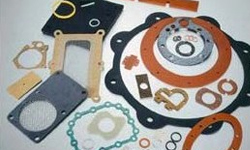
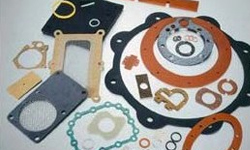
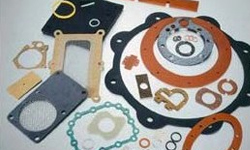
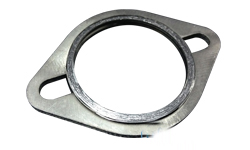
Rubber gaskets are foundational components in modern engineering, serving as critical sealing elements that prevent the leakage of fluids and gases while protecting systems from environmental contaminants. At Kaxite Sealing, we specialize in the design, formulation, and manufacturing of high-performance rubber gaskets that meet the rigorous demands of industries worldwide. Our commitment to precision, material science, and durability ensures that every gasket we produce provides a reliable, long-lasting seal, optimizing operational efficiency and safety.
### Understanding Rubber Gaskets: Function and Importance
A rubber gasket is a mechanical seal designed to fill the space between two or more mating surfaces, primarily to prevent leakage under compression. Unlike rigid seals, rubber gaskets offer flexibility and resilience, allowing them to conform to surface imperfections, accommodate thermal expansion and contraction, and dampen vibration. This makes them indispensable in applications where a tight, pressure-resistant seal is paramount.
The primary functions of a rubber gasket include:
* **Sealing:** Creating a barrier against liquids, gases, dust, and dirt.
* **Pressure Containment:** Maintaining seal integrity under varying internal and external pressures.
* **Vibration Dampening:** Absorbing shock and reducing noise between connected components.
* **Compensation:** Filling irregularities in flange surfaces to ensure uniform contact and pressure distribution.
* **Insulation:** Providing electrical or thermal insulation in specific applications.
### Kaxite Sealing's Advanced Material Formulations
The performance of a rubber gasket is intrinsically linked to its material composition. Kaxite Sealing utilizes a comprehensive range of elastomers, each engineered for specific environmental and operational challenges. Selecting the correct material is the first critical step in ensuring gasket longevity and functionality.
Our core material offerings include:
**1. Nitrile Rubber (NBR/Buna-N)**
* **Key Property:** Excellent resistance to oils, fuels, and hydrocarbons.
* **Temperature Range:** -40°C to +120°C (-40°F to +248°F).
* **Typical Applications:** Automotive fuel systems, hydraulic equipment, oil and gas pipelines.
**2. Ethylene Propylene Diene Monomer (EPDM)**
* **Key Property:** Superior resistance to weathering, ozone, steam, and polar chemicals.
* **Temperature Range:** -50°C to +150°C (-58°F to +302°F).
* **Typical Applications:** HVAC systems, automotive cooling systems, plumbing fixtures, outdoor electrical enclosures.
**3. Fluoroelastomer (FKM/Viton®)**
* **Key Property:** Exceptional resistance to high temperatures, fuels, oils, and aggressive chemicals.
* **Temperature Range:** -20°C to +230°C (-4°F to +446°F).
* **Typical Applications:** Aerospace, chemical processing, high-temperature automotive seals.
**4. Silicone Rubber (VMQ)**
* **Key Property:** Stable performance across an extreme temperature range, flexible at low temperatures, biologically inert.
* **Temperature Range:** -60°C to +230°C (-76°F to +446°F).
* **Typical Applications:** Food and beverage processing, medical devices, lighting gaskets, high-temperature baking seals.
**5. Neoprene (CR)**
* **Key Property:** Good all-purpose resistance to weather, ozone, moderate oils, and flame.
* **Temperature Range:** -40°C to +100°C (-40°F to +212°F).
* **Typical Applications:** Electrical gaskets, refrigeration units, marine and industrial seals.
### Detailed Product Parameter Specifications
At Kaxite Sealing, we provide gaskets with precise dimensional tolerances and physical properties tailored to your application. Below are detailed parameters for our standard and custom gasket offerings.
#### Physical Properties Table (ASTM Test Standards)
This table outlines the typical physical properties of our most commonly used elastomer compounds.
| Material Grade | Hardness (Shore A) | Tensile Strength (MPa) | Elongation at Break (%) | Compression Set (22 hrs @ 70°C) |
| :--- | :--- | :--- | :--- | :--- |
| **NBR-70** | 70 ±5 | 12.5 Min | 350 Min | 25% Max |
| **EPDM-75** | 75 ±5 | 14.0 Min | 300 Min | 20% Max |
| **FKM-75** | 75 ±5 | 15.0 Min | 200 Min | 15% Max |
| **Silicone-60** | 60 ±5 | 7.0 Min | 400 Min | 25% Max |
| **Neoprene-60** | 60 ±5 | 10.0 Min | 400 Min | 30% Max |
#### Chemical & Environmental Resistance Chart
Selecting a gasket requires understanding its compatibility with the media it will contact.
| Material | Water | Steam | Ozone/Weather | Petroleum Oils | Acids (Dilute) | Alcohols |
| :--- | :--- | :--- | :--- | :--- | :--- | :--- |
| **NBR** | Good | Poor | Fair | **Excellent** | Good | Good |
| **EPDM** | **Excellent** | **Excellent** | **Excellent** | Poor | Good | Good |
| **FKM** | Good | Good | **Excellent** | **Excellent** | **Excellent** | **Excellent** |
| **Silicone** | Good | Fair | **Excellent** | Poor | Fair | Good |
| **Neoprene** | Good | Fair | **Excellent** | Good | Fair | Good |
*Legend: Excellent = Highly Recommended, Good = Suitable for Intermittent/Light Exposure, Fair = Limited Use, Poor = Not Recommended.*
#### Standard Gasket Profiles & Dimensions
Kaxite Sealing manufactures gaskets in a wide variety of profiles. Custom shapes and sizes are available upon request with detailed technical drawings.
| Profile Type | Common Cross-Section | Typical Applications | Key Advantage |
| :--- | :--- | :--- | :--- |
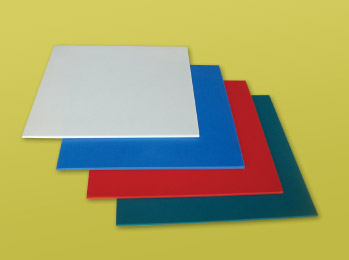
| **Sheet Gaskets** | Cut from flat sheets of material. | Flange connections, access panels, machinery housings. | Cost-effective, versatile for large, simple shapes. |
| **O-Rings** | Circular, toroidal (doughnut-shaped). | Dynamic & static seals in pistons, pumps, valves. | Excellent bi-directional sealing in grooves. |
| **Extruded Seals** | Continuous strips (D-shape, P-shape, U-channel). | Doors, windows, enclosures, automotive panels. | Conforms to long, straight, or curved perimeters. |
| **Molded Gaskets** | Complex, custom 3D shapes. | Engine components, specialized equipment, connectors. | Precise fit for intricate geometries and high volumes. |
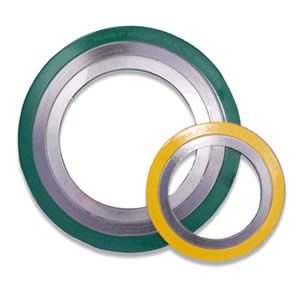
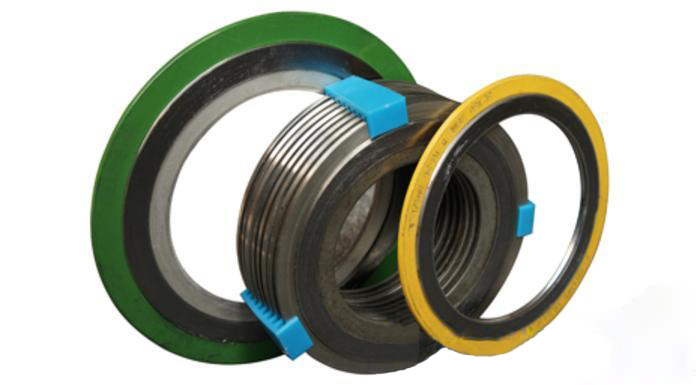
| **Spiral Wound** | Combination of metal windings and filler. | High-pressure/temperature pipe flanges (e.g., in oil & gas). | High resilience under extreme cycling conditions. |
### Rubber Gaskets FAQ (Frequently Asked Questions)
**Q: What factors should I consider when selecting a rubber gasket?**
A: The selection process involves a thorough analysis of the application: the media being sealed (type, concentration, temperature), operating pressure and temperature ranges, the flange material and surface finish, environmental exposure (UV, ozone, weathering), and any regulatory requirements (FDA, USP Class VI, NSF, etc.). Kaxite Sealing's technical team can guide you through this evaluation.
**Q: How do I determine the correct gasket hardness (durometer)?**
A: Hardness, measured in Shore A, indicates softness or firmness. Softer gaskets (e.g., 50-70 Shore A) conform better to uneven surfaces for low-pressure static seals. Harder gaskets (e.g., 70-90 Shore A) offer greater resistance to extrusion and are better for high-pressure or dynamic applications. The ideal hardness balances sealability with durability.
**Q: What is compression set and why is it important?**
A: Compression set is a measure of a rubber material's ability to return to its original thickness after prolonged compression. A low compression set percentage (like that of FKM) is critical for applications where the gasket is under constant load, as it indicates the seal will maintain its contact force and not relax over time, preventing leakage.
**Q: Can Kaxite Sealing provide gaskets for food, medical, or potable water applications?**
A: Absolutely. We offer a range of compounds certified to relevant standards. This includes FDA-compliant silicone and EPDM for food contact, USP Class VI certified materials for medical devices, and NSF/ANSI 61 approved compounds for potable water systems. Specific documentation is available upon request.
**Q: What is the difference between a static and a dynamic seal?**
A: A static seal is used between surfaces that do not move relative to each other, such as pipe flanges or housing covers. A dynamic seal is used between surfaces that have relative motion, such as rotating shafts (shaft seals) or reciprocating pistons (rod seals). Material and design requirements (like friction coefficient and abrasion resistance) are more stringent for dynamic applications.
**Q: How should I store rubber gaskets to maximize their shelf life?**
A: Store gaskets in a cool, dry, dark place away from direct sunlight, ozone sources (like electric motors), and extreme temperatures. Ideal storage temperature is between 10°C and 25°C (50°F and 77°F). Keep them in sealed, opaque bags away from chemicals and avoid compressing, stretching, or hanging them during storage.
**Q: What are the signs of gasket failure, and what typically causes it?**
A: Signs include visible leakage, extrusion of the gasket material from the flange, hardening/cracking, or permanent flattening. Common causes are chemical incompatibility (swelling or degradation), excessive temperature (leading to hardening or melting), incorrect compression (over-tightening causing extrusion or under-tightening causing leakage), and improper material selection for the pressure.
**Q: Does Kaxite Sealing offer custom gasket design and prototyping services?**
A: Yes, we specialize in custom solutions. Our engineering team can work from your CAD drawings or samples to design a gasket that meets exact specifications. We offer rapid prototyping services to allow for form, fit, and function testing before full-scale production, ensuring optimal performance.
### Applications of Kaxite Sealing Rubber Gaskets
The versatility of our rubber gaskets makes them suitable for a vast array of industries:
* **Automotive & Transportation:** Engine gaskets, fluid system seals, vibration isolators, lighting seals, and door/window weatherstripping.
* **Industrial Machinery:** Hydraulic and pneumatic system seals, pump housings, compressor plates, and machinery enclosures.
* **Plumbing & HVAC:** Pipe flange gaskets, valve seals, heat exchanger plates, and ducting connections.
* **Electrical & Electronics:** Enclosure seals for outdoor cabinets, waterproof connectors, and EMI/RFI shielding gaskets.
* **Food & Beverage Processing:** Seals for tanks, pipelines, homogenizers, and filling machines requiring sanitary compliance.
* **Aerospace & Defense:** High-performance seals for fuel systems, hydraulic systems, and environmental control systems.
Through advanced compounding, precision manufacturing, and rigorous quality control, Kaxite Sealing delivers rubber gaskets that are not just components, but reliable solutions that ensure the integrity, safety, and efficiency of your operations. Our global expertise is at your disposal to help navigate the complexities of sealing technology.