Premium PTFE Rods for Industrial Applications Manufacturer in China
Understanding the Material: What is PTFE?
Polytetrafluoroethylene, universally known as PTFE or by its famous brand name Teflon®, is a high-performance synthetic fluoropolymer. It is renowned for its exceptional chemical resistance, outstanding thermal stability, and remarkably low coefficient of friction. These inherent properties make PTFE an ideal material for a vast range of demanding applications, from aerospace and chemical processing to food and beverage production. As a leading manufacturer of engineered sealing solutions, Kaxite Sealing leverages the unique advantages of PTFE to produce superior-grade PTFE Rod stock, providing engineers and fabricators with a reliable raw material for machined components.
The Kaxite Sealing Advantage: Premium PTFE Rods
At Kaxite Sealing, we don't just supply PTFE rod; we deliver precision-engineered material consistency. Our rods are manufactured under stringent quality controls to ensure uniformity in density, dimensional stability, and mechanical properties. This consistency is critical for CNC machining, where predictable material behavior translates to higher yield, tighter tolerances, and reduced waste. Our PTFE rods are available in virgin (pure) grade for applications requiring maximum chemical purity, as well as glass-filled or carbon-filled compounds for enhanced mechanical strength, wear resistance, and dimensional stability under load.
Detailed Technical Specifications & Properties
Our PTFE rod exhibits a comprehensive set of physical, thermal, and chemical properties that make it indispensable in critical environments.
Key Physical & Mechanical Properties
- Color: Opaque white (virgin), black (carbon-filled), or off-white (glass-filled).
- Density: 2.14 - 2.20 g/cm³ (varies with filler type and percentage).
- Tensile Strength: 20 - 35 MPa (2,900 - 5,000 psi). Fillers like glass can increase strength.
- Elongation at Break: 300 - 500% for virgin PTFE, demonstrating high ductility.
- Hardness (Shore D): 50 - 65.
- Coefficient of Friction: Extremely low, typically 0.05 - 0.10 (static against steel).
- Dielectric Strength: Excellent insulator, with values > 40 kV/mm.
Thermal & Chemical Properties
| Property | Value / Rating | Significance |
|---|---|---|
| Continuous Service Temperature | -200°C to +260°C (-328°F to +500°F) | Performs reliably in extreme cryogenic and high-heat environments. |
| Chemical Resistance | Virtually inert | Resistant to almost all industrial chemicals and solvents, including strong acids and bases. |
| Weathering & UV Resistance | Excellent | Does not degrade or become brittle when exposed to outdoor elements. |
| Flammability | Non-flammable (UL94 V-0) | Will not support combustion, enhancing safety. |
| Water Absorption | ~0% | Dimensions and properties remain unchanged in humid or wet conditions. |
Standard Kaxite Sealing PTFE Rod Sizes
We stock a comprehensive range of diameters and lengths to meet most prototyping and production needs. Custom diameters and lengths can be produced upon request.
| Standard Diameter (mm) | Standard Diameter (inches) | Standard Length (mm) | Standard Length (inches) |
|---|---|---|---|
| 6 mm | 0.236" | 500 mm, 1000 mm | 19.7", 39.4" |
| 10 mm | 0.394" | 500 mm, 1000 mm | 19.7", 39.4" |
| 12 mm | 0.472" | 500 mm, 1000 mm | 19.7", 39.4" |
| 20 mm | 0.787" | 500 mm, 1000 mm | 19.7", 39.4" |
| 25 mm | 0.984" | 500 mm, 1000 mm | 19.7", 39.4" |
| 50 mm | 1.969" | 500 mm | 19.7" |
| 100 mm | 3.937" | 500 mm | 19.7" |
Typical Applications for PTFE Rod
Machined from PTFE rod, components serve critical functions across diverse sectors due to the material's unique combination of properties.
- Sealing & Gaskets: Valve seats, flange gaskets, O-rings, and V-rings for aggressive chemical services.
- Electrical Insulation: Bushings, stand-offs, coil forms, and socket insulators.
- Chemical Processing: Laboratory equipment, pump components, column packing supports, and dip pipes.
- Food & Pharmaceutical: Non-stick, FDA-compliant components for conveyors, guides, and wear plates.
- Aerospace & Automotive: Bearings, thrust washers, and low-friction guides in harsh environments.
- General Industrial: Low-friction pads, slides, guides, and sacrificial wear parts.
Machining Guidelines for Kaxite Sealing PTFE Rod
PTFE is a soft, ductile material that machines easily but requires specific techniques to achieve optimal results and avoid deformation.
- Tools: Use sharp, high-speed steel (HSS) or carbide tools with high rake angles. Keep tools sharp to avoid "gumminess."
- Speeds & Feeds: Employ high cutting speeds with slow, continuous feed rates. Avoid letting the tool dwell in the cut.
- Coolant: Generally not required. Use compressed air to remove chips and keep the work area clean.
- Holding the Workpiece: Avoid excessive clamping force to prevent deformation. Use soft jaws or adequate support for thin sections.
- Finishing: Produces a smooth finish naturally. For finer finishes, use very sharp tools and high speeds.
Frequently Asked Questions (FAQ) About PTFE Rod
What is the difference between virgin PTFE and filled PTFE rods?
Virgin PTFE is the pure polymer, offering the highest chemical resistance, lowest coefficient of friction, and best electrical properties. Filled PTFE (e.g., with glass, carbon, graphite, bronze) incorporates additives to improve certain characteristics. Glass filling increases stiffness, dimensional stability, and creep resistance. Carbon filling enhances wear resistance, thermal conductivity, and further reduces friction. The choice depends on the primary requirement of the application: purity/chemical resistance or mechanical/thermal performance.
Can PTFE rod be used for high-pressure applications?
While PTFE has excellent chemical and thermal properties, it is a relatively soft material with a phenomenon known as "cold flow" or creep. Under sustained high pressure, it can deform over time. For static seal applications, design factors like adequate gland fill and support rings are used. For dynamic or very high-pressure applications, filled PTFE compounds (which resist creep better) or alternative reinforced designs are recommended. Consulting with an engineer at Kaxite Sealing is advised for high-pressure designs.
How does temperature affect PTFE rod?
PTFE retains its remarkable properties across an extremely wide temperature range. It remains flexible and functional down to -200°C and stable up to +260°C for continuous use, with short-term peaks permissible even higher. Its mechanical strength decreases as temperature increases, but it does not melt like a thermoplastic; it begins to degrade above ~327°C. Importantly, it does not become brittle at cryogenic temperatures, making it perfect for LNG and other low-temperature systems.
Is PTFE rod safe for use in food contact or medical applications?
Virgin, unfilled PTFE is generally recognized as safe for incidental food contact by agencies like the FDA in the US and is compliant with EU regulations. It is inert, non-toxic, and does not leach substances. For certified food-grade or medical-grade PTFE, it is essential to specify this requirement. Kaxite Sealing can provide material certifications and traceability for such critical applications upon request.
Why choose Kaxite Sealing for PTFE rod?
Kaxite Sealing specializes in high-performance sealing materials and provides more than just a commodity plastic. We offer technical support, consistent quality from batch to batch, a wide range of sizes and formulations (virgin and filled), and the ability to supply custom-molded blanks or finished machined parts. Our expertise ensures you get the right PTFE material for your specific mechanical, thermal, and chemical environment, helping to avoid costly component failure.
How should PTFE rod be stored?
PTFE rod is a stable material but should be stored properly to maintain its condition. Store rods horizontally on a flat, supportive rack to prevent bending or distortion over time, especially for smaller diameters and long lengths. Keep them in a cool, dry, dark environment away from direct sunlight and sources of extreme heat. There is no specific shelf-life concern for PTFE if stored correctly.
- View as
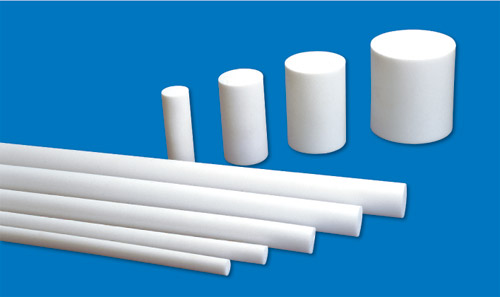
PTFE Rod
Discover Kaxite Sealing's PTFE Rod, a high-performance sealing solution for industrial applications. Made from durable polytetrafluoroethylene, it offers excellent chemical resistance and low friction, ideal for engineers and technicians in demanding environments. This rod ensures reliable performance, reduces downtime, and enhances safety, standing out with its superior quality and affordability. Upgrade your projects today.
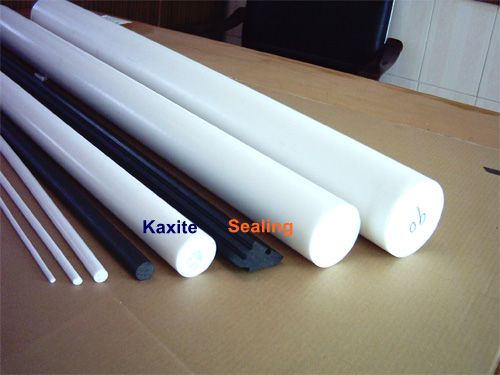
Carbon Filled PTFE Rod
Upgrade your sealing systems with Kaxite Sealing's Carbon Filled PTFE Rod – engineered for superior durability and low friction. Ideal for industrial applications, it provides reliable performance under extreme conditions. Experience unmatched resilience and efficiency, making it the smart choice for demanding environments.
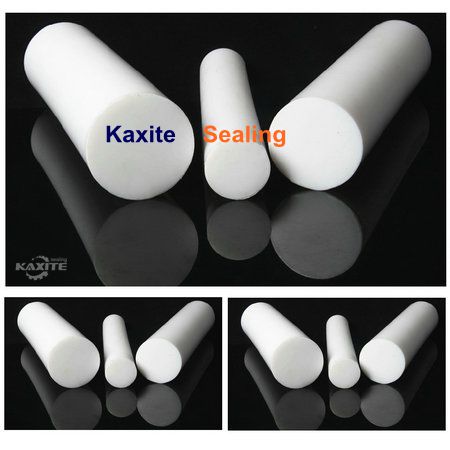
Molded PTFE Rods
Kaxite Sealing's Molded PTFE Rods are durable, high-performance rods perfect for industrial sealing and insulation. Made from premium PTFE, they offer exceptional chemical resistance, low friction, and reliability in harsh environments. Ideal for engineers and manufacturers, these rods ensure smooth operations and long-term efficiency, standing out with superior consistency and custom options. Experience unmatched quality and trust in every application.