Factory in China Produces High-Quality Machines for Spiral Wound Gaskets
Machines for Spiral Wound Gaskets: Precision Engineering for Unmatched Sealing Solutions
The manufacturing of spiral wound gaskets represents a pinnacle of precision engineering, where the smallest deviation can compromise the integrity of critical industrial seals. At the heart of this meticulous production process lie specialized Machines For Spiral Wound Gaskets. These are not mere tools but sophisticated systems designed to consistently produce gaskets that meet the exacting standards of industries such as oil & gas, petrochemicals, power generation, and pharmaceuticals. For over two decades, professionals have relied on high-caliber machinery to ensure their sealing components deliver safety, reliability, and longevity under extreme pressures and temperatures.
Kaxite Sealing stands at the forefront of this technology, engineering and delivering advanced machinery that sets the global benchmark for quality, efficiency, and durability in gasket production. Understanding the intricate specifications and operational demands of these machines is crucial for any business investing in their sealing component manufacturing capability.
Core Technical Specifications of Spiral Wound Gasket Machinery
The efficacy of a spiral wound gasket machine is defined by a suite of interrelated technical parameters. These specifications determine the range of gaskets it can produce, the speed of production, and the consistency of the final product. Below is a detailed breakdown of the critical parameters for a standard high-performance machine from Kaxite Sealing.
Primary Machine Parameters & Capabilities
- Machine Model: KX-SWG Series (Standard, Advanced, & Industrial variants)
- Winding Mechanism: CNC-controlled servo-driven winding head for precise tension and pitch control.
- Filler Material Feed: Independent, adjustable spool holders for flexible graphite, PTFE, ceramic, or metal fiber fillers.
- Strip Material Handling: Accommodates pre-cut stainless steel (304, 316), special alloys (Inconel, Monel), or other metal strips.
- Control System: Industrial PC with touch-screen HMI and proprietary Kaxite Sealing software for recipe storage and quality tracking.
- Power Requirements: 380-480V, 3-phase, 50/60Hz with integrated safety circuits and overload protection.
- Machine Footprint: Compact design, typically 2.5m (L) x 1.8m (W) x 1.9m (H).
- Safety Features: Full perimeter safety guarding with interlocks, emergency stop buttons, and light curtains.
Detailed Production Capacity Specifications
| Parameter | Range / Specification | Notes |
|---|---|---|
| Gasket Inner Diameter (ID) | 15 mm (1/2") to 3000 mm (120") | Larger diameters available on custom Industrial models. |
| Gasket Outer Diameter (OD) | Up to 3200 mm (126") | Limited by machine bed size and mandrel availability. |
| Metal Strip Thickness | 0.15 mm to 0.5 mm (0.006" to 0.020") | Handles a wide range of standard and exotic alloys. |
| Filler Material Thickness | 0.5 mm to 4.0 mm (0.020" to 0.157") | Precision feed ensures uniform filler density. |
| Winding Pitch (P) | 2.5 mm to 8.0 mm (0.1" to 0.315") | Programmable pitch control for optimal sealing density. |
| Production Speed | Up to 15 meters of wound length per minute | Varies based on gasket size, material, and complexity. |
| Outer Ring Attachment | Integrated station for manual or automatic outer ring placement (carbon steel, SS, etc.). | Optional robotic arm for fully automated assembly. |
| Accuracy & Repeatability | ± 0.1 mm on diameter, ± 0.05 mm on pitch | Guarantees compliance with ASME B16.20, API 6A, and other standards. |
Key Components and Their Role in the Winding Process
A modern machine is an assembly of specialized subsystems working in perfect harmony.
- CNC Winding Head: The core of the machine. It precisely rotates the mandrel while feeding and forming the metal strip and filler material under controlled tension.
- Mandrel Set: A collection of precision-machined, tapered dies that determine the inner diameter of the gasket. A comprehensive set is essential for production flexibility.
- Material Decoilers & Tensioners: Hold the metal strip and filler material spools, providing smooth, consistent, and adjustable feed tension to prevent buckling or stretching.
- Guide & Forming Rollers: Shape the flat metal strip into a precise "V" profile and guide the filler material into the formed channel.
- Control Panel & HMI: The user interface. Operators input parameters (ID, OD, pitch, number of winds) and monitor the entire process in real-time.
- Cutting & Sealing Mechanism: At the end of the winding cycle, this subsystem cleanly cuts the filler, tucks in the metal strip tail, and optionally spot-welds it for security.
Frequently Asked Questions (FAQ) on Machines For Spiral Wound Gaskets
Q: What are the main factors to consider when selecting a machine for spiral wound gaskets?
A: The selection depends on your production goals. Key factors include: 1) The size range (ID/OD) of gaskets you need to produce. 2) The variety of metal and filler materials you will use. 3) Required production volume and speed. 4) The level of automation desired (manual loading vs. fully automated lines). 5) Compliance with specific industry standards (e.g., ASME, API, DIN). 6) The machine's precision, repeatability, and ease of maintenance. A consultation with an expert like Kaxite Sealing can help match the right machine model to your specific requirements.
Q: How does the machine ensure consistent density and sealing performance across every gasket?
A: Consistency is achieved through precise servo-motor control of the winding process. The machine's software calculates the exact relationship between the rotational speed of the mandrel and the linear feed rate of the metal strip. This controls the winding pitch perfectly. Simultaneously, independent tensioners apply constant, calibrated force to both the metal strip and the filler material. This combination of controlled pitch and uniform tension ensures each wound spiral has identical density, which is critical for predictable compression and sealing behavior under flange load.
Q: Can one machine produce gaskets for different standards, such as ASME B16.20 and API 6A?
A: Yes, a high-quality, programmable machine is designed for such versatility. The differences between standards often lie in dimensions, wind densities, and outer ring specifications. With a machine like the Kaxite Sealing KX-SWG Series, operators simply select a different pre-programmed recipe from the HMI. The machine automatically adjusts parameters like the number of winding rotations, pitch, and stopping position for outer ring placement. The key is having a machine with a sufficiently precise control system and a robust mandrel set that covers the required diameter ranges for each standard.
Q: What is the typical maintenance routine for these machines, and how does it impact uptime?
A: Preventive maintenance is straightforward but essential. Daily tasks include cleaning debris (graphite dust, metal shavings) and checking for loose fittings. Weekly, lubrication of guide rails and bearings is necessary. Monthly, a more thorough inspection of the forming rollers, cutting blades, and tensioner springs should be performed. The most significant aspect is the regular calibration of tensioning systems and servo drives, which should be done quarterly or semi-annually depending on usage. Kaxite Sealing machines are built for durability and easy access to key components, minimizing downtime. Most tasks can be performed by trained in-house technicians, supported by detailed manuals and remote support from the manufacturer.
Q: How does automation, like robotic outer ring placement, integrate with the winding machine?
A: Automation integration transforms a standalone machine into a high-throughput production cell. After the winding cycle completes, a signal is sent to a robotic arm. The arm picks up a pre-sized outer ring from a magazine, positions it concentrically over the wound spiral, and places it onto the machine's pressing station. The machine then performs the final sizing operation to secure the ring. This integration, controlled by a central PLC, eliminates manual handling, increases placement accuracy, drastically improves cycle times, and enhances worker safety by reducing direct interaction with the machine's working area.
Q: What training and support can we expect when purchasing a new machine?
A: Comprehensive training and support are critical for a quick return on investment. Reputable providers like Kaxite Sealing offer a complete package. This typically includes on-site installation and commissioning by factory engineers, followed by intensive hands-on training for your operators and maintenance staff on machine operation, programming, routine maintenance, and basic troubleshooting. You also receive detailed technical documentation, software manuals, and wiring diagrams. Post-installation support usually features a warranty period, access to a 24/7 technical support hotline, remote diagnostics capabilities, and a ready supply of genuine spare parts to ensure your production line remains operational.
Advanced Features in Modern Machinery
Today's leading machines incorporate features that go beyond basic winding to offer unparalleled control and data integration.
- Recipe Management Software: Store hundreds of gasket profiles (ID, OD, material, pitch, winds) for instant recall, ensuring repeatability and eliminating setup errors.
- Real-Time Monitoring & SPC: Sensors monitor tension, speed, and dimensions during production. Data can be exported for Statistical Process Control (SPC), providing traceability for quality audits.
- Vision Systems: Optional camera systems can perform automatic visual inspection post-winding, checking for filler gaps, consistent winding, and proper outer ring alignment.
- Network Connectivity: OPC-UA or Ethernet/IP connectivity allows the machine to be integrated into factory-wide Industry 4.0 networks for production planning and monitoring.
- Quick-Change Mandrel Systems: Patented systems that allow operators to change mandrels (for different IDs) in minutes instead of hours, significantly improving flexibility for small-batch production.
Material Compatibility and Versatility
A significant advantage of a well-engineered machine is its ability to process a wide array of materials to meet diverse service conditions.
| Material Type | Common Grades/Forms | Key Considerations for the Machine |
|---|---|---|
| Metal Strip | 304/316 SS, Carbon Steel, Inconel 600/625, Monel, Titanium, Hastelloy | Machine must have adjustable tension and hardened forming rollers to handle different yield strengths and prevent marking softer metals. |
| Filler Material | Flexible Graphite (Pure, Impregnated), PTFE, Ceramic Fiber, Mica, Asbestos (legacy) | Filler feed system must accommodate varying material thicknesses, densities, and cohesiveness without tearing or jamming. |
| Outer Ring | Carbon Steel, 304/316 SS, Galvanized Steel, Various Alloys | The outer ring guiding and pressing station must be adjustable for different ring thicknesses and strengths to ensure a snug, concentric fit. |
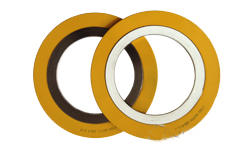
- View as
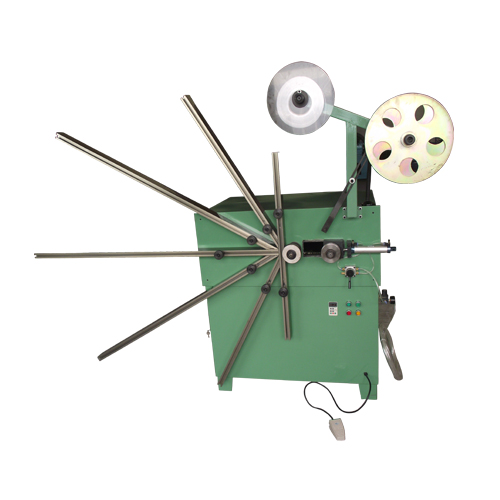
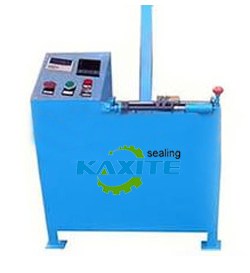
Manual Vertical Big Size Winding Machine For SWG
Introducing Kaxite Sealing's Manual Vertical Big Size Winding Machine For SWG: a robust, user-friendly solution for efficiently winding large-size SWG materials in industrial settings. Designed for durability and precision, it offers effortless operation and superior performance, ensuring reliability for manufacturers and professionals. Experience seamless workflows, reduced downtime, and enhanced productivity—choose Kaxite Sealing for unmatched quality and innovation in winding technology.
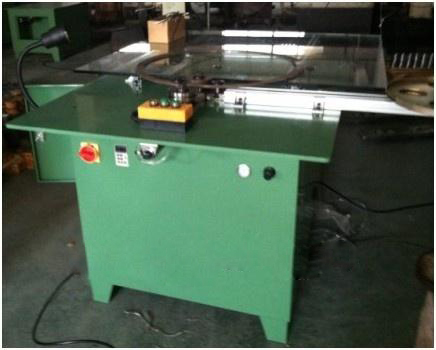
Medium Size Semi-Automatic Winding Machine
Discover the Kaxite Sealing Medium Size Semi-Automatic Winding Machine – a reliable solution for efficient packaging and sealing. Its user-friendly design ensures smooth operation, perfect for small to medium businesses seeking durability and ease. Stand out with its precision engineering, saving time and reducing errors. Experience hassle-free wrapping that boosts productivity today!
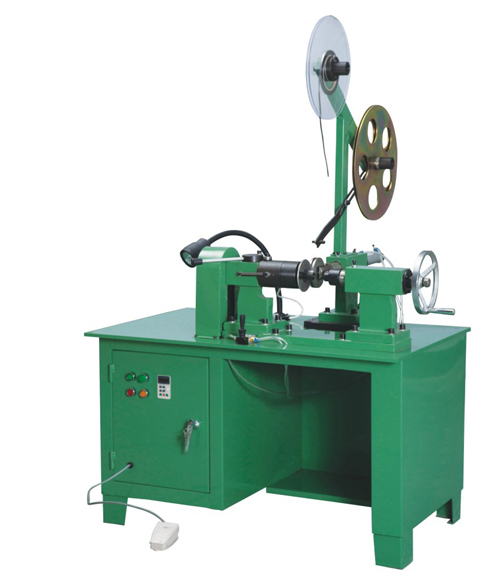
Winding Machine For Small Size SWG
Discover the Kaxite Sealing Winding Machine for Small Size SWG, an essential tool for precise wire winding in compact applications. Its advanced design ensures seamless efficiency and durability, ideal for hobbyists and professionals seeking reliable performance. This innovative machine transforms tedious tasks into effortless operations, offering unmatched precision compared to alternatives. Elevate your projects with Kaxite Sealing’s trusted quality—unlock superior results today!
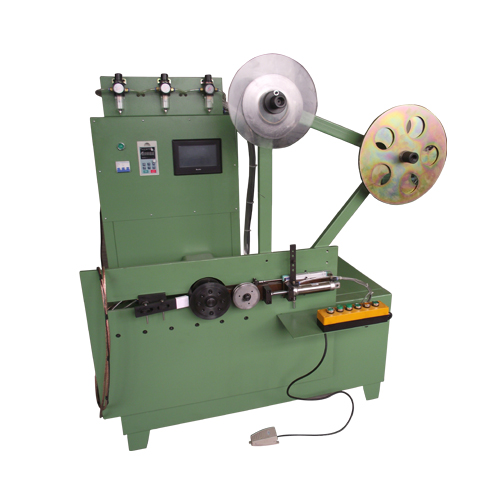
Vertical Semi-Automatic Winding Machine For SWG
Kaxite Sealing's Vertical Semi-Automatic Winding Machine For SWG is a high-efficiency tool designed for industrial winding applications. It features durable construction, user-friendly operation, and precision control, making it ideal for manufacturers seeking reliable performance. This machine enhances productivity and reduces downtime, offering a superior alternative with its advanced technology and competitive pricing. Experience seamless operation and boost your workflow with Kaxite Sealing's innovative solution.
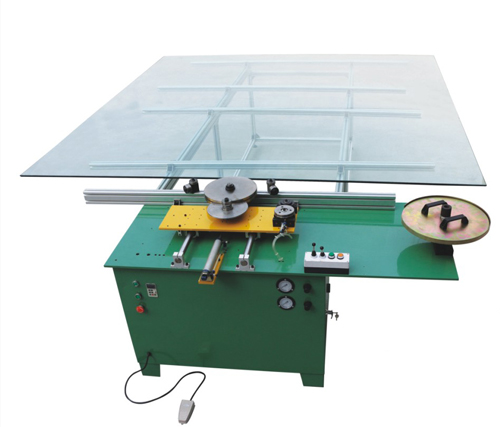
Semi-Automatic Horizontal Big Size Winder
Enhance your packaging efficiency with Kaxite Sealing's Semi-Automatic Horizontal Big Size Winder. This advanced machine streamlines large-scale material winding for industrial applications, offering superior durability and user-friendly operation. Designed for factories and professionals, it ensures smooth workflows and reduced downtime, delivering a reliable solution that stands out with its robust build and consistent performance.
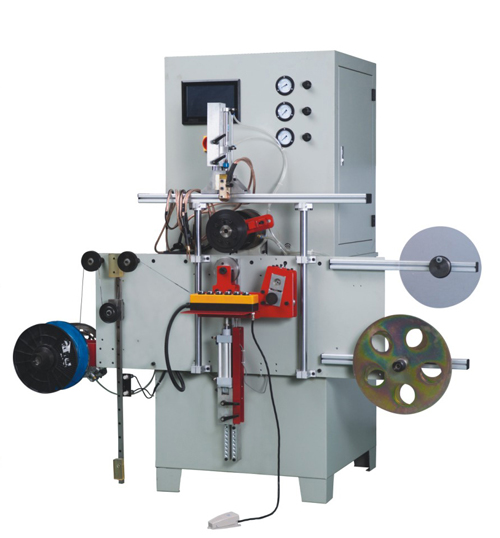
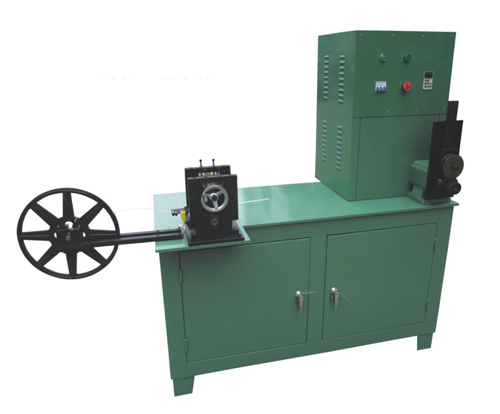
Automatic Winding Machine For Spiral Wound Gasket
Kaxite Sealing's Automatic Winding Machine For Spiral Wound Gasket revolutionizes gasket production with precision and efficiency. Designed for manufacturers and industrial suppliers, this machine automates winding processes, ensuring consistent quality and reducing labor costs. Its advanced technology and user-friendly design save time and enhance productivity. Experience seamless operations and reliable performance, setting new standards in the sealing industry.