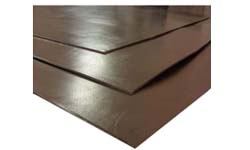
Factory in China Providing High-Quality Asbestos Gaskets for Industrial Applications
Asbestos Gaskets: A Comprehensive Guide to High-Temperature Sealing Solutions
In demanding industrial environments where extreme heat, pressure, and corrosive media are the norm, selecting the correct sealing material is not just a matter of efficiency—it's a critical safety and operational imperative. For decades, Asbestos Gaskets have been a cornerstone in such applications, renowned for their exceptional durability and thermal resistance. At Kaxite Sealing, we combine deep material science expertise with precision manufacturing to produce asbestos gasket materials that meet the rigorous standards of modern industry while providing reliable, long-lasting performance.
Our commitment at Kaxite Sealing is to deliver sealing solutions that engineers and maintenance professionals can trust. We understand that a gasket is a small component that carries immense responsibility. Failure is not an option. Therefore, we meticulously control the composition and production of our asbestos-based materials to ensure consistent quality, optimal sealing force retention, and resilience against a wide spectrum of aggressive chemicals and thermal cycling.
Understanding Asbestos Gasket Material Composition
Kaxite Sealing's asbestos gaskets are not a single, uniform product. They are engineered composites designed for specific service conditions. The core material is chrysotile asbestos fibers, known for their high tensile strength, flexibility, and inherent resistance to fire and heat. These fibers are then bonded with various fillers and elastomers to enhance specific properties. The exact formulation determines the gasket's suitability for different applications.
- Chrysotile Asbestos Fibers: Provide the foundational heat resistance (capable of withstanding temperatures up to 1000°F / 538°C intermittently) and mechanical strength.
- Rubber Binders (e.g., Nitrile, Neoprene, SBR): Offer compressibility, elasticity, and improved sealing against fluids. The choice of binder affects oil, fuel, and chemical resistance.
- Inorganic Fillers (e.g., Clay, Talc, Barium Sulfate): Adjust density, improve heat resistance, and provide added corrosion protection in specific chemical environments.
- Metal Wires or Foils: Sometimes incorporated for added structural integrity, crush resistance, and to handle higher flange pressures.
Key Product Parameters and Specifications
When specifying an asbestos gasket from Kaxite Sealing, several critical parameters must be considered to ensure perfect application fit. Below is a detailed breakdown of our standard product specifications.
| Parameter | Specification Range / Description | Test Standard |
|---|---|---|
| Temperature Range | -40°F to +750°F (-40°C to +400°C) continuous service. Short-term peaks up to 1000°F (538°C). | ASTM F104 |
| Pressure Range | Up to 1500 psi (103 bar), depending on thickness and flange design. | ASME B16.20 / B16.21 |
| Standard Thickness | 1/64", 1/32", 1/16", 1/8", 3/16", 1/4" (0.4mm, 0.8mm, 1.6mm, 3.2mm, 4.8mm, 6.4mm). | ASTM F104 |
| Density | 85 - 110 lbs/ft³ (1360 - 1760 kg/m³) | ASTM F1315 |
| Tensile Strength | Minimum 2500 psi (17.2 MPa) longitudinal; 1500 psi (10.3 MPa) transverse. | ASTM F152 |
| Compressibility | 7% - 15% under 10,000 psi load. Provides excellent conformability to flange faces. | ASTM F36 |
| Recovery | 40% minimum. Ensures the gasket maintains seal during pressure and temperature transients. | ASTM F36 |
| Creep Relaxation | Max 35% loss of initial bolt load. Kaxite formulations are optimized for low creep. | ASTM F38 |
| pH Range | Stable in environments with pH from 2 to 12. Specific grades offer extended resistance. | N/A |
| Common Fluid Resistance | Steam, hot oils, hydrocarbons, alkalis, mild acids, refrigerants, hydraulic fluids. | ASTM D471 (Guide) |
Kaxite Sealing Asbestos Gasket Product Line
Our product line is segmented to address distinct industrial needs. Each grade is engineered with a specific balance of properties.
| Product Grade | Primary Binder/Reinforcement | Best Suited For | Key Advantage |
|---|---|---|---|
| KX-AG100 (Standard Grade) | SBR Rubber | General purpose steam, hot water, and mild chemical service. | Cost-effective reliability for non-critical, high-temperature applications. |
| KX-AG200 (Oil & Fuel Grade) | Nitrile Rubber (NBR) | Fuel lines, lube oil systems, hydraulic systems, hydrocarbon processing. | Superior swelling resistance and seal retention in oil-based fluids. |
| KX-AG300 (Chemical Grade) | Neoprene / Special Fillers | Chemical processing, alkali exposure, moderate acid services. | Enhanced resistance to a broader range of corrosive chemicals. |
| KX-AG400 (High-Pressure Grade) | Wire Mesh Insert | High-pressure steam lines, boiler manways, heat exchangers. | Exceptional blow-out resistance and minimal creep under high bolt load. | KX-AG500 (Non-Stick / Easy Release) | Graphite-Coated Surface | Applications requiring frequent disassembly (e.g., inspection ports). | Prevents adhesion to flanges, reducing cleanup time and gasket tearing. |
Frequently Asked Questions (FAQ) About Asbestos Gaskets
Q: Are asbestos gaskets still legal and safe to use?
A: Yes, in many industrial applications, the use of encapsulated asbestos in gaskets and other sealing materials is still permitted under strict regulations, such as the OSHA Asbestos Standard (29 CFR 1910.1001) in the USA and similar controls elsewhere. The key is that the asbestos fibers are "locked in" within the rubber/filler matrix during manufacture. When properly installed, maintained, and removed using controlled procedures (like wet methods), the risk of fiber release is minimal. Kaxite Sealing products are designed and manufactured to comply with all relevant safety directives for encapsulated asbestos products.
Q: What are the primary advantages of asbestos gaskets over non-asbestos alternatives?
A> The main advantages are their unmatched combination of very high-temperature resistance, excellent compressibility and recovery, and innate fireproof nature. While many non-asbestos materials (like aramid fiber or graphite) excel in one or two areas, high-quality asbestos gaskets often provide a more balanced performance profile across temperature, pressure, and chemical resistance, especially in legacy systems designed with asbestos in mind. They also tend to have a lower initial cost for equivalent performance in extreme heat scenarios.
Q: How do I select the correct Kaxite Sealing asbestos gasket grade for my application?
A> Selection requires evaluating four key factors: 1) Temperature: Match the continuous and peak operating temperatures to the grade's rating. 2) Media: Identify all fluids, gases, or chemicals the gasket will contact. Our chemical resistance chart is essential here. 3) Pressure: Consider both operating pressure and flange pressure (bolt load). 4) Flange Condition: For uneven or pitted flanges, a thicker, more compressible grade may be needed. Our technical support team can assist with this analysis.
Q: What is the proper installation procedure for an asbestos gasket?
A> Correct installation is critical. Always start with clean, dry, and undamaged flange faces. Ensure the gasket is the correct size and type. Do not use sealants unless specified for the grade. Align the gasket carefully. Use a star-pattern sequence to tighten bolts to the manufacturer's recommended torque value in multiple incremental passes. This ensures even compression and prevents distortion. After initial heat cycling, a re-torque is often recommended to compensate for initial gasket creep and settlement.
Q: Can Kaxite Sealing asbestos gaskets be used in food, pharmaceutical, or potable water applications?
A> No. Standard asbestos gaskets are not certified for direct contact with food, pharmaceuticals, or potable water. For these applications, Kaxite Sealing offers a comprehensive range of FDA-approved non-asbestos gasket materials specifically designed to meet the stringent purity and safety requirements of these industries.
Q: How should old asbestos gaskets be disposed of?
A> Disposal is heavily regulated. Removed asbestos gaskets must be treated as asbestos-containing waste material (ACWM). They should be carefully wetted, immediately placed in leak-tight, labeled asbestos waste bags, and disposed of at a licensed hazardous waste landfill in accordance with all local, state/provincial, and federal regulations. Never dry-sand, grind, or abrade an asbestos gasket.
Q: Does Kaxite Sealing offer custom-cut gaskets or sheet stock?
A> Yes. We provide full custom die-cutting, water-jet cutting, and CNC machining services to produce gaskets to your exact drawings and specifications. We also supply our full range of materials in standard sheet sizes and rolls for in-house fabrication. Our team can advise on the most economical and efficient supply method for your needs.
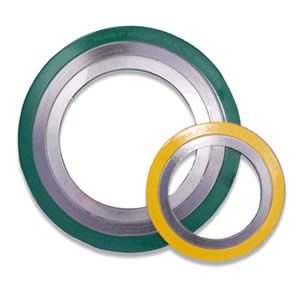
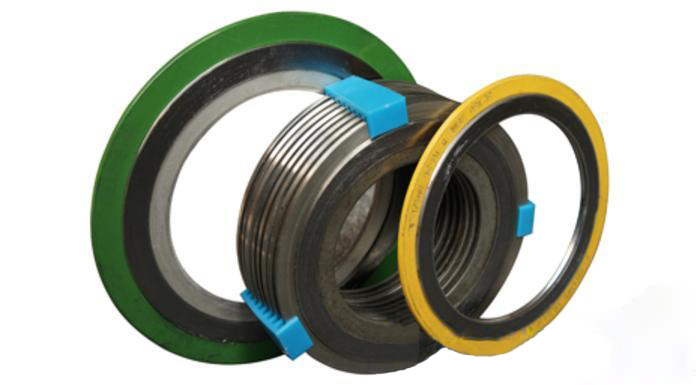
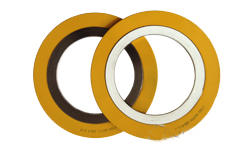
- View as
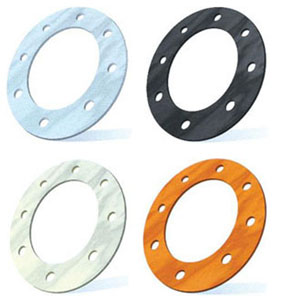
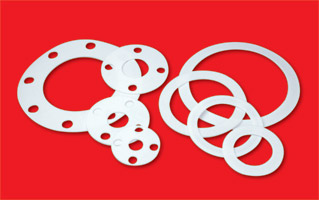
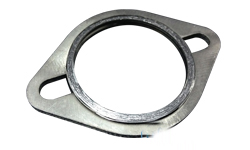
Asbestos Gasket
Discover Kaxite Sealing's Asbestos Gasket, a durable and heat-resistant solution designed for industrial sealing applications, perfect for engineers and maintenance professionals in high-temperature environments. It offers superior performance with reliable asbestos materials, ensuring safety and longevity in demanding settings like machinery and pipelines. Experience confidence and peace of mind with its proven resistance, standing out through Kaxite Sealing's commitment to quality and innovation. Upgrade to a trusted seal today!
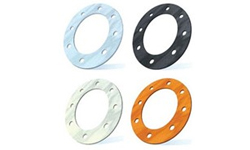
Mineral Fiber Rubber Gasket
Discover the Kaxite Sealing Mineral Fiber Rubber Gasket, a durable and flexible sealing solution designed for industrial applications. With superior heat resistance and compressibility, it ensures reliable performance in harsh environments like machinery and pipelines. This gasket solves leakage issues, providing peace of mind through enhanced safety and efficiency. Unlike standard options, Kaxite Sealing's unique blend offers longer lifespan and better adaptability. Ideal for engineers and professionals seeking dependable sealing, it elevates your projects with trust and quality.