Aramid Fiber Packing Supplier in China
Introduction to Aramid Fiber Packing
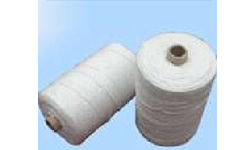
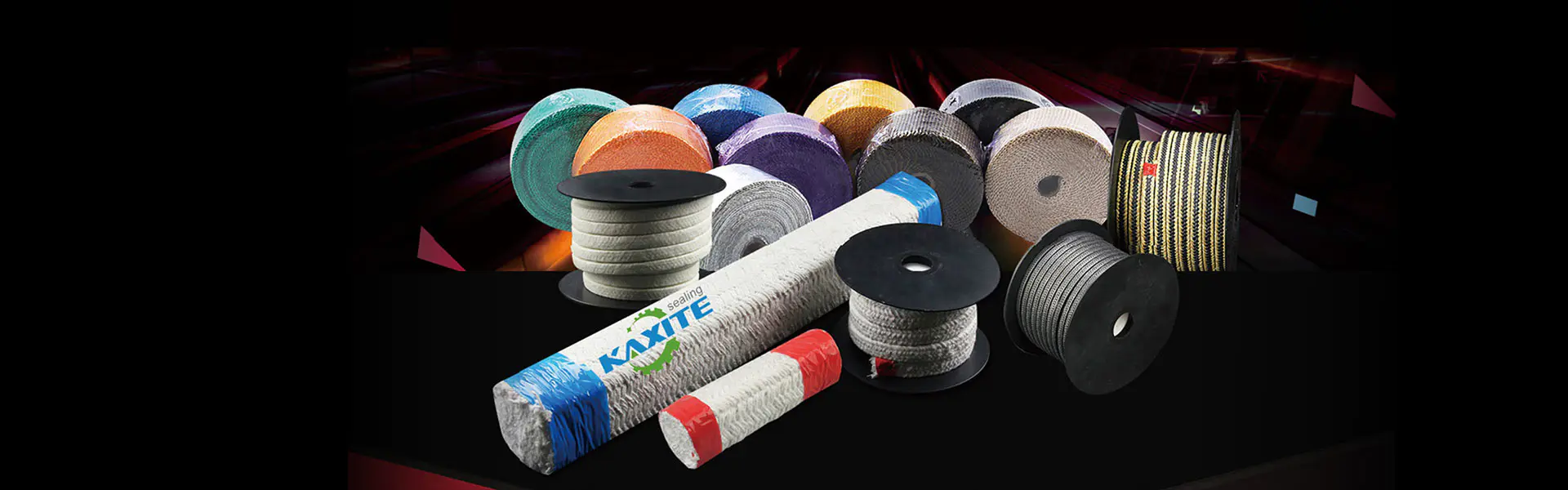
In the demanding world of industrial sealing, reliability and performance under extreme conditions are non-negotiable. Aramid Fiber Packing has emerged as a superior sealing solution, renowned for its exceptional strength, thermal stability, and chemical resistance. Engineered from synthetic aromatic polyamide fibers, this advanced material is designed to handle the toughest applications where traditional packings like asbestos or graphite fall short. At Kaxite Sealing, we specialize in manufacturing high-performance aramid fiber packing that meets the rigorous standards of modern industry, ensuring leak-free operation, extended service life, and reduced maintenance costs for your critical equipment.
Key Features and Benefits of Kaxite Aramid Packing
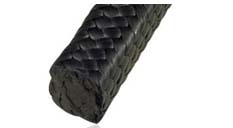
Kaxite Sealing's aramid fiber packing is not just another sealing product; it's a precision-engineered component. Our packing is manufactured using premium-grade aramid fibers, often combined with advanced lubricants and inhibitors to enhance its inherent properties. The result is a versatile sealing solution that offers a unique combination of benefits, making it the preferred choice for engineers and maintenance professionals across the globe.
- Exceptional Tensile Strength: Aramid fibers possess a strength-to-weight ratio far superior to steel, providing outstanding resistance to extrusion and blow-out under high pressure.
- High-Temperature Performance: Capable of continuous operation in temperatures ranging from -100°C to 300°C (-148°F to 572°F), with peak resistance up to 400°C (752°F) for short durations.
- Superior Chemical Resistance: Excellent resistance to a wide range of chemicals, including hydrocarbons, solvents, alkalis, and mild acids, ensuring integrity in corrosive environments.
- Low Thermal Conductivity: Acts as an effective insulator, protecting equipment components from heat transfer.
- Non-Abrasive Nature: The soft, flexible braid is gentle on shaft or stem surfaces, minimizing wear and extending the life of costly equipment.
- Self-Lubricating Options: Many of our formulations include PTFE or graphite for reduced friction and lower breakout torque, ensuring smooth operation.
- Zero Asbestos Content: A safe, environmentally friendly sealing solution that complies with all modern health and safety regulations.
Detailed Product Specifications and Data
To make an informed decision, you need precise data. Below are the detailed technical parameters for Kaxite Sealing's standard aramid fiber packing series. These specifications are derived from rigorous laboratory testing and field performance data.
| Property | Test Method | Standard Grade (Aramid/PTFE) | High-Temp Grade (Aramid/Graphite) | Chemical Grade (Aramid/Elastomer) |
|---|---|---|---|---|
| Fiber Composition | Visual & DSC | Para-aramid, PTFE lubricant | Para-aramid, Reinforcing yarns, Graphite | Meta-aramid, Fluorocarbon elastomer |
| Temperature Range (Continuous) | ASTM E831 | -100°C to 260°C (-148°F to 500°F) | -100°C to 300°C (-148°F to 572°F) | -40°C to 230°C (-40°F to 446°F) |
| pH Range | Immersion Test | 2 - 12 | 2 - 14 | 1 - 14 |
| Density (g/cm³) | ASTM D3800 | 1.25 - 1.35 | 1.40 - 1.55 | 1.30 - 1.45 |
| Tensile Strength (MPa) | ASTM D885 | > 450 MPa | > 500 MPa | > 400 MPa |
| Thermal Conductivity (W/m·K) | ASTM E1530 | 0.04 - 0.06 | 5 - 15 (in axis direction) | 0.05 - 0.08 |
| Recommended Pressure (MPa) | Field Validation | Up to 25 MPa (3625 psi) | Up to 30 MPa (4350 psi) | Up to 20 MPa (2900 psi) |
| Rotational Speed (m/s) | Pac-Seal Test | Up to 20 m/s | Up to 15 m/s | Up to 12 m/s |
Available Sizes and Configurations
- Standard Square Cross-Section: 3mm (1/8"), 5mm (3/16"), 6mm (1/4"), 8mm (5/16"), 10mm (3/8"), 13mm (1/2"), 16mm (5/8"), 19mm (3/4"), 22mm (7/8"), 25mm (1").
- Braiding Style: Square braid, braid-over-braid, and twisted ply styles are available for different application requirements.
- Packaging: Supplied in continuous coils, spools, or pre-cut rings upon request. Standard coil length is 10 feet (3.05 meters) or 50 feet (15.24 meters).
Primary Industrial Applications
Kaxite aramid fiber packing is engineered for versatility. Its unique property profile makes it suitable for a vast array of demanding sealing applications across multiple industries.
- Chemical & Petrochemical Processing: Sealing pumps, mixers, and valves handling acids, alkalis, hydrocarbons, and solvents. Ideal for agitators in reactors.
- Oil & Gas: Used in upstream, midstream, and downstream applications, including pump packing for crude oil, refined products, and produced water. Excellent for swivel joints and Christmas tree valves.
- Power Generation: Sealing boiler feed pumps, condensate extraction pumps, and other auxiliary equipment in fossil fuel, nuclear, and geothermal plants.
- Pulp & Paper: Resistant to corrosive black and white liquors, used in pulp washers, bleach plant equipment, and paper machine pumps.
- Marine & Shipbuilding: Stern tube seals, pump shaft seals, and valve stem packing in both freshwater and saltwater environments.
- General Manufacturing: A reliable solution for industrial mixers, autoclaves, and any rotating or reciprocating equipment requiring a robust, long-lasting seal.
Installation Guidelines for Optimal Performance
Correct installation is critical to achieving the maximum service life and leak-free performance from your aramid fiber packing. Follow these steps for best results:
- Preparation: Clean the stuffing box thoroughly, removing all old packing residue. Inspect the shaft/stem for scoring or wear and measure its diameter and the box bore accurately.
- Packing Selection: Choose the correct Kaxite aramid packing grade and size. The packing cross-section should match the gland dimensions precisely.
- Ring Cutting: Wrap the packing neatly around a mandrel of the same diameter as the shaft/stem. Cut rings at a 45-degree angle (skive cut) using a sharp blade. Ensure joints are clean and square.
- Staggering Joints: Install each ring one at a time, using a packing tool to seat it firmly. Stagger the joints by 90 degrees (or at least 45 degrees) for each subsequent ring.
- Gland Adjustment: After installing all rings, hand-tighten the gland nuts evenly. Start the equipment and gradually tighten the gland in small increments (typically 1/6 to 1/4 of a turn) during warm-up until leakage is reduced to a slight weep for lubrication and cooling.
- Run-in Period: Allow a run-in period of several hours. Re-tighten the gland slightly if necessary after the initial heat cycles. The packing will seat and conform during this period.
Frequently Asked Questions (FAQ)
Q: What is the main advantage of aramid fiber packing over traditional graphite or asbestos packings?
A: The primary advantage is its combination of high strength and thermal stability with chemical resistance. Unlike graphite, which can oxidize at high temperatures in steam, or asbestos, which is a health hazard, aramid packing maintains its structural integrity across a wider temperature and pH range while being completely safe to handle. It is also far more resistant to extrusion under high pressure.
Q: Can Kaxite aramid packing be used for both rotating and reciprocating shafts?
A: Yes, absolutely. Our aramid fiber packing is braided specifically to provide excellent performance in both dynamic applications. For rotating shafts (like pump shafts), our braid-over-braid style offers superior flexibility and resilience. For reciprocating motion (like valve stems), a square braid or twisted ply style provides the necessary density and stability to maintain a seal with minimal adjustment.
Q: How do I choose between the PTFE-lubricated and Graphite-impregnated grades?
A: The choice depends on your service conditions. The PTFE-lubricated grade is ideal for general-purpose applications, especially where chemical compatibility with PTFE is required and for services involving strong alkalis or oxidizing agents. The Graphite-impregnated grade is superior for high-temperature steam service (above 260°C/500°F), hot oils, and applications where the self-lubricating properties of graphite are beneficial for reducing friction and wear.
Q: What is the expected service life of aramid packing?
A: Service life varies significantly based on operating conditions: shaft speed, pressure, temperature, media, and installation quality. Under standard conditions with proper installation and maintenance, Kaxite aramid packing typically lasts 6 to 18 months in continuous service, which is often 3-5 times longer than conventional braided packings. In some mild, well-maintained applications, it can last several years.
Q: Is a break-in or run-in period required after installation?
A: Yes, a proper run-in period is crucial. Aramid packing needs time to "seat" or conform to the micro-imperfections of the shaft and stuffing box. During the first 24-48 hours of operation, a slight increase in leakage and temperature is normal. The gland should be adjusted gradually during this period to achieve the optimal leak rate (a few drops per minute). Over-tightening during run-in can cause excessive heat and premature failure.
Q: Can this packing be used in food and pharmaceutical applications?
A: While aramid fibers themselves are inert, the specific grade must be selected. Our standard industrial grades are not certified for direct food or pharmaceutical contact. However, Kaxite Sealing can provide specialized aramid-based packing made with FDA-listed ingredients and lubricants for such applications. Please contact our technical team with your specific requirements.
Q: How does the non-abrasive nature of aramid benefit my equipment?
A: Traditional hard packings can act like a lapping compound, gradually wearing down the shaft or stem, leading to grooves and eventual fluid leakage. The soft, fibrous structure of Kaxite aramid packing is gentle on metal surfaces. This dramatically reduces shaft wear, preserving the integrity of expensive machined components and avoiding costly shaft repair or replacement, thereby lowering your total cost of ownership.
- View as
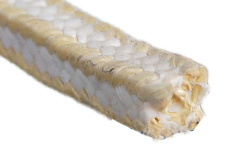
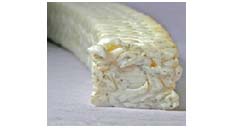
White PTFE Packing with Aramid Corners
Kaxite Sealing's White PTFE Packing with Aramid Corners offers robust, reliable sealing for industrial applications, combining PTFE's chemical resistance with aramid's durability at corners for enhanced performance. Ideal for engineers and maintenance teams in harsh environments like chemical plants, it ensures leak-proof, long-lasting solutions, delivering peace of mind and operational efficiency. Its unique corner reinforcement sets it apart from standard packings, reducing wear and downtime.
Spun Kevlar Packing
Kaxite Sealing introduces Spun Kevlar Packing, a durable sealing solution for industrial applications. Made from spun Kevlar fibers, it excels in high-temperature and high-pressure environments, offering superior abrasion resistance and long-lasting performance. Ideal for engineers and maintenance teams in manufacturing, energy, and automotive sectors, it ensures reliable sealing, reduces downtime, and enhances safety. Unlike standard packings, its unique fiber structure provides better flexibility and leak prevention. Trust Kaxite Sealing for premium quality that keeps operations smooth and efficient.
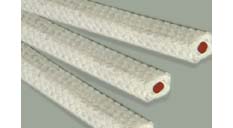
Nomex Fiber Packing With Rubber Core
Discover Kaxite Sealing's Nomex Fiber Packing With Rubber Core, an innovative sealing solution for industrial applications. Its durable Nomex fibers and flexible rubber core provide exceptional leak resistance and longevity, ideal for pumps, valves, and high-temperature environments. Users benefit from reduced downtime and reliable performance, offering peace of mind. Stand out with superior adaptability and enhanced sealing compared to standard packings—experience the difference with Kaxite Sealing today!
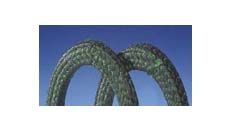
Graphite Spun Aramid Fiber Packing
Kaxite Sealing's Graphite Spun Aramid Fiber Packing offers superior sealing for industrial applications, combining durable aramid fibers with graphite for exceptional heat resistance and minimal friction. Ideal for pumps, valves, and high-temperature environments, it provides reliable performance, reduces downtime, and ensures long-lasting protection. Experience unmatched quality and efficiency with this innovative solution.
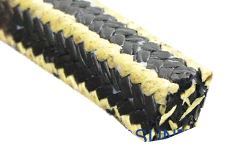
Graphite PTFE Packing with Aramid Fiber Corners
Kaxite Sealing's Graphite PTFE Packing with Aramid Fiber Corners is a high-performance sealing solution for industrial applications. This product combines the durability of graphite PTFE with the strength of aramid fibers, offering superior leak resistance and longevity. Ideal for engineers and maintenance teams in harsh environments, it ensures reliable operation, reduces downtime, and delivers peace of mind. Stand out from competitors with its unique corner reinforcement for enhanced sealing efficiency. Choose Kaxite Sealing for a durable, high-quality seal that exceeds expectations.
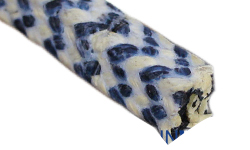
Graphite PTFE and Aramid Fiber in Zebra Braided Packing
Introducing the groundbreaking Graphite PTFE and Aramid Fiber in Zebra Braided Packing from Kaxite Sealing, an advanced sealing solution engineered for high-pressure and high-temperature applications. This product combines superior graphite for enhanced thermal conductivity, PTFE for chemical resistance, and aramid fiber for exceptional strength, ensuring long-lasting durability and reliability in demanding industrial environments. Ideal for pumps, valves, and compressors in sectors like oil, gas, and chemical processing, it minimizes leaks and reduces maintenance downtime, boosting operational efficiency. Users will experience unmatched performance and peace of mind, thanks to its unique zebra braided design that sets it apart from conventional packings. Choose Kaxite Sealing for a seamless, trustworthy sealing experience that elevates your operations.