Factory in China
What Are Corrugated Gaskets?
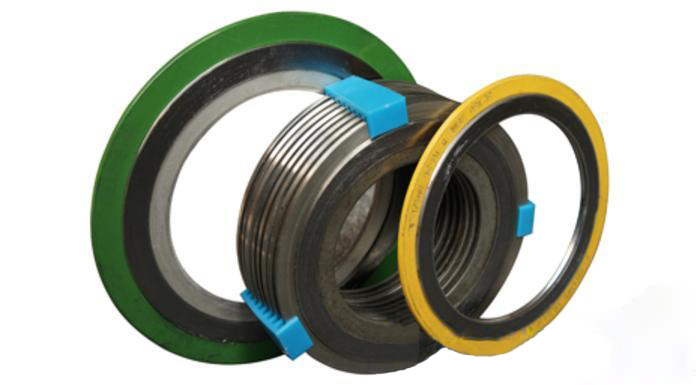
In the demanding world of industrial sealing, where pressure, temperature, and media compatibility are critical, Corrugated Gaskets stand out as a superior engineering solution. Also known as serrated gaskets or corrugated metal gaskets, they are precision-formed mechanical seals designed to create a leak-tight barrier between two mating flanges. Unlike flat gaskets, their defining characteristic is a series of concentric, machined grooves or corrugations on one or both sealing faces. This unique design provides exceptional performance in high-load applications by concentrating the sealing force along the crests of the corrugations, resulting in a highly effective metal-to-metal seal. At Kaxite Sealing, we engineer these gaskets to meet the most rigorous international standards, ensuring reliability in pipelines, pressure vessels, heat exchangers, and other critical infrastructure across the oil & gas, chemical processing, power generation, and aerospace industries. Their ability to handle extreme conditions makes them an indispensable component for engineers and maintenance professionals seeking long-term, dependable sealing solutions.
Key Advantages of Kaxite Sealing Corrugated Gaskets
Choosing the right gasket is paramount for system integrity and safety. Kaxite Sealing's corrugated gaskets offer a compelling set of advantages over conventional sealing methods:
- High Pressure and Temperature Resistance: The all-metal construction (or metal-core design) allows these gaskets to perform reliably in services exceeding 1500°F (815°C) and very high pressures, where non-metallic gaskets would fail.
- Excellent Creep Relaxation Resistance: The corrugated structure provides inherent spring-back, compensating for potential loosening of flange bolts due to system vibrations or thermal cycling. This maintains a consistent sealing load over extended periods.
- Low Bolt Load Requirement: Due to the concentrated sealing force on the corrugation crests, a lower initial bolt torque is often required to achieve an effective seal compared to flat gaskets. This reduces stress on flanges and bolts.
- Superior Sealing Performance: The metal-to-metal contact line created by the corrugations provides an exceptionally tight seal against a wide range of media, including gases, steam, hydrocarbons, and aggressive chemicals.
- Durability and Reusability: Made from robust materials like stainless steel, nickel alloys, or titanium, Kaxite corrugated gaskets are highly durable and can often be reused after careful inspection, offering excellent lifecycle value.
- Versatility in Design: They can be supplied plain, with a centering ring, or as a fully jacketed gasket with soft filler material (like graphite or PTFE) encapsulated within the corrugations for specific chemical or temperature needs.
Technical Specifications & Product Parameters
Kaxite Sealing manufactures corrugated gaskets to precise customer specifications and industry standards. Below are the key parameters that define our product range.
Standard Materials of Construction
The selection of material is critical and depends on the service environment (temperature, pressure, media). Our standard offerings include:
- Carbon Steel: A cost-effective option for general service with temperatures up to 1000°F (538°C).
- Stainless Steel 304/304L, 316/316L: Excellent corrosion resistance for a wide range of chemical services and high-temperature applications up to 1500°F (815°C).
- Alloy 20: Superior resistance to sulfuric acid and other aggressive chemicals.
- Monel 400: Outstanding resistance to sea water, hydrofluoric acid, and alkaline solutions.
- Inconel 600/625: For extreme temperatures and highly oxidizing environments.
- Hastelloy C276: Exceptional resistance to pitting and crevice corrosion in severe chemical processes.
- Titanium: For applications requiring high strength-to-weight ratio and corrosion resistance in chlorides.
- Soft Filler Materials (for jacketed types): Expanded Graphite (GRAFOIL®), PTFE, Ceramic Fiber.
Standard Dimensions & Design Types
Kaxite corrugated gaskets are available in a wide range of sizes and styles to fit various flange standards.
| Style | Description | Typical Applications | Standards |
|---|---|---|---|
| Type CG (Plain Corrugated) | A simple corrugated metal ring without filler or outer rings. Seals on the corrugation crests. | High-temperature steam, heat exchangers, general high-pressure service. | ASME B16.20, DIN 2696 |
| Type CG-F (Corrugated with Filler) | Corrugated metal core with a soft filler material (e.g., graphite) encapsulated in the grooves. Provides dual sealing. | Services requiring tight sealing of hard-to-hold fluids like gases or light hydrocarbons. | ASME B16.20 |
| Type CG-W (Corrugated with Outer Ring) | A plain corrugated metal ring with an integral outer centering/alignment ring. Ensures proper gasket placement. | All standard flange applications where alignment is crucial. | ASME B16.20, DIN 2696 |
| Type CG-FW (Corrugated with Filler & Ring) | Combines a filled core with an outer centering ring. The most common and versatile type. | Wide range of chemical, petrochemical, and refining applications. | ASME B16.20 |
| Kammprofile Gasket | Features a solid metal core with deep, concentric grooves, typically filled with a soft sealing material. Offers very high resilience. | Severe service, high cycling, and large diameter flanges. | Customer Specifications |
| Gasket Type | Max. Temperature (°F / °C) | Max. Pressure (psig / bar) | Note |
|---|---|---|---|
| Plain Corrugated (CG) | 1500 / 815 | Varies with size & corrugation | Rating depends on flange class and design. |
| Graphite Filled (CG-F) | 850 / 454 (in oxidizing atm.) 1200 / 649 (in inert atm.) |
Up to Class 2500 | Limited by filler material oxidation temperature. |
| PTFE Filled (CG-F) | 500 / 260 | Up to Class 600 | Excellent chemical resistance, lower temp limit. |
Surface Finishes & Coatings
- Standard Finish: Mill finish or lightly cleaned surface, suitable for most applications.
- Electropolishing: For ultra-clean or high-purity services (e.g., pharmaceuticals, semiconductors) to minimize particulate generation.
- Anti-Stick Coatings (PTFE, Molybdenum Disulfide): Applied to prevent galling on stainless steel flanges and ease installation/removal.
- Silver Plating: Sometimes used on carbon steel gaskets for high-temperature steam service to prevent oxidation adhesion to flanges.
Frequently Asked Questions (FAQ) About Corrugated Gaskets
Q: When should I choose a corrugated gasket over a spiral wound gasket?
A: Both are excellent for high-pressure services, but the choice depends on the application. Corrugated gaskets generally require a lower bolt load, making them ideal for fragile or low-strength flanges. They also have better spring-back (resilience) than many spiral wound designs, which is advantageous in systems with significant thermal cycling. Spiral wound gaskets may be preferred for services with extreme pressure spikes or where flange face conditions are less than ideal, as the wound structure can compensate for minor imperfections. For standard high-temperature, high-pressure applications with good flange faces, a corrugated gasket from Kaxite Sealing is often the optimal, high-performance choice.
Q: Can corrugated gaskets be used with raised face (RF) and flat face (FF) flanges?
A: Yes, but the selection depends on the gasket type. Plain corrugated gaskets (Type CG) are typically used with flat face or small raised face flanges. For standard raised face flanges, corrugated gaskets with an outer centering ring (Type CG-W or CG-FW) are mandatory. The ring ensures the gasket sits correctly within the bolt circle and does not intrude into the pipe bore. Kaxite Sealing provides detailed guidance on gasket selection based on your specific flange type and rating.
Q: How do I determine the correct material for my corrugated gasket?
A: Material selection is a critical engineering decision based on three primary factors: the chemical composition of the media being sealed (to avoid corrosion), the continuous and maximum operating temperature, and the system pressure. You must also consider potential for galvanic corrosion between the gasket and flange material. Kaxite Sealing's technical team can assist with this selection. We recommend providing full service details (media, concentration, temperature, pressure) so we can recommend the most cost-effective and safe material, such as 316 stainless steel for general chemical service or a specialized alloy like Hastelloy for severely corrosive conditions.
Q: Are corrugated metal gaskets reusable?
A: They can be, but it requires careful inspection. After disassembly, the gasket should be examined for any signs of permanent deformation (flattened corrugations), cracks, pitting, or corrosion. If the corrugations are still well-defined and the metal is in sound condition, the gasket can often be reused. However, for critical services or where safety is paramount, replacement with a new Kaxite Sealing gasket is always the recommended best practice. Reusing a damaged gasket can lead to leaks and potential failure.
Q: What is the proper installation procedure for a corrugated gasket?
A: Correct installation is key to performance. First, ensure both flange sealing surfaces are clean, undamaged, and free of old gasket material. Align the flanges properly before bolting. For gaskets with an outer ring, ensure the ring fits snugly. Hand-tighten all bolts in a crisscross pattern to seat the gasket evenly. Then, use a calibrated torque wrench to tighten the bolts to the specified value in multiple passes (typically three), following the manufacturer's or ASME-recommended bolt tightening sequence. Do not over-torque, as this can crush the corrugations and compromise the seal. Kaxite provides detailed installation guidelines with every order.
Q: Does Kaxite Sealing offer custom-designed corrugated gaskets?
A: Absolutely. While we stock a vast range of standard sizes compliant with ASME, DIN, and other international standards, a significant part of our business is providing custom-engineered sealing solutions. We can manufacture corrugated gaskets in special alloys, non-standard diameters and thicknesses, with unique corrugation patterns, or with proprietary filler materials to meet specific pressure, temperature, or chemical resistance requirements. Our engineering team works directly with clients to develop the perfect seal for challenging applications.
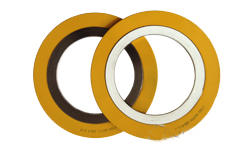
- View as
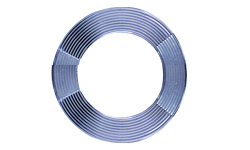
Corrugated Gaskets
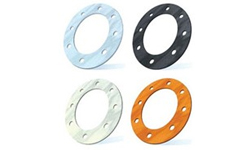
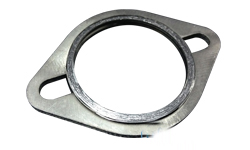
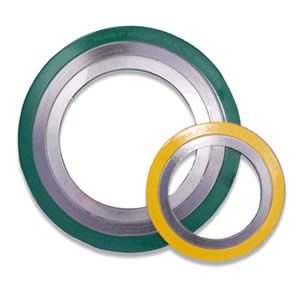
Discover Kaxite Sealing Corrugated Gaskets: premium sealing solutions for industrial and automotive applications. Featuring advanced materials and a unique corrugated design, they ensure superior leak prevention, durability, and temperature resistance, outperforming standard gaskets. Ideal for engineers and maintenance professionals, these gaskets provide reliable performance, boosting confidence and operational efficiency. Experience enhanced sealing with Kaxite Sealing's innovative technology.