Serrated Gaskets Supplier in China for High-Pressure Sealing Solutions
Understanding Serrated Gaskets: The Seal for High-Pressure Integrity
In the demanding world of industrial sealing, where flange faces are anything but perfect, a specific type of gasket rises to the challenge: the Serrated Gasket. Also known as a serrated metal gasket or ring joint gasket, this component is engineered for applications where a high-integrity, leak-proof seal is non-negotiable. Unlike flat gaskets, Serrated Gaskets bite into the flange surfaces, creating multiple concentric barriers against fluid or gas escape. This mechanical interlocking makes them a premier choice for extreme environments involving high pressure, high temperature, and volatile media. At Kaxite Sealing, we specialize in manufacturing these critical sealing components to the highest standards, ensuring reliability where it matters most.
The principle behind their effectiveness is straightforward yet brilliant. The serrations—concentric, sharp-edged grooves machined onto both faces of a solid metal ring—deform slightly under high bolt load. This deformation allows the sharp peaks to embed into the softer flange material (or a harder one when both surfaces are suitably prepared), filling the microscopic valleys and creating a series of intimate metal-to-metal seals. This design is exceptionally resistant to blowouts and is often specified for systems that cannot tolerate any leakage, such as those in the oil and gas, chemical processing, and power generation industries.
Key Product Parameters and Specifications
Selecting the correct serrated gasket is paramount for safety and performance. The specifications must align perfectly with the service conditions and flange standards. Below are the critical parameters that define a serrated gasket, as engineered by Kaxite Sealing.
Core Material Selection
The gasket material must be compatible with the process fluid, temperature, and pressure. It also must be softer than the flange material to allow for proper biting. Common materials include:
- Soft Iron: A standard, economical choice for many oil and gas applications.
- Low Carbon Steel: Offers good strength and corrosion resistance for general service.
- Stainless Steel (304, 316): For superior corrosion resistance in chemical and marine environments.
- Nickel Alloys (Inconel, Monel): For extreme temperatures and highly corrosive media.
- Copper & Aluminum: Used in specific applications for their excellent conductivity and malleability.
Detailed Dimensional Standards
Serrated gaskets are manufactured to precise international standards to ensure interchangeability and fit. The most common standards are ASME B16.20 (for ring joint gaskets) and API 6A. Key dimensions include:
| Dimension | Description | Typical Standards |
|---|---|---|
| Pitch Diameter | The diameter at the center of the gasket's cross-section. Critical for seating in the flange groove. | R-series (R, RX, BX) per ASME B16.20 |
| Width (Cross-Section) | The thickness of the ring from the inner to outer diameter. Affects sealing pressure. | Varies by ring number (e.g., R45, R50) |
| Height / Thickness | The vertical height of the ring. Must match the flange groove depth. | Precisely controlled to 0.01mm tolerance |
| Serrations per Inch | The number of concentric grooves. Finer serrations can offer better sealing on smoother flanges. | Commonly 20, 24, or 28 serrations per inch | Surface Finish | The sharpness and precision of the serrated teeth. A critical quality factor from Kaxite Sealing. | Machined to a sharp 90-degree apex |
Pressure-Temperature Ratings
The performance of a serrated gasket is directly tied to its Pressure-Temperature (P-T) rating, which is determined by the material and design. Kaxite Sealing gaskets are rated according to ASME B16.5 and B16.47 for corresponding flange classes (150, 300, 600, 900, 1500, 2500).
Serrated Gaskets: Frequently Asked Questions (FAQ)
Q: What is the primary advantage of a serrated gasket over a flat gasket or a spiral wound gasket?
A: The primary advantage is its superior leak-tightness under very high pressure and thermal cycling. The multiple metal-to-metal contact lines created by the serrations act as a labyrinth seal, making it extremely difficult for media to penetrate. While spiral wound gaskets are excellent for a wide range of services, serrated gaskets are often specified for the most severe services where even minimal leakage is unacceptable, such as in wellhead equipment, reactor connections, and high-pressure steam lines.
Q: Can a serrated gasket be reused after it has been compressed?
A: It is generally not recommended to reuse a serrated gasket. The sealing action relies on the plastic deformation of the serration tips as they bite into the flange. Once disassembled, the serrations are already flattened and will not create the same effective seal upon re-torquing. Reuse can lead to leaks. Kaxite Sealing always advises using a new, unused gasket for each connection to guarantee seal integrity.
Q: How do I choose between a soft iron and a stainless steel serrated gasket?
A: The choice hinges on corrosion resistance and flange hardness. Soft iron is suitable for hydrocarbon services, water, and steam where corrosion is minimal, and it readily conforms to carbon steel flanges. Stainless steel is mandatory when the process media is corrosive (acids, chlorides) or when operating in a marine environment. The flange material should always be harder than the gasket material; a stainless gasket may be needed with stainless flanges to achieve the necessary bite.
Q: What is the difference between an R-style and a BX-style ring gasket?
A: This is a crucial distinction. R and RX-style gaskets are oval or octagonal in cross-section and seal in a tapered groove in the flange. They are standard for ASME B16.5 flanges. BX-style gaskets have a rectangular cross-section and seal in a rectangular groove. They are designed for higher pressure applications, typically per API 6A specifications for wellhead and Christmas tree equipment, and feature pressure-energizing vent holes. Using the incorrect style for a flange groove will result in seal failure.
Q: What torque values should be used when installing a Kaxite Sealing serrated gasket?
A: Installation torque is critical and must follow the flange manufacturer's or system engineer's specifications. It depends on the bolt size, grade, flange class, and gasket type. Over-torquing can crush the gasket, destroying the serrations, while under-torquing will not achieve the necessary bite. Kaxite Sealing provides detailed installation guidelines with our products, but the final torque procedure should always reference the applicable engineering standards for the specific joint.
Q: How does Kaxite Sealing ensure the quality of its serrated gaskets?
A: At Kaxite Sealing, quality is embedded in our process. We start with certified raw materials, traceable to their mill source. Our CNC machining centers produce serrations with unmatched consistency and sharpness. Every batch undergoes rigorous dimensional inspection using calibrated micrometers and optical comparators. For critical applications, we can provide material test certificates (MTCs) and offer full traceability. Our commitment is to deliver a gasket that performs reliably from the first torque to the last.
Applications and Industry Use
The robustness of serrated gaskets makes them indispensable in several heavy industries. Their ability to maintain a seal under extreme conditions prevents downtime, environmental hazards, and safety incidents.
- Oil & Gas Upstream: Wellhead assemblies, Christmas trees, manifolds, and blow-out preventers (BOPs) where pressures can exceed 15,000 psi.
- Refining & Petrochemical: High-pressure reactor flanges, hydrocracker units, and critical valve connections handling hydrogen, sour gas, and high-temperature hydrocarbons.
- Power Generation: Main steam lines, turbine inlet connections, and high-pressure feedwater systems in fossil fuel and nuclear plants.
- Chemical Processing: Connections for reactors and vessels containing aggressive or toxic chemicals at high pressure.
- High-Pressure Testing: Used in test benches and equipment for validating the pressure integrity of other components.
The Kaxite Sealing Advantage
Choosing Kaxite Sealing for your serrated gasket needs means partnering with a specialist focused on precision and reliability. We understand that a gasket is a small component with a massive responsibility. Our expertise lies not just in manufacturing but in application engineering—helping you select the right material and style for your specific pressure, temperature, and media conditions. With stringent quality control, on-time delivery, and technical support, we provide more than just a product; we provide a guarantee of sealing performance for your most critical applications.
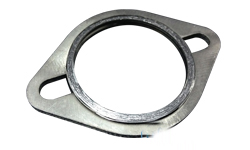
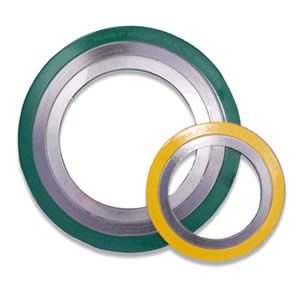
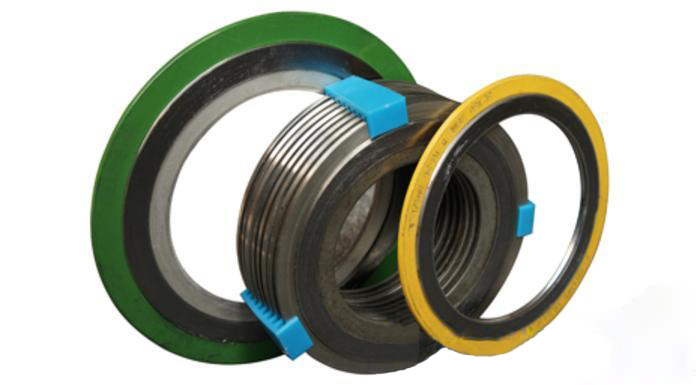
- View as
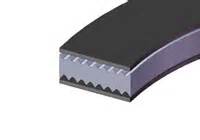
Kammprofile Gasket Basic Style
Experience reliable sealing with the Kammprofile Gasket Basic Style from Kaxite Sealing. This essential gasket excels in industrial applications, offering superior durability and leak-proof performance. Its robust design ensures long-term efficiency, making it ideal for engineers and maintenance professionals. Elevate your projects with our trusted solution today.
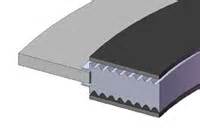
Kammprofile Gasket with Loose Outer Ring
Discover Kaxite Sealing's Kammprofile Gasket with Loose Outer Ring, a sealing solution for demanding industrial applications like flanges. Featuring a robust design, this gasket ensures reliable performance under high pressure and temperature, minimizing leaks and downtime. Ideal for engineers and manufacturers, it offers a secure, worry-free experience. Its unique loose outer ring design enhances assembly ease and durability, setting it apart. Choose Kaxite Sealing for peace of mind in critical operations.
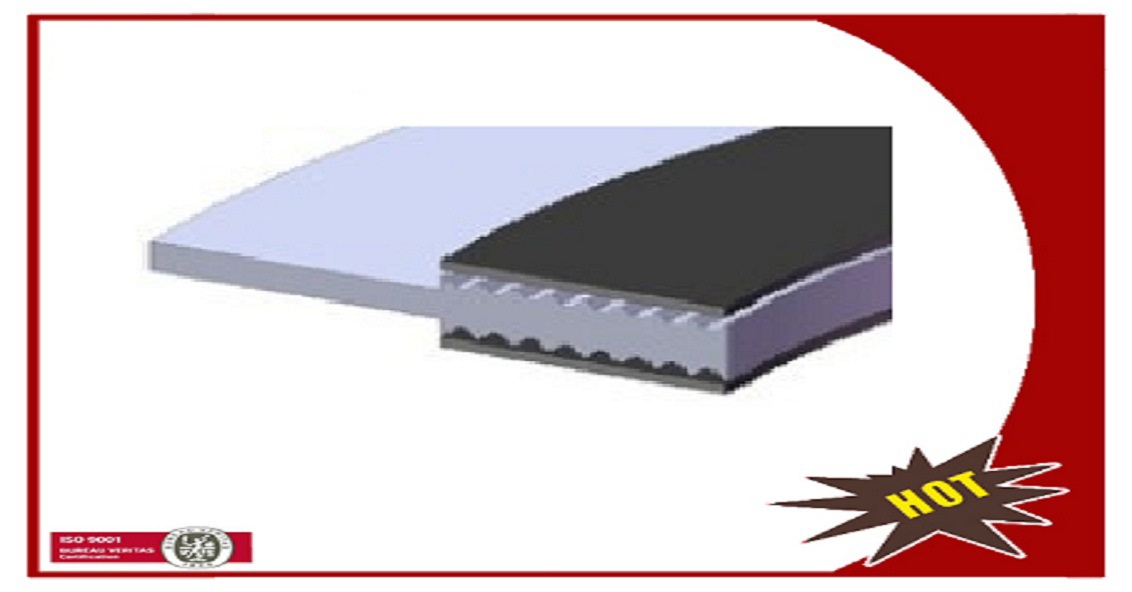
Kammprofile Gasket with Integral Outer Ring
Discover Kaxite Sealing's Kammprofile Gasket with Integral Outer Ring, a cutting-edge sealing solution engineered for high-pressure and high-temperature environments. Its innovative integral outer ring design ensures superior leak-tight performance, enhanced durability, and easy installation, making it ideal for industries like oil and gas, chemical processing, and power generation. Experience unmatched reliability and efficiency—choose Kaxite Sealing for a seamless, worry-free operation.