High-Performance PTFE Fiber Manufacturer in China for Industrial Applications
What is PTFE Fiber?
PTFE Fiber, or Polytetrafluoroethylene Fiber, is a high-performance synthetic material engineered from the polymerization of tetrafluoroethylene. It represents the fibrous form of PTFE, best known by the brand name Teflon®. Unlike the solid or coated forms, PTFE fiber is woven, knitted, or felted into fabrics and yarns, unlocking a unique combination of properties that solid PTFE cannot offer. At Kaxite Sealing, we specialize in transforming this advanced polymer into robust sealing solutions and industrial textiles designed to perform in the most demanding environments. Our expertise lies in leveraging the inherent qualities of PTFE to create fibers that deliver unparalleled chemical resistance, thermal stability, and durability.
Key Characteristics and Advantages of PTFE Fiber
The superiority of PTFE fiber for critical applications stems from its exceptional physical and chemical properties. These characteristics make it the material of choice across aerospace, chemical processing, filtration, and sealing industries.
- Extreme Chemical Resistance: Inert to nearly all industrial chemicals and solvents, including strong acids, bases, and oxidizing agents.
- Exceptional Thermal Stability: Maintains integrity and performance across a vast temperature range, from -260°C (-436°F) to +260°C (+500°F), with short-term tolerance even higher.
- Ultra-Low Coefficient of Friction: Provides excellent non-stick and self-lubricating properties, reducing wear in dynamic applications.
- Excellent Dielectric Properties: A superb electrical insulator, even at high temperatures and in humid conditions.
- Outstanding Weathering and UV Resistance: Does not degrade or become brittle when exposed to sunlight, ozone, or extreme weather.
- High Purity and Non-Toxicity: Compliant with FDA regulations for food and pharmaceutical contact, and suitable for cleanroom environments.
- Flame Resistance: Inherently non-flammable; it will not support combustion.
Kaxite Sealing PTFE Fiber Product Specifications
Kaxite Sealing offers a comprehensive range of PTFE fiber products tailored for specific industrial needs. Our manufacturing process ensures consistent quality, high tenacity, and optimal performance. Below are the detailed parameters for our standard PTFE multifilament yarn, a core product for braided packing and high-performance fabrics.
| Parameter | Specification | Test Method / Notes |
|---|---|---|
| Fiber Type | Multifilament, Sintered | Provides superior strength and flexibility compared to monofilament. |
| Standard Denier | 400 D, 800 D, 1200 D, 2000 D | Custom deniers available upon request. |
| Filament Count | Varies by denier (e.g., 100, 200 filaments) | Fine filaments ensure high packing density and smooth surface. |
| Tensile Strength | ≥ 3.5 cN/dtex | ASTM D2256. Offers excellent mechanical robustness. |
| Elongation at Break | 15% - 25% | ASTM D2256. Provides necessary give for sealing applications. |
| Operating Temperature Range | -260°C to +260°C (-436°F to +500°F) | Continuous use. Short-term peaks up to 300°C (572°F) possible. |
| Melting Point | Approximately 327°C (621°F) | Does not melt but transitions; above 260°C, gradual degradation begins. |
| Coefficient of Friction | 0.05 - 0.10 (dynamic, against steel) | One of the lowest of any solid material. |
| Chemical Resistance | Resistant to virtually all chemicals | Attacked only by molten alkali metals and certain fluorine compounds under extreme conditions. |
| Color | Natural White (Brownish) | Can be treated or blended for specific color requirements. |
| Moisture Regain | 0% | Absolutely hydrophobic; does not absorb water. |
Primary Applications of PTFE Fiber
The unique properties of PTFE fiber make it indispensable in sectors where failure is not an option. Kaxite Sealing's products are integral to the following applications:
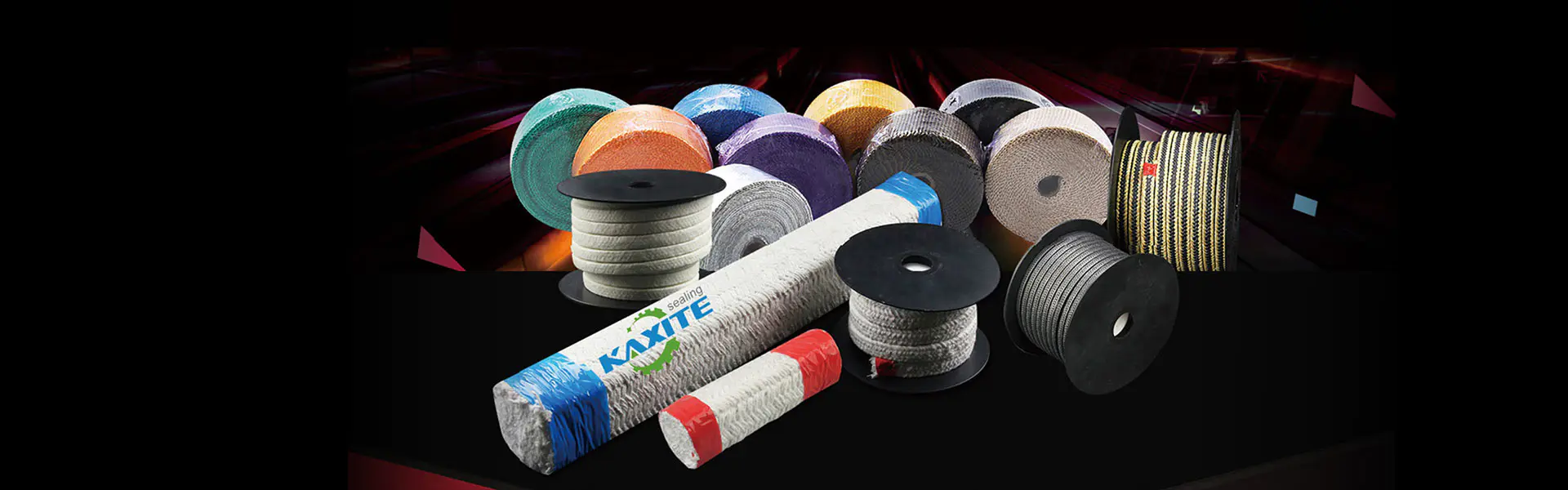
- Mechanical Seals & Braided Packing: Used as the core component in braided compression packings for pumps, valves, and agitators handling corrosive fluids and high temperatures. Kaxite Sealing packings offer long service life and minimal shaft wear.
- High-Temperature Filtration: Woven into filter bags and felts for baghouses in cement, carbon black, and waste incineration plants, capable of withstanding hot, acidic, or alkaline gas streams.
- Expansion Joints & Bellows: Fabrics made from PTFE fiber are used in flexible connections for ducting and exhaust systems, accommodating movement while resisting chemical corrosion and heat.
- Electrical Insulation: Served as sleeving, lacing, and wrapping materials for wires and cables in aerospace, military, and high-temperature electronics.
- Conveyor Belts & Release Fabrics: Non-stick surfaces for industries like food processing, laminating, and composite manufacturing, ensuring easy product release and reduced downtime for cleaning.
- Safety & Protective Apparel: Used in felts and needled fabrics for firefighters' turnout gear, welding blankets, and protective covers due to its flame-resistant and heat-blocking properties.
Frequently Asked Questions (FAQ) About PTFE Fiber
What is the main difference between PTFE fiber and PTFE tape?
PTFE fiber is a textile material composed of continuous filaments or staple fibers, which can be woven, braided, or felted. PTFE tape (thread seal tape) is a thin, unsintered film used primarily for sealing pipe threads. The fiber form offers much higher mechanical strength, flexibility, and temperature resistance, making it suitable for dynamic sealing and structural textile applications.
Can PTFE fiber be used for packing in food-grade applications?
Yes, provided it is manufactured to the appropriate standards. Kaxite Sealing offers PTFE fiber products that are compliant with FDA 21 CFR 177.1550 for incidental food contact. They are non-toxic, odorless, and will not contaminate process streams, making them ideal for food, beverage, and pharmaceutical industries.
How does the temperature resistance of PTFE fiber compare to other high-performance fibers like Aramid or Fiberglass?
PTFE fiber offers a broader usable temperature range. While aramids (e.g., Kevlar®) degrade around 400-450°F (204-232°C) and fiberglass becomes brittle at very low temperatures, PTFE fiber performs reliably from cryogenic temperatures up to 500°F (260°C) continuously. It also does not support combustion, unlike some aramids which may char.
Is PTFE fiber difficult to process or weave?
Due to its extremely low coefficient of friction and high stiffness, PTFE fiber presents challenges in textile processing. It requires specialized equipment and expertise to spin, twist, and weave effectively. Kaxite Sealing utilizes proprietary techniques and state-of-the-art machinery to produce consistent, high-quality yarns and fabrics that meet precise industrial specifications.
What are the limitations of PTFE fiber?
The primary limitations are its relatively low creep resistance (it can cold-flow under sustained high load) and its moderate abrasion resistance compared to some other engineered fibers. However, at Kaxite Sealing, we address these limitations through intelligent product design—such as blending with other fibers (e.g., carbon or aramid) in our sealing products or using specific weave patterns—to enhance performance for the specific application.
How should products made from PTFE fiber, like braided packing, be installed and maintained?
Proper installation is key. For braided packing, the shaft or stem should be clean and smooth. Rings should be cut precisely and staggered 90 degrees. Follow the manufacturer's torque specifications during gland tightening. Initial leakage is normal; a brief run-in period allows the packing to seat. Periodic re-torquing may be necessary as the packing consolidates. Kaxite Sealing provides detailed installation guides with all our packing products to ensure optimal service life.
Can PTFE fiber be recycled or disposed of safely?
PTFE is chemically inert and non-toxic, so landfill disposal is generally considered safe. However, as a high-value fluoropolymer, recycling is increasingly viable. Specialized thermal processes can depolymerize PTFE scrap to recover valuable monomers. Kaxite Sealing is committed to sustainable practices and advises customers on end-of-life options for our products, promoting recycling where available.