Non-asbestos Gaskets Manufacturer in China for Industrial Durability and Safety
Non-asbestos Gaskets: The Modern, Safe, and High-Performance Sealing Solution
In industrial applications where safety, durability, and reliability are non-negotiable, the shift from traditional asbestos-based materials to advanced non-asbestos alternatives represents a significant leap forward. Non-asbestos gaskets are engineered to provide superior sealing performance without the associated health and environmental risks of asbestos. At Kaxite Sealing, we specialize in manufacturing premium-grade non-asbestos gasket materials that meet the rigorous demands of modern industry, offering a perfect blend of safety, resilience, and technical excellence for your critical sealing applications.
What Are Non-Asbestos Gaskets?
Non-asbestos gaskets are sealing components manufactured using synthetic fibers, aramid fibers (like Kevlar), glass fibers, carbon fibers, elastomeric binders, and other filler materials. These components are combined under high pressure and temperature to create a robust, flexible sheet material capable of withstanding extreme conditions. Designed as a direct and superior replacement for traditional asbestos gaskets, they eliminate the risk of lung diseases and contamination while often providing enhanced chemical resistance, temperature tolerance, and pressure handling capabilities.
Key Advantages of Kaxite Sealing Non-Asbestos Gaskets
- Complete Safety & Compliance: Fully compliant with global health and safety regulations (OSHA, REACH, RoHS). Zero asbestos content ensures a safe workplace and eliminates long-term liability.
- Exceptional Temperature Resistance: Capable of performing reliably in a wide range from cryogenic applications up to 1000°F (538°C), depending on the specific grade.
- Superior Chemical Resistance: Formulated to resist a broad spectrum of chemicals, oils, fuels, acids, and alkalis, ensuring integrity in aggressive media.
- High Pressure & Compression Recovery: Excellent creep relaxation resistance maintains bolt load, preventing leaks under high pressure and thermal cycling.
- Versatility & Wide Application Range: Suitable for flanges, pumps, valves, heat exchangers, and engines across industries like oil & gas, chemical processing, power generation, marine, and automotive.
- Easy to Cut & Install: Available in sheets, rolls, or pre-cut shapes. Can be easily fabricated on-site with standard tools for custom gasket creation.
Kaxite Sealing Non-Asbestos Gasket Material Parameters & Specifications
Our product line is categorized into several performance-based grades. Below are detailed specifications for our flagship materials.
Standard Performance Grades
| Grade Code | Primary Composition | Temperature Range | Max Pressure (PSI) | pH Range | Typical Applications |
|---|---|---|---|---|---|
| KX-NA1500 | Aramid Fiber, NBR Binder | -40°F to 400°F (-40°C to 204°C) | 1500 | 3 - 11 | General purpose, water, steam, mild chemicals |
| KX-NA2100 | Glass Fiber, SBR Binder | -50°F to 750°F (-46°C to 399°C) | 2100 | 1 - 12 | Hot oils, exhaust systems, moderate acids/alkalis |
High-Performance & Specialty Grades
| Grade Code | Primary Composition | Temperature Range | Max Pressure (PSI) | pH Range | Key Feature |
|---|---|---|---|---|---|
| KX-NA3500HP | Carbon Fiber, FKM Binder | -100°F to 1000°F (-73°C to 538°C) | 3500 | 0 - 14 | Extreme chemical & thermal resistance |
| KX-NA-FOOD | Mineral Fiber, FDA-approved Elastomers | -20°F to 500°F (-29°C to 260°C) | 1200 | 2 - 10 | FDA, NSF compliant for food & beverage |
| KX-NA-LS | Ceramic Fiber, Inorganic Binders | Up to 1600°F (871°C) | 800 | N/A | Low smoke, zero halogen, for offshore/safety-critical zones |
Physical & Mechanical Properties Table
| Property | Test Method | KX-NA1500 | KX-NA2100 | KX-NA3500HP |
|---|---|---|---|---|
| Tensile Strength (psi) | ASTM F152 | 2800 | 3200 | 4500 |
| Compressibility (%) | ASTM F36 | 12 ± 3 | 10 ± 3 | 8 ± 2 |
| Recovery (%) | ASTM F36 | 50 | 45 | 40 |
| Creep Relaxation (%) | ASTM F38 | 25 | 20 | 15 | Density (g/cm³) | ASTM D792 | 1.75 | 1.95 | 2.10 |
Frequently Asked Questions (FAQ) About Non-Asbestos Gaskets
Q: Are non-asbestos gaskets as durable and effective as traditional asbestos gaskets?
A: Yes, modern non-asbestos gaskets from reputable manufacturers like Kaxite Sealing are not only equivalent but often superior to traditional asbestos gaskets. Advances in fiber technology and compound formulation have resulted in materials that offer excellent thermal stability, better chemical resistance in many applications, and more consistent sealing performance without the health hazards. Their predictable compression and recovery properties also contribute to more reliable long-term sealing and joint integrity.
Q: How do I select the right grade of non-asbestos gasket for my application?
A: Selection depends on several key service conditions. First, identify the media (chemical type, concentration), the continuous and peak operating temperatures, and the system pressure. Also, consider flange surface finish and bolt load. Cross-reference these parameters with the manufacturer's specifications. For example, use our KX-NA1500 for general hot water services, KX-NA2100 for hydrocarbon services, and KX-NA3500HP for aggressive chemical or high-temperature flanges. Kaxite Sealing's technical team can provide detailed selection support.
Q: Can non-asbestos gaskets be used for all the same applications as asbestos gaskets?
A: In the vast majority of industrial applications, yes. They are designed as direct replacements. However, for historically extreme applications involving molten metals or certain highly specific corrosive processes, a specialty grade must be carefully selected. The Kaxite Sealing range includes grades like KX-NA-LS for extreme heat and fire-safe scenarios, ensuring a suitable alternative exists for virtually every application.
Q: How should non-asbestos gaskets be stored and handled?
A: Store sheets or pre-cuts in a cool, dry place away from direct sunlight, moisture, and ozone sources. Keep them flat to avoid permanent curling or bending. Handle with clean gloves to prevent oil or dirt contamination from hands, which can affect sealing performance. Always inspect the gasket material for cracks or damage before installation.
Q: What are the installation best practices for non-asbestos gaskets?
A: Ensure flange faces are clean, smooth, and free of old gasket material and defects. Select the correct gasket size and thickness for the flange. Do not use sealants unless specifically recommended for the grade. Use a calibrated torque wrench to apply the specified bolt load in a star-pattern sequence to ensure even compression. Re-torque after the first heat cycle if recommended by the procedure for the specific application.
Q: Are Kaxite Sealing non-asbestos gaskets certified?
A: Absolutely. Kaxite Sealing materials are rigorously tested and certified to meet international standards. Our standard grades comply with ASTM F104, F146, F36, F38 test methods. Our KX-NA-FOOD grade holds relevant FDA and NSF certifications for incidental food contact. Materials are also documented to be asbestos-free with supporting Mill Test Reports (MTRs) and Certificates of Analysis (CoA) available upon request.
Q: Can I get custom shapes and sizes from Kaxite Sealing?
A: Yes. Kaxite Sealing offers full custom fabrication services. We can die-cut, water-jet cut, or laser-cut precise gaskets from any of our sheet materials to match your provided drawings or sample parts. This ensures a perfect fit, optimal material usage, and saves you valuable production time.
Industries and Applications Served by Kaxite Sealing
The adaptability and safety of our non-asbestos materials make them indispensable across a broad industrial spectrum.
- Oil & Gas: Pipeline flanges, wellhead equipment, refinery processing units, tank fittings.
- Chemical & Petrochemical: Reactor flanges, pump seals, valve bonnets, acid storage systems.
- Power Generation: Steam turbine connections, boiler manways, heat exchanger flanges in nuclear, fossil, and renewable plants.
- Marine & Shipbuilding: Engine head gaskets, pump seals, piping systems on vessels and offshore platforms.
- Water & Wastewater: Pump housings, pipe flanges, clarifier equipment, valve seals.
- Food, Beverage & Pharmaceutical: Processing vessel flanges, sanitary fittings, homogenizer seals using FDA-compliant grades.
- Pulp & Paper: Digester flanges, bleaching equipment, paper machine steam joints.
- View as
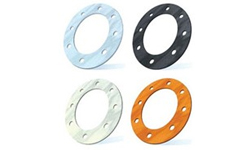
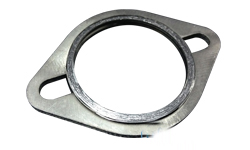
Non-asbestos Rubber Gasket
Discover Kaxite Sealing's Non-asbestos Rubber Gasket, a high-performance sealing solution crafted for durability and safety. Made from premium non-asbestos materials, this gasket offers superior leak prevention, heat resistance, and eco-friendliness, ideal for industrial and automotive applications. Experience reliable performance that builds trust and enhances efficiency. Choose innovation with Kaxite—secure your equipment today!