High-Quality Rubber Sheet Factory in China for Industrial Applications
What is a Rubber Sheet?
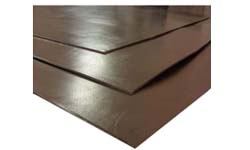
A Rubber sheet is a versatile and essential industrial material manufactured from elastomers, primarily natural or synthetic rubber. These sheets are produced through processes like calendering or extrusion, resulting in flat, uniform slabs available in various thicknesses, widths, and hardness levels. The primary function of a Rubber sheet is to provide effective sealing, insulation, cushioning, and protection against environmental factors such as moisture, dust, chemicals, and abrasion. At Kaxite Sealing, we engineer our Rubber sheets to meet precise specifications, ensuring reliability in demanding applications across diverse sectors including automotive, construction, manufacturing, and aerospace. The material's inherent properties—elasticity, resilience, and durability—make it an indispensable component for gaskets, seals, linings, and mounting pads.
Key Features and Advantages of Kaxite Sealing Rubber Sheets
Choosing the right Rubber sheet is critical for operational efficiency and safety. Kaxite Sealing products stand out due to our commitment to quality and performance.
- Superior Material Consistency: Our sheets offer uniform thickness and density, eliminating weak spots and ensuring predictable performance under stress.
- Exceptional Environmental Resistance: Formulated to withstand specific challenges like ozone, UV radiation, extreme temperatures, and various oils or chemicals.
- High Tensile Strength and Tear Resistance: Engineered to endure stretching and puncturing, which extends the product's service life in high-wear environments.
- Excellent Compression Set Properties: Our sheets return to their original shape after prolonged compression, maintaining a tight seal over time.
- Customization Capability: We provide extensive customization options in compound formulation, dimensions, hardness, and color to match exact application requirements.
- Compliance and Certification: Many of our Rubber sheet grades meet international standards such as ASTM, ISO, UL, and FDA requirements for food-grade applications.
Technical Specifications & Material Properties
Selecting a Rubber sheet requires careful consideration of its technical parameters. Below is a detailed breakdown of common specifications for Kaxite Sealing products.
Standard Physical Property Ranges
- Thickness: Available from 0.5mm (0.020") up to 50mm (2.0") and beyond.
- Width: Standard rolls up to 1500mm (59") wide; custom widths available.
- Hardness (Shore A): Ranges from very soft (30 Shore A) to extremely hard (90 Shore A).
- Tensile Strength: Typically between 5 MPa (725 psi) and 20 MPa (2900 psi), depending on the compound.
- Elongation at Break: Can vary from 100% to 600%, indicating the material's stretchability before tearing.
- Operating Temperature Range: Standard compounds: -40°C to +100°C (-40°F to +212°F). Specialized compounds (e.g., silicone, fluorocarbon) can range from -60°C to +230°C (-76°F to +446°F).
Rubber Sheet Material Comparison Table
| Material Type | Key Properties | Typical Applications | Temperature Range | Resistance Profile |
|---|---|---|---|---|
| Nitrile Rubber (NBR) | Excellent oil & fuel resistance, good abrasion resistance. | Fuel hoses, gaskets in automotive & machinery, oil seals. | -30°C to +120°C (-22°F to +248°F) | Excellent: Oils, fuels, hydrocarbons. Poor: Ozone, weathering. |
| Neoprene (CR) | Good all-purpose resistance to weather, ozone, and moderate oils. | Weather seals, outdoor gaskets, radiator hoses, marine applications. | -40°C to +100°C (-40°F to +212°F) | Good: Weather, ozone, flame. Moderate: Oils. |
| EPDM Rubber | Superior weather, ozone, and steam resistance. Excellent electrical insulator. | Cooling system seals, roofing membranes, outdoor electrical insulation, automotive seals. | -50°C to +150°C (-58°F to +302°F) | Excellent: Hot water, steam, ozone, weathering. Poor: Oils, fuels. |
| Silicone Rubber | Extreme temperature flexibility, high purity, inert. | Food & medical grade seals, high-temperature gaskets, insulation, aerospace. | -60°C to +230°C (-76°F to +446°F) | Excellent: Extreme temps, UV, oxidation. Poor: Tear strength, abrasion. |
| Fluorocarbon (Viton®/FKM) | Exceptional chemical and high-temperature resistance. | Chemical processing seals, aerospace fuel systems, aggressive fluid handling. | -20°C to +200°C (-4°F to +392°F) | Excellent: Chemicals, acids, oils, high temps. Good: Weathering. |
| Natural Rubber (NR) | High elasticity, tensile strength, and tear resistance. | Anti-vibration mounts, tire inner liners, general-purpose gaskets. | -50°C to +70°C (-58°F to +158°F) | Excellent: Wear, tear, flexibility. Poor: Ozone, oils, sunlight. |
Common Applications of Rubber Sheets
The utility of Rubber sheets spans countless industries. Kaxite Sealing provides solutions tailored to these specific needs.
- Gasketing and Sealing: Cutting custom gaskets for flanges, machinery housings, pumps, and doors to prevent leakage of fluids or gases.
- Industrial Linings: Used as protective liners in tanks, chutes, and hoppers to guard against abrasion from bulk materials like coal, sand, or grain.
- Vibration Damping and Isolation: Mounting pads under heavy machinery, engines, or HVAC units to reduce noise and absorb shock.
- Electrical Insulation: Non-conductive sheets used as barriers in electrical panels, switchgear, and component mounting.
- Flooring and Matting: Safety mats for anti-fatigue in workstations, anti-slip surfaces, and protective flooring in gyms or playgrounds.
- Weatherproofing: Strips and sheets used in construction for sealing windows, doors, and roofing systems against air and water infiltration.
Frequently Asked Questions (FAQ) About Rubber Sheets
Q: How do I choose the right type of Rubber sheet for my application?
A: Selecting the correct Rubber sheet involves analyzing several key factors. First, identify the primary media the sheet will contact (e.g., oil, water, chemicals, ozone). Second, consider the operating temperature range, both continuous and peak. Third, assess mechanical requirements like pressure, compression, and potential for abrasion. Fourth, regulatory needs such as FDA approval for food contact or specific industry standards. Kaxite Sealing's technical team can assist you in evaluating these parameters to recommend the optimal material, such as NBR for oil resistance or EPDM for outdoor weathering.
Q: What is the difference between a molded Rubber gasket and one cut from a sheet?
A: Molded gaskets are manufactured in a mold under heat and pressure, creating precise, complex shapes with consistent cross-sections, ideal for high-volume production. Gaskets cut from a Rubber sheet (die-cut, laser-cut, or hand-cut) are more cost-effective for prototypes, low-volume needs, or large, simple shapes. Sheet-based fabrication offers greater flexibility for on-site adjustments and is perfect for creating replacement gaskets for maintenance and repair operations (MRO). The performance depends on the base material's quality; Kaxite Sealing sheets ensure clean, precise cuts and reliable sealing properties.
Q: Can Kaxite Sealing Rubber sheets be customized?
A: Absolutely. Customization is a core strength at Kaxite Sealing. We can tailor Rubber sheets to your exact requirements. This includes custom compounding to achieve specific hardness, tensile strength, or chemical resistance profiles. We offer non-standard dimensions in thickness, width, and length (sheets or continuous rolls). Custom colors are available for coding or aesthetic purposes. We can also emboss, laminate, or fabricate sheets with adhesive backings for easier installation. Contact us with your specifications for a tailored solution.
Q: How should I store Rubber sheets to ensure maximum shelf life?
A: Proper storage is crucial to prevent premature degradation. Store sheets in a cool, dry, and dark environment, ideally between 10°C and 25°C (50°F and 77°F). Avoid direct sunlight, UV exposure, and proximity to heat sources like radiators or steam pipes. Keep sheets away from ozone-generating equipment like electric motors. Store them flat or on a large-diameter core if rolled to avoid permanent creasing or deformation. Do not stack heavy objects on top. Keep sheets in their original packaging until use and separate different polymer types to prevent chemical migration.
Q: What does "Shore A Hardness" mean, and why is it important?
A: Shore A Hardness is a standardized measure (ASTM D2240) of a material's resistance to indentation, indicating its relative softness or firmness. It is measured with a durometer. A lower number (e.g., 30 Shore A) signifies a softer, more pliable material that conforms easily to uneven surfaces for sealing. A higher number (e.g., 80 Shore A) indicates a harder, more rigid material suited for heavy loads and high-pressure applications. Selecting the correct hardness is vital; too soft a material may extrude under pressure, while too hard a material may not seal effectively on rough surfaces.
Q: Are there electrically conductive Rubber sheets available?
A: Yes, conductive and static-dissipative Rubber sheets are specialized products. They are manufactured by loading the Rubber compound with conductive particles like carbon black or metal fibers. These sheets are used in applications where controlling static electricity is critical, such as in electronics manufacturing (ESD protection), cleanrooms, explosives handling, and EMI/RFI shielding gaskets. Kaxite Sealing can provide sheets with specific surface resistance or volume resistivity ratings to meet your electrostatic discharge (ESD) control requirements.
Q: How do I install and join sheets for larger applications?
A: For large surface areas, sheets can be joined effectively. The preferred method is vulcanization, a process using heat and pressure to create a seamless, homogenous bond that is as strong as the original material. For field installations, solvent-based or two-part adhesive cements designed for specific Rubber types can be used. Surface preparation is key: surfaces must be clean, dry, and roughened. For temporary or non-critical seals, mechanical fastening with overlapped seams and fasteners can be used, though this may create potential leak paths. Kaxite Sealing can provide guidance and compatible bonding agents.
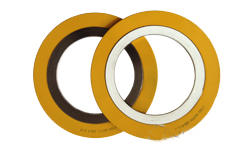
- View as
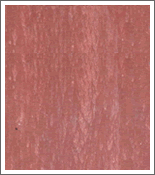
Asbestos Rubber Sheets
Discover Kaxite Sealing's Asbestos Rubber Sheets, designed for superior sealing in industrial and commercial applications. These durable sheets offer resistance to high temperatures and chemicals, making them ideal for engineers, contractors, and maintenance teams. Experience reliable performance that solves leakage problems and enhances safety. Their eco-friendly formulation sets them apart. Invest in quality today!
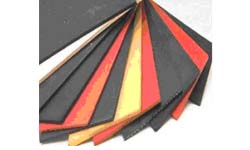
FR Rubber Sheet
Kaxite Sealing offers FR Rubber Sheet, a fire-resistant rubber solution designed for industrial safety. Its key advantages include durable materials and superior resistance, making it ideal for engineers and facilities requiring reliable fire protection in high-risk environments. This product delivers peace of mind by reducing hazards and stands out with exceptional quality. Discover how it enhances your safety standards!
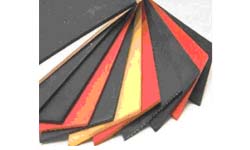
FPM Rubber Sheet
Discover Kaxite Sealing's FPM Rubber Sheet: a premium, durable sealing solution for industrial and automotive applications. Offering superior chemical resistance, high-temperature performance, and flexibility, it's perfect for engineers and manufacturers needing reliable sealing in harsh environments. Experience enhanced safety, reduced downtime, and long-lasting efficiency. Our FPM sheet stands out with its precision engineering and quality assurance, making it the trusted choice for professionals who demand excellence. Elevate your projects with Kaxite Sealing today!
SBR Rubber Sheet
Discover Kaxite Sealing's SBR Rubber Sheet – a durable sealing solution ideal for industrial gaskets and protective linings. Its oil-resistant rubber material ensures long-lasting performance, perfect for engineers, contractors, and maintenance teams in diverse settings from factories to construction sites. Experience reliable leak prevention and peace of mind with our quality-focused design that stands out in the market. Invest in superior sealing today!
NBR Rubber Sheet
Discover Kaxite Sealing's NBR Rubber Sheet: a durable, high-quality sealing solution for industrial and automotive applications. Made from premium nitrile butadiene rubber, it offers excellent resistance to oil, abrasion, and temperature extremes, ensuring long-lasting performance. Ideal for mechanics, manufacturers, and DIY enthusiasts, this versatile sheet provides reliable sealing in demanding environments. Experience enhanced safety and efficiency, knowing you have a superior product compared to basic alternatives. Upgrade your projects today with our proven quality and expert craftsmanship!
EPDM Rubber Sheet
Kaxite Sealing's EPDM Rubber Sheet offers superior durability and flexibility for sealing applications in construction, automotive, and general industry. Its key advantages include excellent weather resistance, long-lasting performance, and ease of installation, solving leakage issues effectively. Ideal for contractors and DIY enthusiasts, it ensures peace of mind with reliable protection. Stand out with our high-quality, cost-effective solution – experience lasting performance with Kaxite Sealing today!