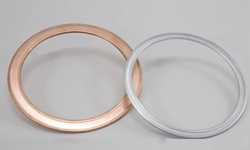
Die-formed Graphite Ring Manufacturer in China for Precision Industrial Applications
In the demanding world of industrial sealing, where extreme temperatures, aggressive chemicals, and high pressures are commonplace, finding a reliable and durable solution is paramount. Among the advanced materials available, the Die-formed Graphite Ring stands out as a cornerstone of modern sealing technology. Engineered for precision and performance, these rings offer a unique combination of properties that traditional packing materials cannot match. At Kaxite Sealing, we specialize in manufacturing high-grade die-formed graphite rings that meet the rigorous standards of industries worldwide.
The manufacturing process is what sets a die-formed ring apart. Unlike machined or stamped graphite, die-forming involves compressing high-purity flexible graphite foil into a precise mold under significant pressure. This process creates a ring with uniform density, enhanced structural integrity, and consistent mechanical properties throughout its structure. The result is a sealing component with minimal creep relaxation, excellent recovery, and superior sealing force retention over long periods, even in the most challenging applications.
Key Advantages of Kaxite Sealing Die-formed Graphite Rings
- Exceptional Thermal Stability: Capable of performing continuously from cryogenic temperatures up to 3000°F (1650°C) in non-oxidizing atmospheres, and up to 750°F (400°C) in oxidizing environments.
- Superior Chemical Inertness: Resistant to a vast array of corrosive media, including acids, alkalis, solvents, and hydrocarbons, making them ideal for chemical processing.
- Excellent Self-Lubrication: The layered structure of graphite provides inherent lubricity, reducing friction and wear on mating surfaces like valve stems and pump shafts.
- High Compressibility and Recovery: The die-forming process allows the material to compress easily to fill gland spaces and recover from thermal and pressure cycling, maintaining a tight seal.
- Low Permeability: The uniform, high-density structure minimizes the path for fluid or gas leakage, ensuring outstanding sealability.
- Long Service Life: Resistant to aging, hardening, and degradation, leading to reduced maintenance frequency and downtime.
Detailed Product Parameters & Specifications
Kaxite Sealing die-formed graphite rings are available in a wide range of standard and custom specifications to fit your exact requirements. Below are the detailed parameters that define our product line.
Material Grades & Properties
| Grade | Density (g/cm³) | Carbon Content (%) | Temperature Range (Oxidizing) | Temperature Range (Inert) | Primary Application |
|---|---|---|---|---|---|
| KG-100 | 1.5 - 1.7 | > 99.5 | -400°F to 750°F (-240°C to 400°C) | -400°F to 3000°F (-240°C to 1650°C) | General Purpose, Flanges, Heat Exchangers |
| KG-200 | 1.7 - 1.9 | > 99.8 | -400°F to 800°F (-240°C to 425°C) | -400°F to 3000°F (-240°C to 1650°C) | High-Density Sealing, Pump & Valve Stems |
| KG-300 (Impregnated) | 1.8 - 2.0 | > 99.0 | -400°F to 550°F (-240°C to 290°C) | -400°F to 3000°F (-240°C to 1650°C) | Corrosive Media, Aggressive Chemicals |
Standard Sizes & Dimensions
| Nominal Size (inches) | Inside Diameter (ID) ±0.005" | Cross-Section (Width) ±0.003" | Standard Gland Depth Recommendation |
|---|---|---|---|
| 1/4" | 0.250 | 1/8", 3/16" | 0.140" - 0.160" |
| 1/2" | 0.500 | 1/8", 1/4" | 0.140" - 0.270" |
| 1" | 1.000 | 1/8", 1/4", 3/8" | 0.140" - 0.400" |
| 2" | 2.000 | 1/4", 3/8", 1/2" | 0.270" - 0.520" |
| 4" | 4.000 | 3/8", 1/2", 5/8" | 0.400" - 0.650" |
Note: Kaxite Sealing can manufacture custom sizes outside these ranges. Metric dimensions are also available upon request.
Physical & Mechanical Properties Table
| Property | Test Method | Typical Value (Grade KG-200) | Unit |
|---|---|---|---|
| Compression Strength | ASTM F36 | 12,000 | psi |
| Recovery (after 25% compression) | ASTM F36 | > 40 | % |
| Creep Relaxation (after 24h at 500°F) | ASTM F38 | < 15 | % loss |
| Thermal Conductivity | ASTM E1461 | 40 - 120 (in-plane) | W/m·K |
| Coefficient of Friction (vs. steel) | ASTM D1894 | 0.05 - 0.15 | - |
| pH Range | - | 0 - 14 | - |
| Emissivity | ASTM E408 | 0.7 - 0.9 | - |
Frequently Asked Questions (FAQ) About Die-formed Graphite Rings
What is the main difference between a die-formed graphite ring and a machined graphite ring?
The primary difference lies in the manufacturing process and resulting material structure. A die-formed ring is created by compressing flexible graphite foil in a mold, yielding a product with uniform, anisotropic properties (stronger in-plane). It has excellent recovery and sealability. A machined ring is cut from a block of extruded or molded graphite, which can be more isotropic but often has lower density, less consistent structure, and potentially more friable edges. Die-forming from Kaxite Sealing typically provides better compression packing characteristics and more reliable performance in dynamic sealing applications.
Can Kaxite Sealing die-formed graphite rings be used in oxygen or strong oxidizing service?
Caution must be exercised. While pure graphite has excellent thermal stability, it can oxidize in the presence of oxygen at elevated temperatures, leading to material loss. For continuous service in oxidizing atmospheres, the maximum recommended temperature is 750°F to 800°F (400°C to 425°C). For higher temperatures or pure oxygen service, Kaxite Sealing offers specially impregnated or oxidized grades (like our KG-300 series) that provide a protective layer to significantly slow the oxidation rate. Always consult our engineering team for specific application details.
How do I select the correct density for my application?
Density is a critical selection parameter. Lower density (1.5-1.7 g/cm³) rings are more compressible and ideal for sealing uneven or damaged flanges where conformity is key. Standard density (1.7-1.9 g/cm³) offers the best balance of compressibility, recovery, and low permeability for most static and dynamic applications like pump and valve stems. High-density or impregnated grades (1.9+ g/cm³) provide maximum strength, lowest permeability, and enhanced chemical resistance for severe service, high-pressure differentials, or aggressive chemicals. The Kaxite Sealing team can help you determine the optimal grade.
Are these rings suitable for both static and dynamic sealing?
Yes, Kaxite Sealing die-formed graphite rings are highly versatile. For static sealing (flanges, heat exchangers, manways), they provide excellent creep resistance and sealability across wide temperature ranges. For dynamic sealing (reciprocating pump rods, rotary valve stems), their self-lubricating nature, high recovery, and low friction coefficient make them an outstanding choice, often outperforming traditional braided packings. The die-formed structure's resilience is key to handling the constant movement without excessive wear or loss of sealing force.
What is the shelf life of a die-formed graphite ring, and how should they be stored?
When stored properly, Kaxite Sealing graphite rings have an virtually indefinite shelf life as the base material is stable and does not degrade over time. The key is to store them in a clean, dry environment at room temperature, away from direct sunlight, excessive moisture, and corrosive fumes. They should be kept in their original packaging until ready for use to prevent contamination from dust or oil. Avoid placing heavy objects on top of them to prevent deformation.
Can these rings be used in food, pharmaceutical, or ultra-pure water applications?
Yes, but specific grades and handling procedures are required. Flexible graphite itself is a pure carbon material and is generally inert. For applications requiring compliance with FDA, USP, or other sanitary standards, Kaxite Sealing offers specially processed grades manufactured in controlled clean environments to minimize contaminants. It is crucial to specify these requirements when ordering. For ultra-pure water, high-purity grades prevent leaching of ions that could affect water quality.
How does installation differ from traditional braided packings?
Installation is generally simpler but requires attention to detail. Unlike braided packings that are wound into the gland, die-formed rings are pre-formed and installed as individual rings. The gland should be clean and smooth. Rings are typically stacked in the gland box, with the joints of adjacent rings staggered by 90 or 180 degrees. Follow the manufacturer's recommended gland clearance and tightening procedure. A major advantage is that they often require less adjustment during initial run-in compared to braided packings, as they are less prone to swelling or thermal expansion issues.
Typical Industries and Applications
The versatility of Kaxite Sealing die-formed graphite rings makes them indispensable across numerous sectors:
- Chemical & Petrochemical: Reactor flanges, agitator seals, heat exchanger gaskets, valve stem packing in contact with acids, alkalis, and hydrocarbons.
- Oil & Gas: High-temperature flanges in refineries, pipeline connections, Christmas tree valves, compressor rod packing.
- Power Generation: Boiler manways, turbine casing seals, soot blower seals, high-temperature valve packing in fossil fuel, nuclear, and geothermal plants.
- Pharmaceutical & Food Processing: Sterilizer doors, mixer seals, pump packing in CIP/SIP systems where cleanliness and non-contamination are vital.
- Automotive & Aerospace: High-temperature test stand fittings, exhaust analysis system seals, and engine research & development applications.
- Industrial Manufacturing: Furnace and oven doors, induction heating equipment, die-casting machine platens, and any application involving extreme heat cycling.
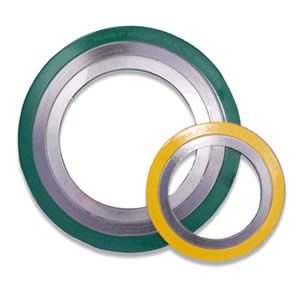
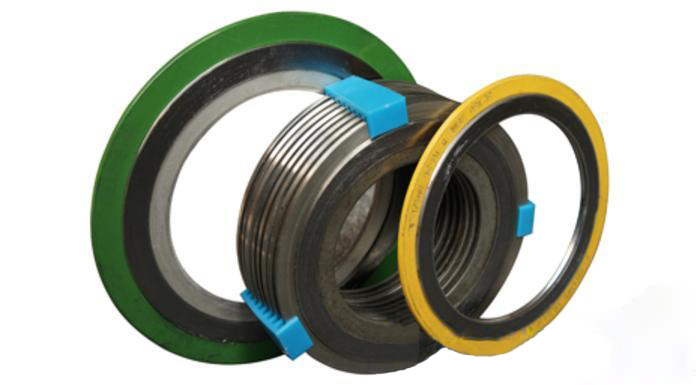
- View as
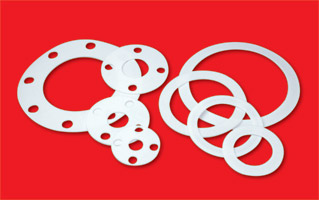
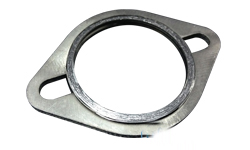
Die-formed Ring
Discover Kaxite Sealing's Die-formed Ring, a precision-engineered sealing solution designed for optimal performance in high-pressure applications. Crafted with durable materials and advanced technology, it ensures reliable, leak-free operation, making it ideal for industrial users seeking enhanced safety and efficiency. Experience superior durability and a perfect fit that sets it apart from competitors, delivering peace of mind and seamless functionality.