What are serrated gaskets and how do they work?
Picture this: a high‑pressure steam line in a power plant suddenly develops a faint hiss. Within hours, a spray of superheated vapor forces an emergency shutdown. The culprit? A failed gasket that couldn’t handle the thermal movement and flange imperfections. For procurement teams, moments like these underscore a simple truth — the right sealing component can mean the difference between continuous production and crippling downtime. What are Serrated Gaskets and how do they work? Serrated gaskets, often called kammprofile gaskets, are constructed from a solid metal core with machined concentric grooves and a soft facing layer, effectively merging the strength of metal with the conformability of a softer seal. They work by concentrating bolt load onto the serration tips, which deform the facing material into flange surface irregularities, creating a labyrinth seal that resists blowout and leakage across wide temperature and pressure swings. This unique mechanism makes them a top choice for critical applications where both safety and reliability are non‑negotiable. In this article, we walk procurement professionals through every facet of serrated gaskets — from engineering principles to practical selection — and show how Ningbo Kaxite Sealing Materials Co., Ltd. addresses these exact challenges with engineered solutions that keep your operations running safely.
- What Are Serrated Gaskets?
- How Do Serrated Gaskets Work?
- Types and Material Choices
- Industrial Applications & Pain Points
- Advantages Over Conventional Gaskets
- How to Select the Right Serrated Gasket
- Frequently Asked Questions
- Conclusion & Next Steps
What Are Serrated Gaskets?
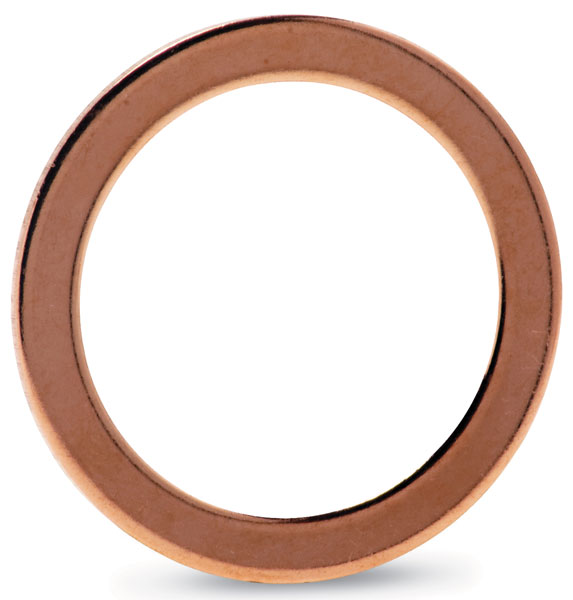
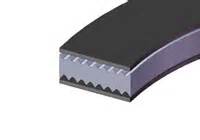
Serrated gaskets are semi‑metallic sealing elements designed for flanged connections that face extreme thermal cycles, aggressive chemicals, or high pressure. The core is typically a stainless steel or other alloy disc with precision‑machined concentric serrations on both faces. A soft facing layer — often flexible graphite, PTFE, or mica — is bonded to each side. This combination gives the gasket outstanding mechanical stability from the metal core and excellent sealability from the compressible facing. Unlike conventional graphite sheet gaskets, which can crumble or extrude under heavy load, the serrated core supports the facing, preventing blowout and retaining integrity even when bolt tension relaxes slightly. Standard styles follow ASME B16.20 and can be ordered with a centering ring for easier installation and enhanced safety. Because the facing material can be selected independently, serrated gaskets serve everything from chemical plants to steam turbine flanges, making them one of the most versatile sealing solutions available.
How Do Serrated Gaskets Work?
The working principle of a serrated gasket centers on stress concentration and multiple sealing lines. When bolts are tightened, the serration tips make line contact with the soft facing. The local pressure is high enough to plastically deform the facing into the grooves of the flange surface, filling minor pits, scratches, and waviness. This leaves a series of concentric sealing rings that act like independent barriers; even if one line is compromised, the next one maintains the seal. Additionally, the metal core dampens vibration and withstands the internal pressure thrust, preventing the gasket from being pushed out of the joint — a common failure mode known as blowout. One frequent question we hear from engineers is:
What are serrated gaskets and how do they work in real‑world service compared to jacketed gaskets? In real‑world service, serrated gaskets outperform double‑jacketed gaskets under thermal cycling because the facing does not lose resilience as quickly. The metal core also provides a positive stop, reducing the risk of over‑compression and allowing simpler bolt‑tightening procedures. For procurement specialists, this translates to less maintenance and longer intervals between turnarounds — a distinct economic advantage.
Types and Material Choices
Selecting the right serrated gasket starts with matching core and facing to the process fluid, temperature, and pressure. Below is a reference table that procurement teams often use to narrow down options. Ningbo Kaxite Sealing Materials Co., Ltd. stocks and manufactures gaskets across all these categories, with custom configurations available on short lead times.
| Type | Core Material | Facing Material | Temperature Range | Typical Pressure Rating | Best For |
|---|---|---|---|---|---|
| Standard serrated | 304/316 SS | Graphite | -200°C to 550°C | Class 150–2500 | Steam, heat transfer fluids |
| Low‑emission | 316L | PTFE | -200°C to 260°C | Class 150–1500 | Acids, chemical services |
| High‑temperature | Alloy C‑276 | Mica or vermiculite | Up to 1000°C | Class 150–900 | Exhaust, gas turbines |
| With centering ring | Carbon steel / SS | Graphite or PTFE | Varies | Class 150–2500 | Easy alignment, blowout prevention |
For more aggressive media such as oxygen or chlorine, engineering the facing treatment and core material is critical. At Ningbo Kaxite, we assist clients in specifying the right combination through a detailed chemical compatibility review, preventing premature failure and procurement delays.
Industrial Applications & Pain Points
Imagine a refinery hydroprocessor unit with a flange face that has become slightly scalloped over years of service. Standard spiral wound gaskets require a near‑perfect surface to seat properly; a worn flange often leads to persistent dripping. The maintenance superintendent faces a tough choice: re‑machine the flange (expensive and time‑consuming) or accept a minor but nagging leak. Serrated gaskets solve this dilemma directly. The soft facing layer conforms to minor defects, and the serrations create a high‑integrity seal even when the flange exhibits slight irregularities. This “forgiving” behavior has made serrated gaskets the go‑to choice in refining, petrochemical, and power generation facilities. In LNG liquefaction plants, where rapid temperature drops from ambient to -160°C occur, the graphite‑faced serrated gasket prevents blowout and retightening requirements that plague other gasket types. The result is reduced fugitive emissions, lower total lifecycle cost, and fewer unplanned shutdowns — all key metrics for modern procurement KPIs.
Advantages Over Conventional Gaskets
When compared with compressed fiber, spiral wound, or ring‑type joint gaskets, serrated designs offer several distinct wins:
- Excellent resistance to blowout – The metal core acts as a solid retainer.
- Superior seal on damaged flanges – Deep serration grooves provide stress relief and adaptation.
- Minimal spring‑back loss – Less relaxation over time, reducing the need for hot re‑torquing.
- Broad chemical compatibility – Choose facing from graphite, PTFE, or mica independently of the core.
- Cost‑effective in the long run – Longer maintenance intervals and fewer leaks generate clear savings.
Procurement managers also appreciate that many serrated gaskets can be sourced in standard ANSI and DIN sizes, cutting inventory complexity. Ningbo Kaxite Sealing Materials Co., Ltd. keeps large raw‑material stocks to fulfill urgent orders without compromising quality, directly addressing the pain point of extended lead times that cripple project schedules.
How to Select the Right Serrated Gasket
Choosing the correct serrated gasket involves evaluating four key factors: operating temperature and pressure, chemical composition of the medium, flange condition, and bolt load availability. A common mistake is ordering a gasket with a facing that outperforms the core temperature limit; for instance, pure graphite can handle 550°C in oxidising environments, but a 304 stainless steel core may begin to lose strength above 450°C. Working with an experienced manufacturer streamlines this process. Many engineers ask:
What are serrated gaskets and how do they work when matched to non‑standard flange dimensions? When matched to non‑standard dimensions, serrated gaskets are typically laser‑ or water‑jet cut from plate stock, then machined with the serration profile. The soft facing is applied afterwards. At Ningbo Kaxite, we offer custom diameter fabrication and full material traceability, so even one‑off specials perform exactly like production parts. We also provide detailed installation torque tables and surface finish recommendations, removing guesswork for field crews.
Frequently Asked Questions
Q: What is the difference between a serrated gasket and a kammprofile gasket?
A: These terms are used interchangeably. Kammprofile is a brand‑derived name for the same grooved‑metal‑core concept. Industry standards such as ASME B16.20 now formally recognise “serrated metal gaskets with soft covering layers.”
Q: Can a serrated gasket be reused?
A: The metal core can often be reused if it was not over‑compressed or corroded, but the soft facing must be replaced. In practice, due to inspection difficulties, most sites treat serrated gaskets as single‑use items to guarantee absolute reliability. Ningbo Kaxite can advise on qualification tests if reusability is a critical cost factor in your operation.
Conclusion & Next Steps
Serrated gaskets deliver a unique blend of strength, forgiveness, and adaptability that few other seal types can match. For procurement professionals, specifying the right serrated gasket means fewer emergency calls, lower total cost of ownership, and safer plant environments. If you are evaluating sealing options for a current project or want to benchmark your gasket specification against industry best practices, we invite you to take the next step. Reach out for a no‑obligation technical discussion or a sample kit tailored to your process conditions.
Ningbo Kaxite Sealing Materials Co., Ltd. is a specialized designer and manufacturer of high‑performance industrial sealing products, including serrated gaskets, spiral wound gaskets, PTFE products, and compression packings. We serve demanding sectors such as oil & gas, chemical processing, power generation, and marine engineering. With a firm commitment to quality, our factory is ISO 9001 certified, and we provide full material certification with every shipment. Visit our website at https://www.synthetic-fiber-packings.com to explore our catalog or email our team directly at [email protected] for a customized proposal. We look forward to solving your sealing challenges.
Kim, S. H. and Oh, S. J., 2017. Evaluation of sealing performance for serrated gaskets used in bolted flange joints. Journal of Mechanical Science and Technology, 31(12), pp. 5755–5762.
Sawa, T. and Miyashita, Y., 2015. FEM stress analysis and sealing performance evaluation of pipe flange connections with kammprofile gaskets. International Journal of Pressure Vessels and Piping, 135, pp. 1–11.
Ando, F., Kobayashi, T. and Suzuki, K., 2014. Leak rate prediction of serrated metal gaskets based on surface topography measurement. Journal of Nuclear Science and Technology, 51(6), pp. 812–820.
Nagata, S., Shoji, T. and Yamaguchi, A., 2019. An experimental study on thermal cycling behavior of graphite‑faced serrated gaskets. Pressure Vessel Technology, 41(4), pp. 045702.
Joshi, D. B. and Kulkarni, S. S., 2016. Comparative analysis of spiral wound and kammprofile gaskets for high‑pressure heat exchangers. International Journal of Engineering Research & Technology, 5(07), pp. 442–447.
Wu, Z., Li, X. and Chen, G., 2021. Creep‑relaxation characteristics of PTFE‑coated serrated gaskets at elevated temperatures. Sealing Technology, 2021(8), pp. 17–24.
Barton, R. L., 2013. Gasket technology for fugitive emission control. Chemical Engineering Progress, 109(10), pp. 30–36.
Derenne, M., Bouzid, A. H. and Marchand, L., 2018. Optimizing serrated gasket geometry for improved leakage‑tightness performance. ASME Journal of Pressure Vessel Technology, 140(5), pp. 051204.
Takagi, K., Taniyama, N. and Hirose, T., 2020. Influence of flange rotation on the sealability of kammprofile gaskets under bending moment. International Journal of Pressure Vessels and Piping, 186, pp. 104144.
Palmer, D. E. and Crossland, J., 2012. The application of metal‑reinforced sealing solutions in LNG services. LNG Journal, September–October, pp. 42–47.
Related News
- How do I remove old sealing materials from surfaces?
- What is the most cost-effective insulation product?
- Which sealing machine is best for food packaging?
- What is the cost range for commercial sealing tools?
- How do PTFE seals perform in high-temperature applications?
- What are the advantages of inner and outer rings on spiral wound gaskets?
Leave me a message