English
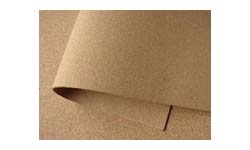
For over two decades, Kaxite Sealing has been at the forefront of providing high-performance sealing solutions. Our flagship Cork Sheet material stands as a testament to our commitment to quality, sustainability, and innovation. Harvested from the renewable bark of the cork oak tree, our cork sheets offer a unique combination of properties unmatched by synthetic alternatives. This natural material is compressible, resilient, fire-resistant, and provides excellent thermal and acoustic insulation. Whether you're an engineer specifying components for industrial machinery, a contractor working on building insulation, or a DIY enthusiast crafting a custom project, understanding the detailed specifications of our cork sheet is crucial for optimal application and performance.
To ensure you select the perfect cork sheet for your needs, we have detailed our standard product parameters below. Kaxite Sealing cork sheets are available in various grades, densities, and thicknesses to meet a wide range of technical requirements.
The following table outlines the primary grades of Kaxite Sealing cork sheet, categorized by density and their corresponding key characteristics. This data is based on rigorous internal testing and industry standards (ASTM, DIN).
| Product Grade | Density (kg/m³) | Available Thickness (mm) | Compression Set (%) Max | Thermal Conductivity (W/m·K) | Primary Recommended Applications |
|---|---|---|---|---|---|
| KAX-NATURAL (Standard) | 180-220 | 1, 1.5, 2, 3, 4, 5, 6, 8, 10, 12 | 25 | 0.040 - 0.045 | General purpose gaskets, vibration damping pads, bulletin boards, craft projects. |
| KAX-DENSE (Industrial) | 300-350 | 3, 5, 6, 8, 10, 12, 15, 20 | 15 | 0.045 - 0.050 | Heavy-duty flange gaskets for oil, fuel, and water systems, engine mounts, industrial insulation. |
| KAX-ACOUSTIC (Premium) | 240-280 | 10, 12, 15, 20, 25, 30 | 20 | 0.038 - 0.042 | Sound insulation in floors, walls, and ceilings, acoustic panel underlay, studio damping. |
| KAX-FLEX (Fabric Backed) | 200-240 | 2, 3, 4, 5 | 30* | 0.042 - 0.046 | Expansion joints, pipe wrapping, irregular surface sealing, flexible insulation jackets. |
*Higher compression set due to enhanced flexibility; recovery remains excellent.
We’ve compiled a list of the most common questions we receive about cork sheet materials. If you have a question not covered here, our Kaxite Sealing technical support team is always ready to assist.
Q: What makes cork sheet a sustainable material choice?
A: Cork is a remarkably eco-friendly resource. The bark of the cork oak tree is harvested every 9-12 years without harming the tree, which can live for over 200 years. This process promotes carbon sequestration and supports biodiverse ecosystems. Kaxite Sealing sources its cork from responsibly managed forests, ensuring a fully renewable and biodegradable (when untreated) product lifecycle that minimizes environmental impact.
Q: How do I select the correct density and thickness for a gasket application?
A: The selection depends on flange surface finish, bolt pressure, and the medium being sealed. For smooth flanges and low-pressure water/air applications, our KAX-NATURAL grade (3-5mm) is often sufficient. For rough cast surfaces, higher pressures, or oils/fuels, KAX-DENSE grade (3-6mm) is recommended as it resists extrusion better. Always ensure the cork sheet thickness is sufficient to fill the flange gap imperfections under compression.
Q: Can Kaxite Sealing cork sheet be used for high-temperature applications?
A: Our standard cork sheets are reliably used in continuous service up to 120°C. For short-term exposure, they can withstand peaks of 150°C. Prolonged exposure above this range can cause the natural resins to harden and reduce resilience. For higher temperature needs, we recommend exploring our composite materials or specific high-temperature treated cork options. Always verify the temperature rating against your specific operating conditions.
Q: How do I cut and install cork sheet gaskets effectively?
A: Cork sheet is easy to work with. For gaskets, place the sheet over the flange and tap gently with a mallet to create an imprint. Cut along the inside of bolt holes first, then the outer profile using a sharp utility knife, scalpel, or die-cutting tools for production. The surface should be clean, dry, and free of old gasket material. Apply a thin, even layer of appropriate gasket sealant if specified. Tighten bolts evenly in a crisscross pattern to the manufacturer's torque specifications to ensure uniform compression.
Q: Is your cork sheet resistant to mold, mildew, and pests?
A: Yes, naturally. Cork contains suberin, a waxy substance that makes it inherently resistant to moisture absorption, mold, mildew, and pests like termites. This makes Kaxite Sealing cork sheet an excellent choice for building applications in areas prone to humidity, such as sub-floors, walls, and roofing underlayment, without the need for toxic chemical treatments.
Q: What is the difference between cork sheet and cork roll?
A: The primary difference is form factor and typical application. Cork sheet from Kaxite Sealing is a rigid, flat panel material ideal for gaskets, insulation boards, and precision cutting. Cork roll is a thinner, more flexible material often used as underlayment for flooring or as a protective wrap. Our KAX-FLEX grade bridges this gap, offering a fabric-backed flexible cork sheet for specific sealing needs.
Q: Do you offer custom fabrication or die-cutting services?
A: Absolutely. Kaxite Sealing provides comprehensive custom fabrication services. We can precision die-cut your cork sheet into any 2D shape, including complex gaskets with multiple holes and contours, based on your CAD drawings or samples. This saves you time, reduces material waste, and guarantees a perfect fit for your assembly line or project requirements. Contact our sales team with your specifications for a quote.
Q: How does the thermal insulation performance of cork compare to foam or fiberglass?
A: Cork sheet offers exceptional thermal insulation due to its closed-cell structure filled with gaseous compartments. With a thermal conductivity (k-value) ranging from 0.038 to 0.050 W/m·K, it performs comparably to many rigid foam boards and significantly better than standard fiberglass batts. Additionally, cork provides superior acoustic damping, compressibility for sealing, and structural integrity that many foam products lack, making it a versatile, multi-functional insulation material.
The versatility of our cork sheet makes it indispensable across numerous sectors. Its natural properties solve complex engineering and design challenges.
With twenty years of specialization, Kaxite Sealing is more than just a supplier. We are your technical partner in sealing solutions. We maintain stringent quality control from raw material selection to final packaging. Our in-house expertise allows us to provide unparalleled technical support, helping you navigate material selection and application challenges. We are committed to innovation, constantly refining our products to meet evolving industry standards and customer demands. When you specify Kaxite Sealing cork sheet, you are choosing a product backed by decades of experience, reliability, and a deep understanding of the material's capabilities and potential.