Factory in China Specializing in Premium Carbon Fiber Solutions for Business Procurement
High-Performance Carbon Fiber Solutions by Kaxite Sealing
In the demanding world of industrial and advanced manufacturing, material selection is paramount. For decades, Kaxite Sealing has been at the forefront of material science, engineering high-performance solutions that withstand extreme conditions. Our flagship line of advanced Carbon Fiber composites represents the pinnacle of this commitment. Engineered for superior strength, exceptional thermal stability, and remarkable chemical resistance, Kaxite Sealing's Carbon Fiber products are designed to deliver unmatched reliability in the most critical applications, from aerospace and automotive to energy and high-precision machinery.
We don't just supply materials; we provide engineered solutions. Every sheet, fabric, and custom component is the result of rigorous R&D and quality control, ensuring consistent performance that our global clients can depend on. Below, we detail the technical specifications and versatile applications of our premium Carbon Fiber materials.
Core Product Specifications & Technical Data
Kaxite Sealing's Carbon Fiber is manufactured using high-modulus polyacrylonitrile (PAN) precursors and state-of-the-art pyrolysis and weaving techniques. This process yields a material with an optimal balance of low weight and high structural integrity.
Standard Material Properties
- Fiber Type: High-Strength, High-Modulus PAN-based Carbon Fiber
- Standard Weave Styles: Plain Weave, Twill Weave (2x2, 4x4), Unidirectional
- Density: 1.75 - 1.85 g/cm³
- Fiber Areal Weight: Available from 100 gsm to 600 gsm
- Standard Width: 100 cm, 127 cm, and 150 cm (custom widths available)
- Color: Standard Black (Grey and custom treatments upon request)
Mechanical & Thermal Performance Table
| Property | Test Method | Typical Value Range | Units |
|---|---|---|---|
| Tensile Strength | ASTM D3039 | 3,800 - 5,800 | MPa |
| Tensile Modulus | ASTM D3039 | 230 - 350 | GPa |
| Compressive Strength | ASTM D6641 | 1,500 - 2,800 | MPa |
| Flexural Strength | ASTM D7264 | 1,600 - 2,400 | MPa |
| Thermal Conductivity (In-plane) | ASTM E1461 | 5 - 120 | W/m·K |
| Coefficient of Thermal Expansion (CTE) | ASTM E831 | -0.5 to 0.5 | 10⁻⁶ /K |
| Long-Term Service Temperature (Inert Atmosphere) | - | Up to 2,000°C | °C |
Available Product Forms from Kaxite Sealing
To meet diverse application needs, we offer our premium Carbon Fiber in multiple formats.
- Carbon Fiber Fabric / Cloth: Ideal for manual lay-up, vacuum bagging, and resin infusion processes. Available in various weaves and weights.
- Prepregs: Fabrics pre-impregnated with epoxy, phenolic, or other high-temperature resins. Offers consistent resin content and reduced VOC emissions.
- Carbon Fiber Sheets / Plates: Rigid panels made from laminated prepreg or molded from chopped fiber. Used for fixtures, brackets, and insulating components.
- Chopped Fibers & Milled Fibers: Short fibers for compounding into thermoplastics or thermosets to enhance strength and conductivity.
- Custom Molded Parts: Complex components manufactured to precise customer specifications using compression molding, RTM, or autoclave curing.
Key Application Industries
The unique properties of Kaxite Sealing's Carbon Fiber make it indispensable across several high-tech sectors.
| Industry | Typical Applications | Key Benefit |
|---|---|---|
| Aerospace & Defense | Structural airframe components, rotor blades, satellite panels, radomes, UAV bodies | High strength-to-weight ratio, dimensional stability |
| Automotive & Motorsports | Body panels, monocoques, drive shafts, brake components, interior trims | Weight reduction for performance and efficiency, high rigidity |
| Industrial & Energy | Sealing gaskets for high-temperature/pressure flanges, wind turbine blades, fuel cell plates, robotic arms | Chemical inertness, creep resistance, thermal management |
| Sporting Goods & Recreation | Bicycle frames, fishing rods, tennis rackets, helmet shells, prosthetics | Tailored stiffness and damping properties |
| Electronics & Semiconductors | Heat spreaders, wafer handling equipment, EMI shielding enclosures | Thermal conductivity, low CTE matching silicon |
Frequently Asked Questions (FAQ) About Carbon Fiber
What is the main advantage of using Carbon Fiber over traditional metals like steel or aluminum?
The primary advantage is its exceptional strength-to-weight ratio. Kaxite Sealing's high-grade Carbon Fiber composites can be stronger than many steel alloys while being approximately 70% lighter. This leads to significant weight savings, which translates to higher fuel efficiency in vehicles, greater payload capacity in aerospace, and improved performance in sporting equipment. Additionally, it offers superior fatigue resistance and does not corrode like metals.
How does the thermal performance of Carbon Fiber benefit industrial sealing applications?
In demanding sealing applications, such as those in chemical processing or power generation, gaskets and seals face extreme temperatures and pressures. Kaxite Sealing's Carbon Fiber-based materials exhibit minimal thermal expansion, meaning they maintain their shape and sealing force across a wide temperature range (-200°C to over 500°C in oxidizing environments, and much higher in inert atmospheres). Their high thermal conductivity also helps dissipate heat from the sealing interface, preventing localized overheating and failure.
What resin systems are compatible with Kaxite Sealing's Carbon Fiber fabrics?
Our fabrics are compatible with a wide range of resin systems, including epoxy, polyester, vinyl ester, phenolic, and high-temperature polyimide resins. For optimal performance, we recommend selecting a resin that matches the intended service environment (e.g., chemical exposure, temperature) and processing method. We offer technical support to help you select the best fiber-resin combination for your specific project.
Can Kaxite Sealing's Carbon Fiber be machined or finished after curing?
Yes, cured Carbon Fiber composites can be machined using standard CNC equipment with diamond-coated or polycrystalline diamond (PCD) tools due to the material's abrasiveness. Drilling, milling, and cutting are all possible. For a superior surface finish, sanding and polishing can be performed. It is crucial to use proper dust extraction as Carbon Fiber dust can be conductive and an irritant.
What quality assurance and certifications does Kaxite Sealing provide with its Carbon Fiber products?
Kaxite Sealing maintains a strict quality management system. Our Carbon Fiber products are batch-tested, and we provide material test reports (MTRs) detailing key mechanical properties. We can also supply materials that meet specific industry standards such as ASTM, MIL-SPEC, or customer-defined specifications. Our manufacturing processes are designed to ensure consistency, traceability, and reliability in every order.
How does the cost of Carbon Fiber compare to fiberglass or metals, and is it cost-effective?
While the raw material cost of Carbon Fiber is higher than fiberglass or standard metals, the total cost of ownership often favors Carbon Fiber in performance-critical applications. The weight savings lead to operational cost reductions (e.g., fuel savings). Its durability and resistance to fatigue and corrosion reduce maintenance and replacement frequency. For applications where performance, safety, and longevity are paramount, the investment in Kaxite Sealing's Carbon Fiber delivers significant long-term value.
- View as
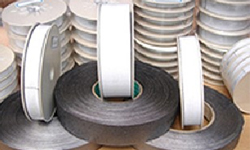
Graphite Tapes
Discover Kaxite Sealing's Graphite Tapes, versatile sealing solutions for industrial applications. With superior heat resistance and durability, they ensure reliable performance in harsh environments. Ideal for engineers and technicians, these tapes offer easy installation and long-lasting protection. Experience peace of mind with a secure seal that prevents leaks and reduces maintenance. Our unique formulation outperforms competitors, delivering unmatched quality. Trust Kaxite Sealing for your sealing needs and elevate your projects today!
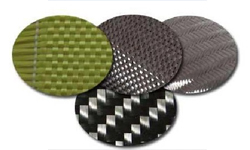
Graphite Clothes
Graphite Clothes by Kaxite Sealing redefine comfort with innovative technology, perfect for active individuals seeking durable, breathable wear in any setting. Experience unmatched softness and enhanced mobility—elevate your everyday with style and reliability.