What is PTFE Film and Why is it a Critical Engineering Material?
In the demanding world of industrial manufacturing and high-performance applications, material selection is paramount. Among the elite class of engineering plastics, PTFE Film stands out as a versatile and robust solution for countless challenges. At Kaxite Sealing, we specialize in manufacturing premium-grade PTFE films that meet the highest standards of quality and reliability.
PTFE, or Polytetrafluoroethylene, is a synthetic fluoropolymer renowned for its exceptional properties. When processed into a thin, consistent film, these properties are harnessed in a flexible and adaptable format. PTFE film is chemically inert, meaning it resists attack from virtually all industrial chemicals and solvents. It operates seamlessly across an extreme temperature range, from cryogenic levels up to +260°C (+500°F), without losing its structural integrity. Furthermore, it possesses the lowest coefficient of friction of any solid material, making it naturally non-stick and self-lubricating. Its excellent dielectric strength and non-flammability add to its profile as a safe and effective insulator. These characteristics make Kaxite Sealing PTFE film an indispensable component in industries ranging from aerospace and semiconductor manufacturing to food processing and pharmaceuticals.
Detailed Product Specifications of Kaxite Sealing PTFE Film
Our commitment at Kaxite Sealing is to provide not just a product, but a precisely engineered material solution. Our PTFE films are available in various formulations and dimensions to cater to specific application needs. Below are the detailed parameters that define our product line.
Standard Material Properties
- Base Material: 100% Virgin Polytetrafluoroethylene (PTFE) Resin.
- Color: Natural (translucent white), also available in custom colors (e.g., black for UV resistance).
- Density: 2.15 - 2.20 g/cm³.
- Melting Point: Approximately 327°C (621°F).
- Continuous Service Temperature: -200°C to +260°C (-328°F to +500°F).
- Flammability Rating: UL94 V-0 (Non-flammable, self-extinguishing).
- Coefficient of Friction: Typically 0.05 - 0.10 (static/dynamic, against steel).
Available Dimensions & Physical Specifications
| Parameter | Range / Standard Options | Notes |
|---|---|---|
| Thickness | 0.025mm (0.001") to 3.0mm (0.118") | Precision-calendered for consistent gauge. |
| Width | Up to 1500mm (59") | Slit to customer-specified widths with clean edges. |
| Length | Continuous rolls up to 100m, Sheets (e.g., 1000mm x 1000mm) | Custom sheet sizes and roll lengths available. |
| Tensile Strength (MD) | 15 - 35 MPa (2175 - 5075 psi) | Varies with thickness and filler content. |
| Elongation at Break | 200% - 400% | Exhibits high ductility and toughness. |
| Dielectric Strength | 60 - 100 kV/mm (in 0.1mm thickness) | Excellent electrical insulation properties. |
Common Filled PTFE Film Compositions
To enhance specific properties for demanding applications, Kaxite Sealing offers compounded PTFE films. These incorporate fillers to improve wear resistance, creep resistance, and thermal conductivity.
| Filler Type | Typical Composition | Key Enhanced Properties | Typical Applications |
|---|---|---|---|
| Glass Fiber | 15% - 25% by weight | Improved stiffness, creep resistance, and compression strength. | Gaskets, bearing pads, structural liners. |
| Carbon/Graphite | 15% - 20% by weight | Enhanced thermal conductivity, reduced wear, lower friction. | Heat exchanger interfaces, conductive seals, wear strips. |
| Bronze | 40% - 60% by weight | Superior wear resistance, high thermal conductivity, reduced deformation under load. | Heavy-duty bushings, thrust washers, bearing cages. |
| Stainless Steel | 5% - 15% by weight | Increased hardness and load-bearing capacity, EMI/RFI shielding potential. | Corrosive environments requiring metal detection, specialized seals. |
PTFE Film: Frequently Asked Questions (FAQ)
Our technical team at Kaxite Sealing has compiled answers to the most common questions we receive about PTFE film. This section aims to provide clear, detailed information to help with your material selection process.
Q: What is the primary difference between PTFE film and PTFE sheet?
A: The distinction is primarily based on thickness. Industry standards often classify material below 0.5mm (0.020") as a "film" due to its flexibility and ability to be wound on rolls. Material thicker than 0.5mm is typically referred to as a "sheet" or "skived sheet" and is more rigid. Kaxite Sealing PTFE film offers excellent drape and conformability for lining and wrapping applications, while our sheets are suited for machining parts like gaskets and seals.
Q: Can PTFE film be heat sealed or welded to itself or other materials?
A: Pure PTFE film cannot be heat sealed or welded using conventional thermal methods because it does not melt and flow like thermoplastics. It transitions directly from a solid to a gel-like state near its melting point. Joining is typically achieved through:
- Adhesive Bonding: Using specialized fluoropolymer-compatible adhesives (surface activation via sodium etching or plasma treatment is often required for a strong bond).
- Mechanical Fastening: Using stitches, rivets, or clamps.
- Sintering: For overlapping layers, applying high heat and pressure can fuse them, but this is a specialized industrial process.
Q: Is PTFE film safe for use in food contact and medical applications?
A: Yes, 100% virgin PTFE resin is inherently inert, non-toxic, and FDA-compliant for food contact under specific regulations (e.g., CFR Title 21). It is also USP Class VI tested, making it suitable for certain medical device applications. It is crucial to ensure that no reprocessed or contaminated resin is used. Kaxite Sealing offers food-grade and medical-grade PTFE films manufactured in controlled, clean environments with full material traceability to guarantee purity and compliance.
Q: How does PTFE film perform under prolonged UV exposure outdoors?
A: While PTFE has excellent chemical and thermal stability, prolonged exposure to direct ultraviolet (UV) radiation can cause very slight surface degradation over extended periods (years), potentially leading to a minor loss of surface gloss or mechanical properties at the very surface layer. For critical outdoor applications requiring decades of service life, such as architectural fabrics or permanent outdoor seals, we recommend specifying Kaxite Sealing PTFE film compounded with UV stabilizers or in a carbon-black filled version, which offers superior resistance to sunlight and weathering.
Q: What are the best practices for storing and handling PTFE film?
A: To maintain the performance of your Kaxite Sealing PTFE film, follow these guidelines:
- Storage: Store rolls vertically in a cool, dry, dark place away from direct sunlight, heat sources, and ozone generators (like high-voltage equipment). Ideal temperature is between 10°C and 25°C (50°F - 77°F).
- Handling: Wear clean gloves to prevent contamination from skin oils. Use care when unrolling to avoid creasing or kinking the material.
- Cleaning: If necessary, clean only with mild solvents like isopropyl alcohol. Avoid abrasive cleaners or pads that could scratch the surface.
Q: Can PTFE film be machined or die-cut easily?
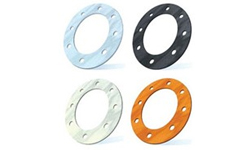
A: Absolutely. One of the key advantages of PTFE film is its excellent machinability. It can be cleanly and precisely die-cut, stamped, kiss-cut, or laser-cut into complex shapes with minimal burr formation. For prototypes or low-volume production, it can even be cut with scissors or a sharp blade. The flexibility and toughness of Kaxite Sealing PTFE film allow it to be formed into seals, gaskets, washers, and insulating components with high dimensional accuracy. We can also provide pre-cut parts to your exact drawings.
Key Applications Across Industries
The unique combination of properties makes Kaxite Sealing PTFE film a problem-solving material in numerous sectors.
- Electrical & Electronics: Used as high-temperature, high-voltage insulating film for wire wraps, capacitor dielectrics, and coil insulation. Its non-flammability is a critical safety feature.
- Chemical Processing: Employed as a liner for tanks, pipes, and reaction vessels to protect against corrosive chemicals. Also used for gaskets and diaphragm seals in aggressive fluid systems.
- Aerospace & Automotive: Functions as a lightweight, high-temperature sealant, bearing liner, and anti-chafe tape for wiring harnesses and fluid lines.
- Industrial Machinery: Serves as a low-friction, anti-stick liner for conveyor belts, heat press plates, and as a release layer in composite molding.
- Pharmaceutical & Food: Applied as a non-contaminating, easy-clean surface for conveyor belts, sealing surfaces on packaging machines, and as a barrier layer.