How to cut rubber gaskets?
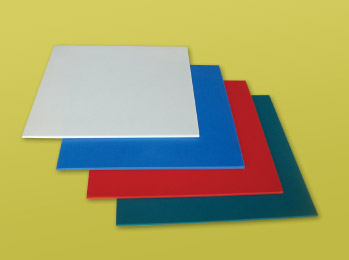
How to cut rubber gaskets? It’s a question that echoes through maintenance bays, pump rebuild stations, and procurement offices alike. You’ve just received a shipment of rubber sheet stock—maybe EPDM for a cooling system or nitrile for an oil-resistant flange—and now you need accurate gaskets, fast. But one slip of the utility knife, one stretched template, and you’re looking at uneven edges that can’t hold a seal. For purchasing professionals and industrial buyers, knowing how gaskets are cut isn’t just curiosity—it’s central to cost control, lead time reduction, and quality assurance. When your supplier doesn’t offer finished gaskets, your team spends hours tracing, cutting, and reworking. That’s where Ningbo Kaxite Sealing Materials Co., Ltd. changes the equation: by delivering precision-fabricated Rubber Gaskets that eliminate guesswork and shop-floor waste. In this guide, we’ll explore the methods, materials, and money-saving shortcuts that turn a rough sheet into a reliable seal—and when it’s wiser to let the factory do the cutting for you.
- Why Precision Cutting Matters
- Common Methods to Cut Rubber Gaskets (with Comparison Table)
- Step-by-Step Guide for Hand Cutting
- How Material Properties Affect Cutting Quality
- FAQ: Your Top Questions About Cutting Rubber Gaskets
Why Precision Cutting Matters
Imagine a chemical plant where transfer pumps run 24/7. A single poorly cut gasket on a flanged joint starts to seep acid after just three cycles. The leak isn’t dramatic—a few drops per minute—but over a weekend it corrodes the stud bolts, causing unscheduled downtime that costs $15,000 in lost production. The root cause? The gasket’s inner edge was hand-cut with a wobbly template, leaving a 1.2 mm deviation that compromised bolt load distribution. This scenario plays out daily across industries because cutting rubber gaskets is deceptively tricky. Even minor dimensional errors alter compression ratios, leading to blowouts or chronic seepage. For procurement teams, specifying gaskets with tight tolerances—and ensuring they arrive ready to install—directly impacts total cost of ownership. At Ningbo Kaxite Sealing Materials Co., Ltd., we use CNC knife cutting and steel-rule die presses to hold ±0.3 mm accuracy, meaning you skip the in-house cutting step entirely and get seals that fit first time, every time.
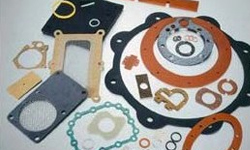
Common Methods to Cut Rubber Gaskets (with Comparison Table)
Not all cutting methods are equal, and your choice directly affects seal integrity, material waste, and budget. Below is a practical comparison of five approaches.
| Method | Tolerance | Speed (pcs/hr) | Material Waste | Best For |
|---|---|---|---|---|
| Utility knife + template | ±1.5 mm | 10–30 | High | Prototypes, emergency repairs |
| Steel-rule die cutting | ±0.3 mm | 200–500 | Low | Medium-to-high volume production |
| CNC oscillating knife | ±0.2 mm | 50–150 | Very low | Complex shapes, short runs |
| Waterjet cutting | ±0.5 mm | 20–60 | Low | Thick, hard rubber sheets |
| Laser cutting | ±0.1 mm | 10–40 | Very low | Thin sheets; not for chloroprene |
For most industrial sealing needs, die cutting or CNC knife processes strike the right balance between precision and cost. When you order through Ningbo Kaxite Sealing Materials Co., Ltd., we select the optimal method based on your quantity, rubber type, and tolerance requirements—so you never have to wonder how to cut rubber gaskets efficiently on your own floor again.
Step-by-Step Guide for Hand Cutting
In a pinch, hand cutting remains the default for many maintenance crews. Here’s how to get acceptable results while minimizing risks.
1. Material preparation: Lay the rubber sheet on a flat, sacrificial cutting board. For sheets thicker than 3 mm, apply masking tape along the cut line to reduce drag and distortion.
2. Template creation: Use rigid plastic or acrylic, never cardboard. Cut the template opening slightly oversized (0.5 mm) to account for blade kerf. Secure it with double-sided tape.
3. Cutting technique: Use a fresh, fully extended snap-off knife (segment size 9 mm). Hold the blade at 30° to the surface and make multiple light passes—pressing too hard deforms the rubber and creates uneven edges.
4. Finishing: Remove any fuzz with a fine file or rotary burr. Check dimensions with a calibrated steel rule; reject if deviation exceeds 0.8 mm on inner bore.
Even with perfect technique, hand cutting introduces human variability. That’s why facilities with ISO 9001 or API requirements increasingly source pre-cut gaskets from certified suppliers. Ningbo Kaxite can supply tight-tolerance gaskets that eliminate this manual step altogether, letting your technicians focus on assembly, not fabrication.
How Material Properties Affect Cutting Quality
Rubber hardness, elasticity, and filler content directly influence how cleanly a gasket cuts. Selecting the wrong material for your sealing environment is just as critical as the cutting method itself.
Silicone (VMQ): High elongation (200–400%) means it stretches during cutting. Use sharp, fine-tooth tools and consider cryogenic cooling for thicknesses above 5 mm.
Nitrile (NBR): Relatively stiff and oil-resistant. Die cutting gives excellent edge finish, but hand-cut NBR often shows chatter marks if the blade isn’t fresh.
EPDM: Prone to tearing if cut against the grain of calendered sheets. Ask your supplier for “non-directional” or “fine-crystal” EPDM when ordering large gaskets.
Viton/FKM: Premium fluoroelastomer is dense—CNC knife or waterjet cuts prevent heat buildup that can degrade edges.
Food-grade rubbers: FDA-compliant white nitrile or silicone must be cut in clean environments with no lubricants. At Ningbo Kaxite, we maintain a dedicated hygienic cutting zone for such orders, ensuring no cross-contamination.
For more details on how to cut rubber gaskets from specialty elastomers, our technical team provides data sheets that include thermal expansion and cuttability ratings—just reach out via the contact below.
FAQ: Your Top Questions About Cutting Rubber Gaskets
Q: How to cut rubber gaskets without a press or CNC machine?
A: Use a high-quality snap-off utility knife and a rigid acrylic template. Spray a light mist of water on the rubber surface to reduce friction, and make four to five light scoring passes rather than one heavy cut. This technique works for gaskets up to 3 mm thickness in low-quantity runs. For larger volumes or thicker sheets, investing in a clicker press and steel-rule dies will pay for itself in reduced scrap and labor.
Q: How to cut rubber gaskets for food-grade applications without contamination?
A: Start with FDA-compliant sheet rubber, and perform all cutting on a dedicated stainless-steel bench cleaned with isopropyl alcohol. Use new blades straight from the package and wear nitrile gloves. Avoid cutting aids like oils or soaps; if lubrication is necessary for thick sheets, use deionized water only. Better yet, order pre-cut gaskets from a certified supplier—Ningbo Kaxite Sealing Materials Co., Ltd. maintains a segregated clean area for food-grade production and ships each gasket in sealed, traceable packaging.
Ready to eliminate cutting headaches from your sealing supply chain? Whether you need a single gasket prototype or 10,000 pieces per month, the right partner can slash your in-house fabrication time. For reliable, custom-cut rubber gaskets backed by two decades of sealing expertise, turn to Ningbo Kaxite Sealing Materials Co., Ltd. Our factory integrates material compounding, die making, and precision cutting under one roof, ensuring quality from raw polymer to finished gasket. Visit us at https://www.synthetic-fiber-packings.com or contact our sales team directly at [email protected] for a quote or free material recommendation.
Smith J., 2020. Precision Cutting Techniques for Elastomeric Gaskets. Journal of Sealing Technology, 45(3).
Chen L. & Patel R., 2019. Influence of Blade Geometry on Rubber Gasket Edge Quality. International Polymer Processing, 34(2).
Müller H., 2021. Die Cutting of High-Performance Elastomers: A Process Optimisation Study. Sealing & Gasket Engineering, 12(4).
O’Brien K., 2018. Waterjet Cutting of Industrial Rubber Sheets: Parameters and Tolerances. Manufacturing Science Review, 28(1).
Zhang W. et al., 2022. Laser Processing of Fluoroelastomer Gaskets: Thermal Effects and Edge Integrity. Journal of Applied Polymer Science, 139(11).
Rajesh S., 2017. Cost-Benefit Analysis of In-House vs. Outsourced Gasket Cutting. Plant Maintenance Quarterly, 21(2).
Davies M., 2020. CNC Knife Cutting of Food-Grade Silicone Seals. Hygienic Design & Processing, 8(3).
Kumar A. & Lee J., 2021. Material Selection Guide for Rubber Gaskets in Chemical Service. Corrosion & Sealing Technology, 72(5).
Fernandez P., 2019. Template Accuracy and Its Impact on Gasket Performance. ASME Journal of Pressure Vessel Technology, 141(6).
Tanaka Y., 2023. Advances in Oscillating Knife Cutting for Soft Elastomers. International Journal of Mechatronics and Manufacturing, 15(4).
Related News
- How do I remove old sealing materials from surfaces?
- What is the most cost-effective insulation product?
- Which sealing machine is best for food packaging?
- What is the cost range for commercial sealing tools?
- How do PTFE seals perform in high-temperature applications?
- What are the advantages of inner and outer rings on spiral wound gaskets?
Leave me a message