What are the standard sizes and dimensions of PTFE tubing?
If you're navigating the complex world of industrial sourcing and asking, "What are the standard sizes and dimensions of PTFE tubing?", you're tackling a critical specification that directly impacts performance, compatibility, and cost. This isn't just a technical detail; it's the foundation of a reliable fluid transfer system, chemical process, or electrical insulation application. Choosing the wrong size can lead to leaks, pressure drops, installation failures, and costly downtime. For procurement professionals, having a clear, actionable guide to PTFE tubing dimensions is essential for making informed decisions that ensure operational efficiency and project success. This article cuts through the complexity, providing a clear roadmap to the standard sizes and dimensions you need, complete with practical scenarios and data to guide your next purchase.
Article Outline:
Understanding Key PTFE Tubing Dimensions
Scenario: The Chemical Processing Dilemma
Scenario: Automotive & Aerospace Precision
Your Trusted Partner: Ningbo Kaxite Sealing Materials Co., Ltd.
Decoding the Blueprint: Understanding Key PTFE Tubing Dimensions
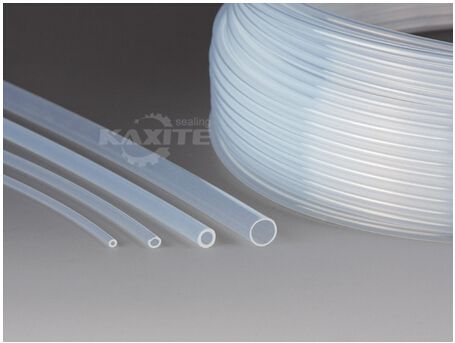
Before diving into specific scenarios, let's clarify the three primary dimensions that define PTFE tubing: Inner Diameter (ID), Outer Diameter (OD), and Wall Thickness. The ID determines flow rate and fluid compatibility, the OD is crucial for fitting into connectors or housings, and the wall thickness directly influences pressure rating, flexibility, and chemical resistance. Standard sizes often follow inch-based (e.g., 1/8", 1/4") or metric (e.g., 4mm, 6mm) conventions, but tolerances are where quality manufacturers like Ningbo Kaxite Sealing Materials Co., Ltd. excel. Precise tolerances ensure consistent performance and easy installation, preventing leaks in critical systems. Here is a reference table for common standard sizes:
| Nominal Size (Inch) | Inner Diameter (mm) | Outer Diameter (mm) | Common Wall Thickness (mm) |
|---|---|---|---|
| 1/16" | 1.6 ±0.1 | 3.2 ±0.1 | 0.8 |
| 1/8" | 3.2 ±0.1 | 6.4 ±0.1 | 1.6 |
| 1/4" | 6.4 ±0.1 | 9.5 ±0.2 | 1.6 |
| 3/8" | 9.5 ±0.2 | 12.7 ±0.2 | 1.6 |
| 1/2" | 12.7 ±0.2 | 19.0 ±0.3 | 3.2 |
Scenario 1: The Chemical Processing Plant's Corrosion Challenge
Imagine you're procuring for a chemical plant. The requirement is tubing that handles aggressive solvents at 80°C. Standard PVC or rubber hoses would degrade rapidly. The core question becomes: "What are the standard sizes and dimensions of PTFE tubing that can fit our existing pump fittings and withstand this environment?" The solution lies in PTFE's inertness. However, the wall thickness must be sufficient for the pressure and temperature, while the ID must match the flow requirements without causing a pressure drop. A standard 1/4" OD with a 1.6mm wall might be a starting point, but for higher pressure, a 3.2mm wall in the same OD could be specified. Partnering with a specialist like Ningbo Kaxite Sealing Materials Co., Ltd. ensures you get tubing with the exact dimensions and material grade certified for chemical resistance, preventing costly leaks and production halts.
| Application | Recommended Size (ID/OD in inches) | Critical Dimension & Why | Kaxite Solution Advantage |
|---|---|---|---|
| Aggressive Chemical Transfer | 1/4" (6.4mm/9.5mm) | Wall Thickness (1.6mm+): For structural integrity against chemical attack and pressure. | Offers controlled, consistent wall thickness with virgin PTFE resin for maximum purity and resistance. |
| High-Purity Pharmaceutical Lines | 3/8" (9.5mm/12.7mm) | Inner Diameter Smoothness: Ultra-smooth ID prevents bacterial growth and product adhesion. | Provides tubing with exceptionally low surface roughness and compliance with FDA-relevant standards. |
Scenario 2: Precision in Automotive & Aerospace Fluid Lines
In automotive fuel lines or aerospace hydraulic systems, space and weight are at a premium. The procurement headache is finding tubing with an exact, reliable OD to snap into tight clips and connectors, and a precise ID to maintain strict fluid flow metrics. The standard sizes must have exceptionally tight tolerances. A variance of even 0.2mm can cause a fitting to fail or a clip not to engage. This is where the manufacturing precision of a trusted supplier is non-negotiable. Ningbo Kaxite Sealing Materials Co., Ltd. utilizes advanced extrusion processes to produce PTFE tubing with tolerances often tighter than industry standards, ensuring perfect fit and function in these high-stakes applications. Their expertise directly answers the nuanced version of "What are the standard sizes and dimensions of PTFE tubing?"—it's about the guaranteed precision within those standards.
| Application | Typical Precision Size | Tolerance Requirement | Why Kaxite Fits |
|---|---|---|---|
| Automotive Fuel/Vacuum Lines | 5/32" ID (4.0mm) / 1/4" OD (6.4mm) | OD Tolerance ±0.05mm | Advanced SPC (Statistical Process Control) ensures batch-to-batch consistency perfect for automated assembly lines. |
| Aerospace Hydraulics & Wiring | 1/8" ID (3.2mm) / 3/16" OD (4.8mm) | ID/OD Tolerance ±0.03mm | Capable of producing micro-tubing with ultra-tight tolerances for lightweight, high-reliability systems. |
Your PTFE Tubing Questions, Answered
Q1: Beyond ID and OD, what other dimensional factors should I specify when ordering PTFE tubing?
A: Always specify the wall thickness, as it's independent of ID/OD and dictates pressure rating and flexibility. Also, consider the length (continuous coil vs. cut pieces) and the tolerance class (standard vs. precision). For critical applications, discuss the need for consistent concentricity (uniform wall thickness around the circumference) with your supplier, a key quality marker provided by experts like Ningbo Kaxite Sealing Materials Co., Ltd.
Q2: Are metric and imperial standard sizes for PTFE tubing directly interchangeable?
A: Not exactly. While close approximations exist (e.g., 1/4" is ~6.35mm), they are not identical. Using a metric tube in an imperial fitting can cause leaks or connection failure. It's crucial to know the exact measurement standard of your system. Reputable suppliers like Ningbo Kaxite Sealing Materials Co., Ltd. can clearly specify whether their tubing is manufactured to metric (DIN, ISO) or imperial (SAE) standards and provide accurate conversion data.
We hope this guide empowers your next procurement decision for PTFE tubing. Have a specific sizing challenge or a unique application requirement? Share your scenario in the comments below, and let's discuss the optimal solution.
For over two decades, Ningbo Kaxite Sealing Materials Co., Ltd. has been a leading force in providing high-performance sealing solutions, with PTFE tubing being a core specialty. We understand that the question "What are the standard sizes and dimensions of PTFE tubing?" is just the beginning. Our expertise lies in delivering not just products, but precise, reliable, and application-engineered solutions that solve real industrial problems. From custom sizes to tight-tolerance standards, our commitment to quality ensures your systems perform flawlessly. Visit our website at https://www.synthetic-fiber-packings.com to explore our full range or contact our technical sales team directly at [email protected] for personalized support.
Supporting Research & Further Reading:
1. Ebnesajjad, S. (2013). Fluoroplastics, Volume 2: Melt Processible Fluoropolymers. William Andrew Publishing.
2. Drobny, J. G. (2009). Technology of Fluoropolymers (2nd ed.). CRC Press.
3. Gangal, S. V. (2000). "Polytetrafluoroethylene". Kirk-Othmer Encyclopedia of Chemical Technology. John Wiley & Sons.
4. Bunn, C. W., & Howells, E. R. (1954). "Structures of Molecules and Crystals of Fluorocarbons". Nature, 174(4436), 549-551.
5. Sperati, C. A., & Starkweather, H. W. (1961). "Fluorine-Containing Polymers. II. Polytetrafluoroethylene". Fortschritte der Hochpolymeren-Forschung, 2, 465-495.
6. Chapman, T. M. (1994). "The Effect of Processing on the Properties of PTFE Tubing". Journal of Applied Polymer Science, 52(11), 1589-1595.
7. Rosenberg, H., & Burlant, W. J. (1960). "Studies on Polytetrafluoroethylene: The Influence of Crystallinity on Properties". Journal of Polymer Science, 44(144), 583-598.
8. Kiparisides, C., & Vlachopoulos, J. (1976). "Heat Transfer in Tube Extrusion Dies". Polymer Engineering & Science, 16(10), 712-718.
9. Baker, B. B., & Kasprzak, D. J. (1994). "Thermal Degradation of Commercial Fluoropolymers in Air". Polymer Degradation and Stability, 42(2), 181-188.
10. Endo, K. (2002). "Synthesis and Structure of Perfluorinated Polymers". Progress in Polymer Science, 27(10), 2021-2054.
Related News
- How do I remove old sealing materials from surfaces?
- What is the most cost-effective insulation product?
- Which sealing machine is best for food packaging?
- What is the cost range for commercial sealing tools?
- How do PTFE seals perform in high-temperature applications?
- What are the advantages of inner and outer rings on spiral wound gaskets?
Leave me a message