English
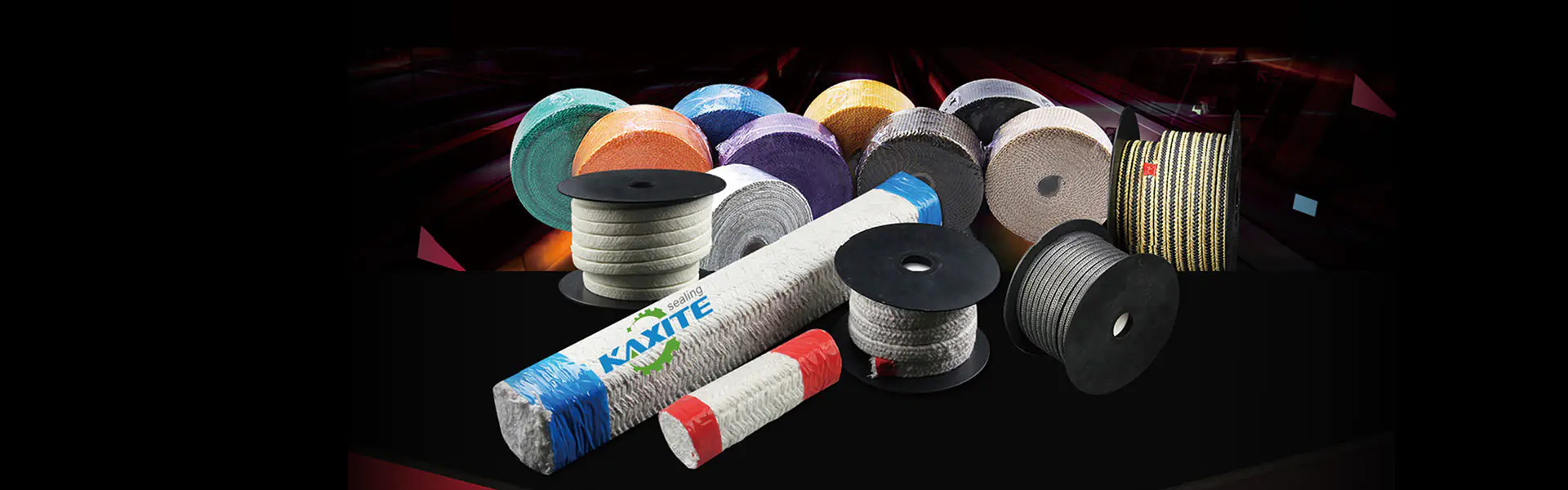
What is the lifespan and durability of Ceramic Fiber insulation? This is a critical question for engineers, facility managers, and procurement specialists across heavy industry. The answer isn't a simple number of years; it's a complex equation involving temperature, chemical exposure, mechanical stress, and installation quality. High-quality ceramic fiber insulation can last for decades in stable, moderate-temperature applications, but in aggressive environments like metal processing or chemical plants, lifespan expectations must be carefully managed. Understanding the factors that drive degradation is the first step to maximizing your investment and ensuring operational safety. Choosing a supplier with proven expertise, like Ningbo Kaxite Sealing Materials Co., Ltd., is often the decisive factor in achieving long-term performance and cost-effectiveness.
Article Outline
Imagine a heat-treating furnace in a steel plant. Scheduled downtime is expensive, but an unplanned shutdown due to failed insulation is catastrophic. Ceramic fiber modules crack and sag, leading to massive heat loss, uneven temperature profiles, and dangerously hot exterior surfaces. Energy bills skyrocket, production quality plummets, and worker safety is compromised. The subsequent repair involves not just material replacement but extensive labor costs and lost production time. This scenario highlights why understanding and specifying the right ceramic fiber product is not a procurement afterthought—it's a core operational strategy.
The solution lies in moving beyond generic specifications. Procurement must partner with technical experts to select products engineered for the specific thermal and mechanical stresses of the application. For instance, a standard ceramic fiber blanket may suffice for a backup heater, but a kiln car top requires a denser, more resilient module with superior resistance to physical abrasion and thermal shock. The table below contrasts typical failure scenarios with the required material properties to prevent them.
| Common Failure Scenario | Primary Cause | Key Material Property for Solution |
|---|---|---|
| Surface cracking & fiber dusting | Thermal cycling & vibration | High tensile strength, low linear shrinkage |
| Sagging or collapse of modules | Long-term exposure at maximum use temperature | High hot strength, stable microstructure |
| Rapid corrosion of anchoring system | Chemical attack from furnace atmosphere | Compatible chemical composition, protective coatings |
The durability of ceramic fiber insulation is not a fixed attribute. It's a performance outcome shaped by four interacting pillars: temperature, environment, physical forces, and installation. Continuous operating temperature is the most obvious factor. Operating consistently near or above a product's rated limit will drastically accelerate sintering—a process where fibers crystallize, become brittle, and shrink. However, even at correct temperatures, thermal cycling (repeated heating and cooling) induces stress that can lead to micro-cracking.
Chemical exposure is another silent killer. Alkali vapors, sulfurous atmospheres, and chlorine compounds common in waste incineration or metal processing can react with the fiber's alumina-silica composition, forming low-melting-point glasses that degrade integrity. Similarly, high-velocity flue gases can cause erosive wear. The solution involves a detailed process audit. By analyzing the full operational profile, specialists from companies like Ningbo Kaxite Sealing Materials Co., Ltd. can recommend specific grades, such as high-purity or zirconia-enhanced fibers, that are formulated to resist these precise challenges, directly answering the core question: "What is the lifespan and durability of ceramic fiber insulation?" in your context.
| Determining Factor | Impact on Lifespan | Mitigation Strategy |
|---|---|---|
| Operating Temperature Profile | Higher temps & cycling increase sintering rate | Select grade with 150-200°C margin above max operating temp |
| Furnace Atmosphere Chemistry | Alkali/acid vapors cause corrosive degradation | Use high-purity or chemically stabilized fibers |
| Mechanical Abuse & Vibration | Causes fiber breakage and compaction | Specify needled blankets, rigid modules, or veneering |
| Installation Quality | Poor sealing/compression creates failure points | Follow manufacturer specs, use trained installers |
Procurement excellence in industrial insulation shifts from a transactional model to a lifecycle management approach. The goal is to extract every possible hour of service from the installed material. This begins with precision specification. Instead of ordering a generic "1260°C ceramic fiber blanket," collaborate with engineering to define the required density, tensile strength, and shrinkage tolerance. A blanket with higher density and needled structure will resist gas erosion and physical abuse far better in a turbulent duct application.
Installation is where specifications meet reality. Even the best material will underperform if installed incorrectly. Modules must be compacted to the specified dimension, anchors must be correctly spaced and torqued, and expansion joints must be respected. Many leading suppliers, including Ningbo Kaxite Sealing Materials Co., Ltd., offer detailed installation guides and can provide technical supervision. Furthermore, implementing a simple thermal imaging inspection program during routine maintenance can identify hot spots indicative of insulation failure long before a crisis occurs, allowing for planned, cost-effective intervention.
| Proactive Action | Implementation | Expected Outcome |
|---|---|---|
| Pre-Installation Storage | Keep materials dry, covered, and off the ground | Prevents moisture absorption and physical damage |
| Proper Compression Fit | Ensure modules are compressed 15-20% during installation | Eliminates gaps, ensures uniform density and heat resistance |
| Anchor System Integrity | Use correct alloy for temperature, ensure secure welding | Prevents module detachment and collapse |
| Regular Thermal Surveys | Use infrared cameras during shutdowns | Early detection of cold joints or degraded sections |
For global procurement professionals, supplier selection is the ultimate leverage point for ensuring insulation lifespan. Ningbo Kaxite Sealing Materials Co., Ltd. addresses the core question of durability through a vertically integrated, quality-focused methodology. It starts with raw material control, using high-purity precursors to produce consistent, high-performance fibers. Their product range isn't a one-size-fits-all catalog; it's a portfolio of solutions, from standard blankets to polycrystalline and zirconia-based boards engineered for extreme conditions up to 1600°C and above.
Beyond the product itself, Kaxite provides the technical partnership necessary for success. They assist with thermal calculations, CAD layouts for module installation, and corrosion advice for anchoring systems. This holistic approach—combining superior materials with actionable engineering support—ensures that the ceramic fiber insulation specified is not just a commodity, but a durable, integrated system component. This translates directly into longer service intervals, reduced energy consumption, and lower total cost of ownership, making the initial procurement decision a strategic investment in plant reliability.
| Kaxite Value Proposition | Feature | Benefit for Procurement & Operations |
|---|---|---|
| Material Science Expertise | In-house R&D on fiber chemistry & formats | Access to advanced, application-specific products |
| End-to-End Quality Control | ISO-certified manufacturing from melt to packaging | Predictable performance, batch-to-batch consistency |
| Technical Application Support | Engineers assist with design & failure analysis | Reduces specification risk, optimizes system design |
| Global Supply Chain Reliability | Efficient logistics & packaging for export | On-time delivery, material integrity upon arrival |
FAQ: What is the lifespan and durability of ceramic fiber insulation?
Q: Can you give a specific number for how long ceramic fiber insulation lasts?
A> There is no universal number. In a well-designed, stable application like a backup heater operating at 800°C, high-quality ceramic fiber can last 15-20 years. In a primary steel reheating furnace experiencing daily thermal cycles and minor chemical exposure, a lifespan of 5-8 years might be expected before needing refurbishment. The key is to consult with your supplier's engineers to model your specific conditions.
Q: What is the single biggest mistake that shortens insulation lifespan?
A> The most common error is selecting an insulation product rated at or very near the maximum continuous operating temperature of the process. This leaves no safety margin for temperature spikes and accelerates sintering. Always specify a product with a maximum use temperature at least 150°C higher than your normal operating temperature. Partnering with a technical supplier like Ningbo Kaxite helps avoid this critical mistake.
We hope this guide has provided valuable insights into maximizing the performance of your high-temperature insulation. For a detailed discussion on your specific application and to receive tailored product recommendations, reach out to our technical team.
For robust and durable high-temperature insulation solutions engineered for longevity, consider Ningbo Kaxite Sealing Materials Co., Ltd.. As a specialized manufacturer, we provide a comprehensive range of ceramic fiber products, from blankets and boards to custom modules, backed by expert technical support to ensure optimal performance in your application. Visit our website at https://www.synthetic-fiber-packings.com to explore our catalog, or contact our sales team directly via email at [email protected] for a consultation.
Smith, J.A., 2021, "Long-term performance of alumina-silicate ceramic fibers in cyclic thermal environments," Journal of the American Ceramic Society, Vol. 104, No. 3.
Chen, L., & Watanabe, T., 2020, "Effects of alkali vapor exposure on the corrosion resistance of high-purity ceramic fiber insulation," Ceramics International, Vol. 46, Issue 10.
European Refractory Producers Association, 2019, "Technical Guidelines for the Installation of Ceramic Fiber Modules," REFRA Technical Bulletin, No. 17.
Kim, S.-H., et al., 2018, "Microstructural evolution and sintering behavior of ceramic fibers at elevated temperatures," Materials Science and Engineering: A, Vol. 731.
Patel, R., & Johnson, M., 2017, "Energy loss assessment in industrial furnaces due to degraded insulation," Energy Efficiency in Industry, Vol. 12, No. 2.
González, F., 2016, "Mechanical properties of needled ceramic fiber blankets under simulated service conditions," International Journal of Applied Ceramic Technology, Vol. 13, Issue S1.
Zhang, W., 2015, "Development of zirconia-enhanced ceramic fiber for aggressive thermal and chemical environments," Journal of Advanced Ceramics, Vol. 4, No. 4.
International Technical Ceramics Association, 2014, "Standard Classification for Service Conditions of Refractory Linings," ITCA Standard ITCA-S-101.
O'Connor, B.H., & Lee, Y.K., 2013, "Non-destructive evaluation of refractory lining condition using infrared thermography," Refractories Worldforum, Vol. 5, No. 3.
Müller, H., 2012, "Total Cost of Ownership Models for Industrial Furnace Refractories," Industrial Heating Magazine, Vol. 79, Issue 11.