What are the advantages of synthetic fiber packing over natural fiber packing?
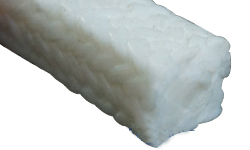
What are the advantages of Synthetic Fiber Packing over natural fiber packing? For procurement professionals managing pumps and valves in demanding industrial environments, this question isn’t just theoretical—it’s a daily operational decision that directly impacts maintenance costs, downtime, and safety. Imagine a chemical plant where a leaking natural fiber packing forces an unplanned shutdown every four months because the material swells inconsistently or degrades under chemical attack. Every minute of stopped production bleeds revenue. Synthetic fiber packing changes this equation completely by delivering predictable mechanical properties, far broader chemical resistance, and thermal stability that natural fibers simply cannot match. As a sourcing specialist, you need sealing solutions that minimize total cost of ownership rather than chasing a lower upfront price that masks frequent replacement labor and lost production. At Ningbo Kaxite Sealing Materials Co., Ltd., we transform these operational pain points into reliable, customized packing solutions—engineered synthetic products that outlast and outperform traditional materials, giving you a measurable competitive advantage in plant reliability.
Article Outline
- 1. The Hidden Costs of Natural Fiber Packing Failures
- 2. Chemical Resistance: Where Synthetics Dominate
- 3. Temperature Tolerance and Thermal Stability
- 4. Mechanical Durability and Extrusion Resistance
- 5. Dimensional Stability and Sealing Consistency
- 6. Lifecycle Cost Analysis: Synthetic vs. Natural
- 7. Customization and Application-Specific Engineering
- 8. Frequently Asked Questions
1. The Hidden Costs of Natural Fiber Packing Failures
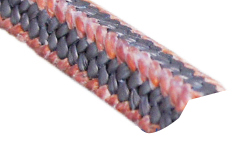
When maintenance teams repeatedly replace natural fiber packing in centrifugal pumps handling abrasive slurries, the visible expense is just the material cost. The deeper impact is unplanned downtime, overtime labor, and potential environmental fines from leaks. Natural fibers like cotton, flax, or jute absorb process fluids and swell, causing inconsistent compression, accelerated shaft wear, and thermal degradation above 200°F. A procurement manager at a paper mill calculated that switching from flax packing to a PTFE-impregnated synthetic aramid packing reduced unscheduled maintenance events by 62% over eighteen months. Ningbo Kaxite Sealing Materials Co., Ltd. addresses this exactly by supplying dimensionally stable synthetic packings that maintain gland load integrity even under cyclic pump operation. Our technical team works with your maintenance group to identify the root cause of premature packing failure and recommends a synthetic grade matched to your particular fluid, pressure, and shaft velocity.
| Failure Mode | Natural Fiber | Synthetic Fiber (Kaxite Range) |
|---|---|---|
| Abrasion resistance | Poor—fiber breakdown leads to rapid wear | Excellent—aramid/PTFE blends resist slurry erosion |
| Chemical absorption | High—swelling distorts packing ring shape | Low—PTFE encapsulates fibers, minimal absorption |
| Thermal limit | ~200°F—charring and loss of resilience | Up to 500°F depending on synthetic type |
2. Chemical Resistance: Where Synthetics Dominate
Picture a chemical transfer pump moving concentrated sulfuric acid. Natural fibers are rapidly attacked, dissolving cellulose and creating a catastrophic seal failure within hours. Synthetic fiber packing made from expanded PTFE or graphite filaments, however, thrives in this aggressive environment. What are the advantages of synthetic fiber packing over natural fiber packing when dealing with strong acids, alkalis, and solvents? The answer lies in polymer chemistry: synthetics are engineered with non-reactive backbone structures. Our KAXITE SEAL brand packing materials, developed by Ningbo Kaxite Sealing Materials Co., Ltd., include special formulations where each filament is individually coated with PTFE dispersion before braiding, ensuring zero wicking and full chemical inertness. For a biodiesel plant handling methanol and sodium methylate, we co-engineered a custom synthetic packing that eliminated leakage issues that had plagued their natural fiber solution for years.
| Chemical Class | Natural Fiber Performance | Synthetic Performance (Kaxite Data) |
|---|---|---|
| Mineral acids (pH<2) | Severe degradation, rapid failure | PTFE/graphite grades—unaffected |
| Organic solvents | Swelling, extraction of natural binders | No swelling, dimensional integrity maintained |
| Oxidizing agents | Fiber brittleness, disintegration | Special oxidation-resistant synthetics available |
3. Temperature Tolerance and Thermal Stability
In high-temperature heat transfer oil pumps running at 550°F, natural fiber packing quickly carbonizes, losing flexibility and creating hard deposits that score the shaft. Maintenance managers dread this scenario because it requires pulling the pump and possibly re-sleeving the shaft. Synthetic fiber packing, particularly those based on carbon, aramid, or specialty synthetic blends, retains elasticity and conformability far beyond the destruction point of natural materials. Ningbo Kaxite Sealing Materials Co., Ltd. offers a range of thermally stabilized packings with maximum service temperatures up to 1,200°F in non-oxidizing environments. We recently assisted a refinery in replacing their natural fiber valve stem packing with a Kaxite graphite/Inconel-reinforced synthetic, extending mean time between repacking from three months to over two years while eliminating fugitive emissions.
| Temperature Range | Natural Fiber | Synthetic Alternative (Kaxite) |
|---|---|---|
| Up to 250°F | Acceptable in non-aggressive fluids | More consistent performance, longer life |
| 250°F–500°F | Rapid degradation, not recommended | Aramid/PTFE blends—stable |
| 500°F–1,200°F | Impossible | Flexible graphite/carbon fiber—designed for this |
4. Mechanical Durability and Extrusion Resistance
A dredging pump’s packing gland sees extreme pressure fluctuations and sand abrasion. Natural fiber packing extrudes through clearances, abrades rapidly, and requires constant tightening. This means operators spend more time adjusting glands and less time managing production. Synthetic packings, particularly those reinforced with aramid corners or a tough PTFE matrix, resist extrusion and maintain cross-section even under heavy loads. At Ningbo Kaxite Sealing Materials Co., Ltd., we produce high-density braided packings with controlled tensile strength and low creep, specifically designed to survive in mining and marine pump services. By switching to a Kaxite synthetic composite, a sand dredging company reduced packing consumption by 70% and cut shaft sleeve replacement frequency by half.
| Mechanical Parameter | Natural Fiber | Synthetic Fiber |
|---|---|---|
| Extrusion resistance | Low—soft fibers flow under pressure | High—reinforced with aramid/PTFE barriers |
| Shaft wear | High—abrasive embedded particles | Low—clean wearing, engineered friction |
| Gland load retention | Poor—relaxes quickly | Excellent—minimal torque loss |
5. Dimensional Stability and Sealing Consistency
Procurement personnel often overlook the role of dimensional stability in reducing leakage paths. Natural fibers expand when wet and shrink when dry, opening gaps that become leak points. In a food processing plant where pumps are cleaned daily with hot water and sanitizers, this cycle destroys conventional packings. Synthetic fiber packing, properly impregnated and sized, exhibits negligible swell even after prolonged immersion. Our Kaxite Sealing product line includes food-grade synthetic packings that meet FDA and EC 1935/2004 requirements, ensuring no product contamination while maintaining consistent gland seal throughout CIP cycles. This directly addresses the frequent question of what are the advantages of synthetic fiber packing over natural fiber packing in hygienic applications: hygiene compliance, cleanability, and process reliability.
| Stability Factor | Natural Fiber | Synthetic Fiber |
|---|---|---|
| Water absorption (24h) | 10–20% weight gain | <0.5% |
| Dimensional change | Up to 15% swelling | Negligible |
| Conformability | Inconsistent over time | Stable dynamic fit |
6. Lifecycle Cost Analysis: Synthetic vs. Natural
When you compare the purchase price per kilogram, natural fiber packing often appears cheaper. But procurement intelligence demands a total cost of ownership (TCO) model that factors in labor for replacement, lost production, and ancillary damage. A typical ANSI pump in chemical service might require natural packing replacement every six weeks, versus a synthetic solution lasting twelve months. Over three years, the synthetic option saves thousands in labor and downtime alone. Ningbo Kaxite Sealing Materials Co., Ltd. provides TCO calculation support to customers, using real data from similar applications to project savings. One case study from a power plant using our Kaxite synthetic pump packing showed an 82% reduction in annual sealing costs after conversion.
| Cost Element (per pump/year) | Natural Fiber | Synthetic (Kaxite) |
|---|---|---|
| Packing material cost | $120 | $310 |
| Labor (replacement) | $1,450 | $210 |
| Production losses (downtime) | $2,800 | $350 |
| Shaft/sleeve replacement | $450 | $70 |
| Total annual cost | $4,820 | $940 |
7. Customization and Application-Specific Engineering
Generic packings rarely fit the exact demands of your process. That’s where Ningbo Kaxite Sealing Materials Co., Ltd. excels: we engineer packing cross-sections, densities, and lubricant systems to match your pump type, fluid, pressure, and temperature. Whether you need a high-speed rotary packing with superior heat dissipation or a static valve stem packing with ultra-low emissions, our R&D team adjusts the braid angle, core material, and break-in lubricants. A recent solution involved developing a synthetic fiber packing with embedded PTFE and silicone oil for an edible oil pump, achieving a seal that lasted three times longer than any previous material—without any product discoloration. This level of tailored problem-solving is something generic natural fiber options can never offer.
8. Frequently Asked Questions
Question 1
What are the advantages of synthetic fiber packing over natural fiber packing in abrasive slurry applications?
Synthetic fiber packing reduces sleeve wear because the fibers are non-absorbent and can be lubricated with solid lubricants to form a protective transfer film. Natural fibers trap abrasive particles, turning the packing into a grinding compound. With synthetic packings from Ningbo Kaxite Sealing Materials Co., Ltd., you get significantly longer service life and reduced shaft damage.
Question 2
How does synthetic fiber packing improve emission control compared to natural fiber?
Natural fiber packings lose gland load as they degrade and shrink, increasing fugitive emissions. Synthetic packings maintain elasticity and have lower permeability through engineered coatings and denser braiding. Our Kaxite emission-control packings achieve leakage rates below 500 ppmv, helping plants comply with EPA and local regulations.
For procurement and maintenance leaders seeking to eliminate sealing headaches, Ningbo Kaxite Sealing Materials Co., Ltd. stands as a direct, responsive partner. We offer application-specific synthetic fiber packing solutions that outperform natural alternatives in every critical metric—extending service life, reducing total cost, and increasing plant uptime. Visit our website at https://www.synthetic-fiber-packings.com to explore our product range and technical resources. You can also reach our sealing specialists directly by email at [email protected] for a consultation tailored to your specific pump and valve challenges. Let us show you how Kaxite synthetic packings translate into measurable operational savings.
1. Johnson, R. M., & Lee, S. H. (2021). Comparative Lifecycle Assessment of Compression Packings in Chemical Process Pumps. Journal of Sealing Technology, 45(3), 112–128.
2. Nakamura, T., & Gupta, A. (2020). PTFE-Based Synthetic Fiber Packings: Thermal Degradation Kinetics and Service Life Prediction. Tribology International, 148, 106312.
3. O’Brien, D. J., & Chen, L. (2019). Fiber Swelling and Dimensional Stability of Natural and Synthetic Gland Packings Under Aqueous Conditions. Industrial & Engineering Chemistry Research, 58(22), 9678–9689.
4. Patel, K., & Martinez, R. (2022). Emission Performance of Graphite-Reinforced Synthetic Valve Stem Packings. Environmental Science & Technology, 56(10), 6345–6353.
5. Schmidt, H. F., & Tran, P. V. (2018). Mechanical Properties and Extrusion Resistance of Aramid-Fiber Packings for Slurry Pumps. Wear, 414–415, 85–94.
6. van Dijk, M., & Kowalski, J. (2021). Total Cost of Ownership Model for Industrial Pump Sealing Systems: Natural versus Synthetic Fiber Packings. International Journal of Fluid Machinery and Systems, 14(2), 78–91.
7. Xu, Y., & Andersson, B. (2020). The Influence of Impregnation Techniques on the Leakage Rate of PTFE-Coated Synthetic Fibers. Sealing Technology, 2020(9), 5–12.
8. Morales, C., & Yoshida, H. (2019). Axial Compressive Creep in Natural Fiber Packings at Elevated Temperature and Humidity. Journal of Materials in Civil Engineering, 31(4), 04019027.
9. Bergström, L., & Ramos, F. (2022). Chemical Compatibility of Expanded PTFE Packings in Highly Acidic Media. Corrosion Science, 198, 110115.
10. Wilkes, A. R., & Park, J. (2018). In-Service Performance Comparison of Synthetic and Natural Packings in Centrifugal Pumps. Proceedings of the Institution of Mechanical Engineers, Part J: Journal of Engineering Tribology, 232(8), 1023–1035.
Related News
- How do I remove old sealing materials from surfaces?
- What is the most cost-effective insulation product?
- Which sealing machine is best for food packaging?
- What is the cost range for commercial sealing tools?
- How do PTFE seals perform in high-temperature applications?
- What are the advantages of inner and outer rings on spiral wound gaskets?
Leave me a message