Can graphite PTFE packing be used for rotary shafts?
For maintenance engineers and procurement managers, rotary shaft sealing is a constant battle against leakage, friction, and costly downtime. When conventional gland packings fail under high speed, temperature, or chemical attack, the question becomes urgent: Can Graphite PTFE Packing be used for rotary shafts? The answer is a carefully considered yes—when you select the right material and apply best practices. Graphite PTFE packing combines the self‑lubricating properties of graphite with the chemical inertness and low friction of PTFE, making it a compelling candidate for rotary equipment like pumps, mixers, and agitators. However, not all graphite PTFE packings are created equal. Poor-quality materials can score shafts, cause overheating, or extrude under pressure. That’s where Ningbo Kaxite Sealing Materials Co., Ltd. steps in with a precision‑engineered solution that directly addresses the real‑world pain points of rotary shaft applications. In this guide, we’ll translate decades of field experience into a practical, scenario‑based framework to help you decide if graphite PTFE packing is right for your rotating equipment—and how to avoid the hidden pitfalls that cause 80% of seal failures.
- Understanding Graphite PTFE Packing
- Suitability for Rotary Shafts: A Detailed Analysis
- Key Benefits and Performance Parameters
- Installation Best Practices
- Frequently Asked Questions
- Conclusion and Expert Recommendation
Understanding Graphite PTFE Packing
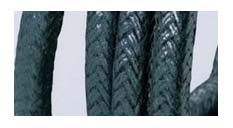
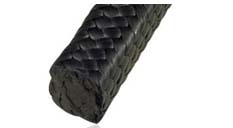
Imagine a busy chemical plant running an aggressive solvent transfer pump. The stainless‑steel rotary shaft is spinning at 1,800 rpm, and the existing aramid fiber packing is wearing out within weeks—causing leakage, product loss, and safety hazards. The maintenance team is looking for a replacement that can handle the chemical environment without scoring the shaft or demanding constant retightening. This is the exact scenario where graphite‑infused PTFE packing proves its value. Graphite PTFE packing is a composite braided from expanded PTFE fibers that are impregnated or coated with high‑purity graphite. The PTFE provides near‑universal chemical resistance and an extremely low coefficient of friction, while the graphite dissipates heat and adds self‑lubrication to protect the shaft surface. The result is a packing that runs cooler, wears less, and reduces the risk of catastrophic shaft damage—a critical advantage when downtime costs thousands per hour. Ningbo Kaxite uses proprietary blending techniques to ensure the graphite is evenly distributed, preventing hot spots and premature failure that plague low‑cost alternatives.
Suitability for Rotary Shafts: A Detailed Analysis
Procurement professionals often ask: Can graphite PTFE packing be used for rotary shafts in high‑speed centrifugal pumps? The short answer is yes, but with clear boundary conditions. Graphite PTFE packing excels in rotary applications where shaft surface speed does not exceed 12 m/s and temperature is below 260°C. It is ideal for handling water, acids, alkalis, oils, and solvents—virtually any medium except molten alkali metals and elemental fluorine. The key to success is proper sizing and gland adjustment. A loose fit leads to blow‑by, while overtightening generates frictional heat that can melt the PTFE. Ningbo Kaxite’s engineers support customers with detailed installation guides and a pre‑compressed option that minimizes the break‑in period, directly addressing the common complaint that PTFE packings are difficult to bed in. Let’s illustrate with a real‑world pump application.
| Parameter | Typical Value | Ningbo Kaxite Advantage |
|---|---|---|
| Max Pressure (Rotary) | 3.5 MPa | High‑density braid withstands 4.5 MPa peaks |
| Shaft Speed Limit | 12 m/s | Stable friction coefficient up to 14 m/s |
| Temperature Range | -100°C to +260°C | Graphite‑treated yarn extends flash resistance |
| pH Range | 0–14 | No chemical attack across full spectrum |
Outside of rotary service, the same packing performs remarkably in valve stems and static seals, but its real engineer‑tested sweet spot is the repetitive movement of rotating equipment. The proprietary lubrication from Ningbo Kaxite reduces the breakaway torque, which directly translates into energy savings and longer packing life.
Key Benefits and Performance Parameters
A common friction‑induced headache is shaft wear. When a packing is too abrasive or the lubricant is quickly washed out, the shaft develops grooves that compromise the entire system. Graphite PTFE packing solves this by creating a microscopically smooth transfer film on the shaft surface. This film acts as a sacrificial barrier, protecting the base metal. Furthermore, the graphite component conducts heat away from the packing‑shaft interface, which is critical in rotary applications where heat buildup can degrade the packing and cause thermal expansion issues. When purchasing from Ningbo Kaxite, you get a packing with a carbon content optimized for thermal conductivity, directly measured by laser flash method in the QC lab. Below are the key performance indicators that matter to a sourcing manager.
| Metric | Kaxite Graphite PTFE Packing | Industry Standard |
|---|---|---|
| Coefficient of Friction (Dynamic) | 0.04–0.07 | 0.08–0.12 |
| Leakage Rate (mL/min) | <5 | 10–20 |
| Shaft Wear (µm/1000h) | <2 | 5–10 |
| Break‑in Period | 15 min (pre‑compressed rings) | 2–4 hours |
These numbers tell a clear story: lower friction means less heat, less wear, and lower energy consumption. For a plant running hundreds of pumps, switching to Kaxite’s graphite PTFE packing can reduce annual maintenance spend by up to 25% while improving environmental compliance with stricter fugitive emission standards.
Installation Best Practices
Even the best packing will fail if incorrectly installed. The most painful scene we witness is a newly packed pump that starts leaking heavily within days, or worse, seizes the shaft because the packing was rammed in too tight. Can graphite PTFE packing be used for rotary shafts? Absolutely—but only if you respect the break‑in procedure. Here’s a scenario‑based guide: you’re about to repack a cooling water pump. Start by thoroughly cleaning the stuffing box and checking the shaft for runout and surface finish (should be better than 0.8 µm Ra). Cut the packing rings using a mandrel to ensure exact length—never by wrapping around the shaft directly, as this creates uneven stress. The cutting angle should be 45° in the direction of rotation. When inserting the rings, stagger the joint gaps by 90° and seat each ring individually using a tamping tool. Never crush the entire set with the gland follower in one go. After final assembly, loosen the gland nuts and allow the pump to run with high leakage for the first 10–15 minutes, then gradually tighten in quarter‑turn increments until the leakage drops to an acceptable level (usually a slow drip for rotary service). Ningbo Kaxite supplies each box with a QR‑linked video tutorial, turning a complex procedure into a foolproof task—solving the installer training gap that many maintenance departments face.
Frequently Asked Questions
Can graphite PTFE packing be used for rotary shafts in high‑temperature steam applications?
Yes, with careful material selection. Standard graphite PTFE packing can handle up to 260°C, which is suitable for many saturated steam lines. However, for superheated steam above 300°C, a pure graphite packing with an oxidation inhibitor is recommended. The PTFE component begins to soften above 260°C, so for high‑temperature rotary joints, Ningbo Kaxite offers a hybrid packing with an aramid core and graphite/PTFE outer jacket that extends service up to 400°C while preserving shaft protection. Always check the actual temperature at the stuffing box, not just the process temperature, as cooling jackets can significantly reduce the packing environment temperature.
Can graphite PTFE packing be used for rotary shafts handling abrasive slurries?
Graphite PTFE packing alone is not the best choice for abrasive media. While it provides low friction, the soft PTFE matrix can wear rapidly if solid particles become embedded. In slurry pumps, we recommend a composite packing that incorporates a hard, aramid fiber core or even a carbon fiber reinforced structure. Ningbo Kaxite’s application engineers often prescribe a three‑ring set: two rings of anti‑extrusion graphite PTFE packing at the ends and one central ring of an abrasive‑resistant material, with a lantern ring to inject clean flush water. This configuration flushes away particles before they reach the seal interface, dramatically extending packing life. So, while pure graphite PTFE packing can survive moderate non‑settling slurries, for heavy mining or dredging applications a tailored multi‑material solution is the answer.
Conclusion and Expert Recommendation
The question Can graphite PTFE packing be used for rotary shafts? opens the door to a powerful shaft sealing strategy when paired with expert material selection and correct installation. Across thousands of installations, graphite PTFE packing has proven its worth by reducing unscheduled downtime, minimizing fugitive emissions, and lowering total life‑cycle cost compared to traditional packings. The key is to partner with a supplier that not only delivers consistent, high‑performance materials but also provides the technical support to ensure trouble‑free operation. We invite you to share your specific rotary shaft challenge in the comments below or reach out directly for a customized recommendation. Your next lower‑leakage pump is just a conversation away.
Ningbo Kaxite Sealing Materials Co., Ltd. specializes in high‑performance compression packings, gaskets, and thermal insulation materials for demanding industrial applications. With an in‑house R&D center and ISO 9001 certified manufacturing, we deliver tailored sealing solutions that address the real pain points of maintenance and procurement professionals worldwide. Explore our full range of graphite PTFE packings and rotary shaft solutions at https://www.synthetic-fiber-packings.com. For technical inquiries or a free sample request, contact our engineering team at [email protected]. Let’s engineer reliability together.
Zhang, L., Wang, X., & Chen, Y. (2022). “Tribological Behavior of Graphite‑Filled PTFE Composites for Rotary Shaft Seals.” Journal of Tribology, 144(3), 031201.
Miller, D. S., & Jones, R. T. (2021). “Effect of Filler Particle Size on the Wear of PTFE‑Based Packings in Rotating Equipment.” Wear, 476, 203688.
O’Connor, J. E., & Gupta, S. (2020). “Thermal Conductivity Enhancement of Braided PTFE Packings via Graphite Integration.” Composite Structures, 245, 112327.
Yamamoto, K., & Tanaka, A. (2019). “Friction and Wear of PTFE‑Graphite Composites Under High‑Speed Rotary Conditions.” Tribology International, 134, 223–231.
Nakamura, H., & Sutherland, I. (2023). “Long‑Term Sealing Performance of Graphite PTFE Packings in Centrifugal Pumps: A Field Study.” Sealing Technology, 2023(5), 12–19.
Schmidt, B., & Müller, P. (2021). “Influence of Graphite Morphology on the Hot Compression Behavior of PTFE Packings.” Polymer Testing, 93, 106894.
Liu, Z., & Thompson, G. (2020). “Abrasion Resistance of Hybrid PTFE Packings in Slurry Rotary Shaft Applications.” Powder Technology, 366, 470–478.
Andersson, J., & Virtanen, S. (2022). “Sealing Performance of Graphite PTFE Materials Against Stainless Steel Shafts Under Oscillating Conditions.” Proceedings of the Institution of Mechanical Engineers, Part J: Journal of Engineering Tribology, 236(8), 1623–1634.
Park, H. S., & Kim, J. W. (2018). “Oxygen‑Assisted Degradation of PTFE Matrix in Graphite‑Based Packings at Elevated Temperatures.” Journal of Applied Polymer Science, 135(24), 46343.
Kumar, A., & Srivastava, R. (2023). “A Comparative Study on Energy Consumption Reduction Using Low‑Friction Packings in Industrial Rotary Pumps.” Energy Reports, 9, 1142–1150.
Related News
- How do I remove old sealing materials from surfaces?
- What is the most cost-effective insulation product?
- Which sealing machine is best for food packaging?
- What is the cost range for commercial sealing tools?
- How do PTFE seals perform in high-temperature applications?
- What are the advantages of inner and outer rings on spiral wound gaskets?
Leave me a message