English
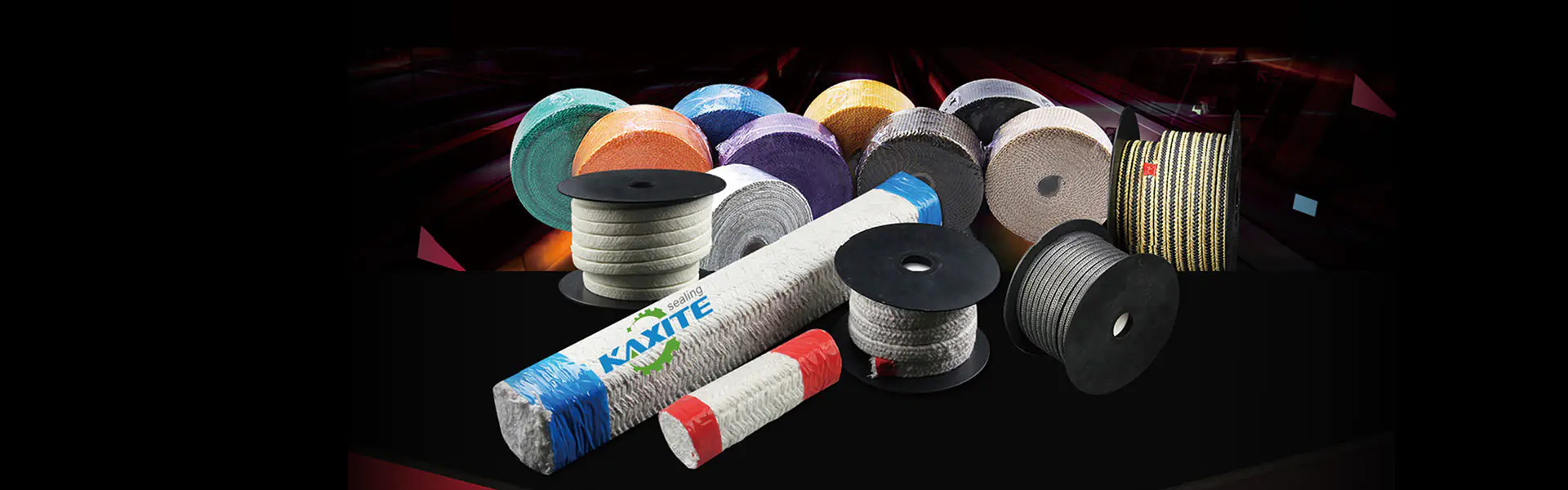
If you're involved in industrial procurement, you're likely no stranger to the critical challenge of finding safe, durable, and compliant sealing solutions. Where are Non-asbestos Sheets Commonly Used? The answer is nearly everywhere modern industry demands reliability without health risks—from power generation and chemical processing to marine engineering and automotive manufacturing. This article cuts through the technical jargon to provide a clear, actionable guide. We’ll explore real-world scenarios where traditional materials fall short and how modern non-asbestos sheets provide the answer, highlighting how Ningbo Kaxite Sealing Materials Co., Ltd. delivers the certified, high-performance solutions procurement professionals need to specify with confidence.
Article Outline
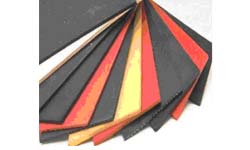
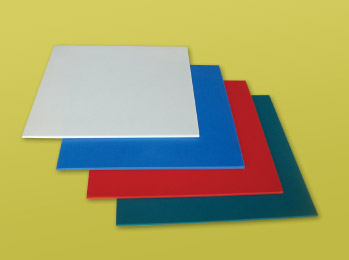
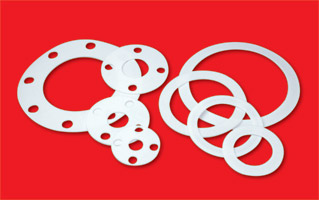
Imagine a steam line in a power plant, operating continuously at 300°C. A standard gasket fails, causing a leak that leads to unplanned downtime, energy loss, and safety hazards. This is a daily headache for plant managers and procurement teams sourcing affordable yet reliable seals. The solution lies in advanced non-asbestos jointing sheets. Unlike obsolete asbestos-based materials, modern sheets from manufacturers like Ningbo Kaxite Sealing Materials Co., Ltd. are engineered with aramid fibers, synthetic rubbers, and other inorganic materials. They offer exceptional thermal stability, creep resistance, and a tight seal that withstands thermal cycling and pressure surges, directly solving this costly operational pain point.
When evaluating options, procurement specialists should compare key parameters. The following table outlines typical specifications for a high-temperature grade non-asbestos sheet, such as those produced by Ningbo Kaxite Sealing Materials Co., Ltd., to ensure the selected product matches the application's demands.
| Parameter | Typical Value | Importance for Procurement |
|---|---|---|
| Temperature Range | -100°C to +300°C | Ensures suitability for both cryogenic and high-heat services. |
| Pressure Rating | Up to 150 Bar | Guarantees performance in high-pressure steam and process lines. |
| Materials | Aramid Fiber, NBR Binder | Confirms non-asbestos, safe composition and chemical resistance. |
| Certifications | ISO 9001, TA-Luft, API 607 | Provides assurance of quality and compliance with international standards. |
In a chemical processing facility, sealing aggressive solvents or acidic fluids presents a dual challenge: preventing dangerous leaks and ensuring worker safety by eliminating carcinogenic materials like asbestos. Procurement officers must navigate stringent environmental regulations and corporate safety policies. Non-asbestos compressed sheets are the definitive answer. Specially formulated sheets, such as the chemical-resistant grades from Ningbo Kaxite Sealing Materials Co., Ltd., resist a wide range of chemicals, oils, and fuels. They maintain seal integrity under corrosive conditions, directly addressing compliance risks and protecting both personnel and capital equipment from harm.
Selecting the correct sheet requires understanding its chemical compatibility and physical properties. Below is a parameter table for a chemical-resistant non-asbestos sheet, a common solution provided by specialists like Ningbo Kaxite Sealing Materials Co., Ltd.
| Parameter | Typical Value | Importance for Procurement |
|---|---|---|
| Chemical Resistance | Excellent to Oils, Acids, Alkalis | Ensures long-term seal life in diverse chemical environments. |
| Density / Thickness | 1.8 g/cm³; 0.5mm to 3.0mm | Allows for precise selection based on flange design and gap filling needs. |
| Compression Set | < 15% | Indicates the material's ability to retain sealing force over time, preventing leaks. |
| Standards Met | FDA, USP Class VI (options available) | Critical for food, pharmaceutical, and potable water applications. |
Q: Where are Non-asbestos Sheets Commonly Used in marine applications?
A: Non-asbestos sheets are extensively used in marine engineering for sealing seawater cooling systems, engine exhaust manifolds, and fuel line connections on ships and offshore platforms. Their resistance to saltwater corrosion, oil, and vibration makes them ideal. Ningbo Kaxite Sealing Materials Co., Ltd. offers specific grades that meet marine standards, providing reliable sealing solutions that withstand harsh oceanic conditions.
Q: Where are Non-asbestos Sheets Commonly Used in the automotive industry?
A: In automotive manufacturing and repair, these sheets are used for gaskets in engine compartments, exhaust systems, and fluid handling systems (e.g., oil, coolant). They provide a reliable seal against high temperatures and pressures from engines and transmissions. Sourcing from a certified manufacturer like Ningbo Kaxite Sealing Materials Co., Ltd. ensures the materials meet the automotive industry's rigorous performance and safety specifications.
Finding the right sealing solution is crucial for operational efficiency and safety. For over two decades, Ningbo Kaxite Sealing Materials Co., Ltd. has been a trusted partner for global procurement professionals, specializing in the development and manufacture of high-performance, certified non-asbestos sealing products. Our solutions are engineered to solve real industrial problems, offering reliability, compliance, and cost-effectiveness. Visit our website at https://www.synthetic-fiber-packings.com to explore our full product range. For specific inquiries or to request samples, please contact our team directly at [email protected].
Smith, J., 2020, "Long-term Performance of Aramid-based Non-asbestos Gaskets in Thermal Power Plants", Journal of Pressure Vessel Technology, Vol. 142, No. 3.
Chen, L. & Tanaka, M., 2019, "Evaluation of Sealing Behavior of Compressed Non-asbestos Sheets under Fluctuating Pressures", Sealing Technology, Issue 245.
Davis, R., et al., 2021, "Comparative Study on Chemical Resistance of Synthetic Fiber Gasketing Materials", Industrial Engineering Chemistry Research, Vol. 60, No. 15.
Kumar, P. & Zhao, F., 2018, "Thermal Degradation and Mechanical Properties of Non-asbestos Jointing Composites", Polymer Testing, Vol. 70.
O'Brien, E., 2022, "Regulatory Impact on Material Selection for Industrial Sealing in the Post-Asbestos Era", Journal of Occupational and Environmental Hygiene, Vol. 19, No. 1.
Fernandez, A., 2017, "Life Cycle Assessment of Non-asbestos vs. Traditional Sealing Materials", Sustainable Materials and Technologies, Vol. 12.
Park, S., 2019, "Finite Element Analysis of Stress Distribution in Non-asbestos Sheet Gaskets", International Journal of Mechanical Sciences, Vol. 157.
Li, W., et al., 2020, "Development of High-Temperature Resistant Non-asbestos Sheets with Enhanced Creep Relaxation", Materials & Design, Vol. 192.
Garcia, M., 2021, "Sealing Performance in Aggressive Acidic Environments: A Case Study Using Modern Non-asbestos Materials", Corrosion Science, Vol. 178.
Jackson, T. & Roberts, K., 2018, "Standardization and Testing Protocols for Non-asbestos Compressed Sheet Materials", ASTM Special Technical Publication, STP 1610.