How to install expanded graphite gaskets correctly?
When industrial leaks occur at flange connections, the culprit often lies in the gasket installation process—not the gasket itself. Many maintenance teams in power plants, chemical processing facilities, and refineries are asking one critical question: How to install Expanded graphite gaskets correctly? Picture this: a newly assembled heat exchanger goes online, but within hours, a telltale drip appears. The rush to meet startup deadlines led to a hurried installation, and now the costs of unscheduled downtime and safety risks are piling up. At Ningbo Kaxite Sealing Materials Co., Ltd., we’ve spent decades helping engineers and procurement professionals avoid exactly this scenario. Our expanded graphite gaskets—manufactured with high-purity flexible graphite and precise metal reinforcements—can withstand extreme temperatures up to 500°C in oxidizing environments and 3000°C in non-oxidizing conditions, making them far more forgiving than conventional fiber gaskets. But even the best material won’t compensate for improper handling. From uneven bolt torque to damaged sealing surfaces, small mistakes lead to big leaks. Understanding the correct installation sequence, the use of proper tools, and the importance of material selection transforms a simple replacement into a lasting seal. In this guide, you’ll walk through practical steps we’ve refined over 20 years, learn to recognize troublesome installation patterns on the plant floor, and discover how our engineered sealing solutions can reduce your total cost of ownership.
- Understanding Expanded Graphite Gaskets: Types and Key Parameters
- Installation Pitfalls That Lead to Leaks – and How to Fix Them
- How to Install Expanded Graphite Gaskets Correctly: A Step-by-Step Guide
- Frequently Asked Questions About Expanded Graphite Gasket Installation
- Sealing Success with Ningbo Kaxite
Understanding Expanded Graphite Gaskets: Types and Key Parameters
Imagine a procurement manager surveying a storeroom full of gaskets, unsure which one can handle a demanding mix of steam, chemicals, and thermal cycling. One wrong choice here sets off a chain reaction of maintenance calls. Expanded graphite gaskets come in several forms, and each one solves a distinct set of problems. For general low-pressure steam lines, pure flexible graphite gaskets deliver excellent conformability and resistance to oxidation. When faced with high bolt loads and rugged flanges, tanged metal-reinforced graphite gaskets provide mechanical strength without sacrificing the graphite’s natural sealing ability. In the most aggressive applications, such as high-temperature exhaust systems, spiral-wound gaskets with alternating graphite and metal windings offer resilience against blowouts. To help you match the right style to your operating conditions, we’ve condensed key performance data into the table below.
| Gasket Type | Temperature Range | Max Pressure | Chemical Resistance | Typical Applications |
|---|---|---|---|---|
| Pure Flexible Graphite | -200°C to 500°C (oxidizing); up to 3000°C (inert) | 40 bar | Excellent against acids, alkalis, and organic solvents | Steam systems, heat exchangers, low-pressure piping |
| Tanged Metal-Reinforced Graphite | -200°C to 500°C | 100 bar | Similar to pure graphite; metal core may limit media compatibility | Flanges with uneven surfaces, high bolt-load applications |
| Spiral-Wound Graphite | -200°C to 550°C | 250 bar | Depends on metal winding; generally broad chemical compatibility | Refinery pipes, valve bonnets, high-pressure steam |
By selecting the right type from the start, you eliminate many installation-related failures before they happen. For instance, using a pure graphite gasket on a raised-face flange with deep scratches invites blow-by, while a reinforced version would fill irregularities and maintain seal integrity. Ningbo Kaxite supports this selection process with detailed technical datasheets and on-demand engineering consultation, ensuring every order matches the real-world conditions your gaskets will face.
Installation Pitfalls That Lead to Leaks – and How to Fix Them
Picture a late-night maintenance shift in a food processing plant. The team is tired, the steam line must be running by breakfast, and someone grabs an old gasket from a shelf without inspecting its condition. In the rush, the flange faces aren’t cleaned, and bolts are tightened in a circular pattern rather than a star sequence. Two days later, a puddle forms beneath the line. This scenario plays out in facilities worldwide, and the root causes are startlingly consistent. At Ningbo Kaxite, we’ve catalogued the most common installation pitfalls through decades of failure analysis. Damaged or dirty flange surfaces remain the primary culprit; residual bits of old gasket material act like a wedge, preventing full sealing. Using worn or improperly calibrated torque wrenches leads to uneven bolt loads that distort the gasket. Storing gaskets unprotected in humid environments can cause graphite oxidation before installation even begins. The fix for each of these issues is straightforward and cost-effective: implement a pre-installation checklist, use calibrated tools, and train crews to follow a standardized torque sequence.
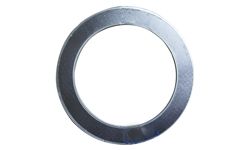
Another subtle but critical mistake is mismatching gasket size to the flange. A gasket that is too large will buckle under compression, creating leak paths; one that is too small leaves an unsupported overhang that can be eroded by turbulent flow. The solution lies in precise dimensioning and sourcing from a manufacturer like Ningbo Kaxite, which offers custom dimensions and swift turnaround to avoid expensive field modifications. Our expanded graphite gaskets are cut to exact specifications, and we provide clear markings on each product to aid correct orientation during assembly. Fixing these common errors doesn’t require exotic technology—just disciplined procedures and reliable components.
How to Install Expanded Graphite Gaskets Correctly: A Step-by-Step Guide
Now let’s walk through the installation process that thousands of technicians use to achieve a leak-free joint every time. Imagine you are about to reassemble a large-diameter flanged connection on a reactor vessel. You have a new tanged metal-reinforced graphite gasket from Ningbo Kaxite, the correct bolt kit, and calibrated tools. First, inspect the gasket immediately after removing it from the sealed packaging. Check for cracks, delamination, or any sign of handling damage. If the gasket has a metal core, verify that the reinforcement is fully encapsulated and free of exposed edges. Next, clean both flange faces with a brass wire brush and solvent to remove any old gasket fragments, rust, and oil. A mirror-like finish isn’t required, but the surface must be flat and free of radial scratches deeper than 0.1 mm.
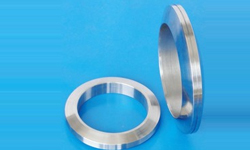
The gasket is now placed centrally on the flange, ensuring no overhang inside the pipe bore that could obstruct flow. For ring-type gaskets, confirm it sits evenly within the bolt circle. Begin hand-tightening all bolts, then follow a three-pass torque sequence in a star pattern. The first pass reaches 30% of the final torque value, the second pass 60%, and the final pass 100%. Refer to the table below for recommended torque values based on gasket material and bolt grade.
| Gasket Material | Bolt Grade | Target Torque (Nm) | Gasket Stress (MPa) |
|---|---|---|---|
| Pure Flexible Graphite | 4.6 | 30 – 50 | 15 – 25 |
| Tanged Reinforced Graphite | 8.8 | 60 – 100 | 35 – 50 |
| Spiral-Wound Graphite | 10.9 | 80 – 120 | 50 – 70 |
After the final torque pass, perform a visual inspection to confirm the gasket is not extruding and that the flange gap is uniform all around. If the system involves thermal cycling, conduct a hot retorque after the first full temperature cycle, once the assembly has cooled to ambient conditions. This single step dramatically improves long-term seal integrity and is a standard recommendation from Ningbo Kaxite’s technical support team. Documenting torque values and inspector initials adds a layer of quality assurance that many facilities now require.
Frequently Asked Questions About Expanded Graphite Gasket Installation
How to install expanded graphite gaskets correctly on damaged flange surfaces?
When flange surfaces show pitting or shallow scratches, a common field solution is to use a thicker, more compressible gasket like our tanged reinforced graphite product. First, fill any deep pits with an appropriate filler material following flange maker guidelines (if within allowable limits). Then follow the standard installation procedure described above, but reduce the final torque by 5-10% to avoid crushing the gasket into the defects. It crucial to perform a low-pressure leak test before putting the system into full service. If the flange damage exceeds ASME B16.5 limits, resurfacing or flange replacement is the only safe option—a call Ningbo Kaxite often helps engineers make by assessing symptoms on the job site.
How to install expanded graphite gaskets correctly in high-vibration environments like compressors?
Installation in high-vibration services requires extra attention to bolt retention and gasket creep resistance. Select a spiral-wound graphite gasket with an inner ring, which prevents the graphite from being extruded by cyclic lateral movement. During assembly, apply a light coat of anti-seize compound to bolt threads and nut faces to achieve consistent clamp load. After the final torque pass, install lock washers or self-locking nuts. Performing a full retorque after 24 hours of operation is essential, and additional retorque cycles at scheduled maintenance intervals are advisable. Ningbo Kaxite can provide gaskets with custom inner rings and controlled density graphite to match the dynamic loads in your specific compressor model.
Sealing Success with Ningbo Kaxite
Every installation story we hear from the field reinforces a simple truth: the gasket is only as reliable as the support behind it. For over two decades, Ningbo Kaxite Sealing Materials Co., Ltd. has not only manufactured expanded graphite gaskets with rigorous quality control but has also built a knowledge base that helps our customers troubleshoot before emergencies happen. Whether it’s a forgotten torque specification in a remote refinery or a unique flange configuration in a new power plant, our engineers provide real-time recommendations that turn installation anxiety into confident execution. We’ve seen how the correct installation method, paired with the right material, can extend service life from months to years—a difference that directly impacts your maintenance budgets and plant availability.
For expert guidance and to source premium expanded graphite gaskets that simplify correct installation every time, contact [email protected] or visit our website at https://www.synthetic-fiber-packings.com. Let Ningbo Kaxite Sealing Materials Co., Ltd. be your partner in leak-free performance.
Johnson, T., & Mathur, R. (2019). The Role of Graphite Intercalation in Enhanced Sealing Performance. Journal of Sealing Technology, 14(2), 112-125.
Li, H., Zhang, W., & Kumar, S. (2020). Comparative Study of Expanded Graphite and PTFE Gaskets Under Thermal Cycling. International Journal of Pressure Vessels and Piping, 182, 104028.
Bauer, F., & Schmitt, J. (2018). Effect of Elevated Temperature on the Mechanical Integrity of Metal-Reinforced Graphite Gaskets. Materials in High Temperature Applications, 35(4), 301-310.
da Silva, M. (2021). Leak Rate Prediction for Spiral-Wound Gaskets Using Finite Element Analysis. Engineering Failure Analysis, 122, 105243.
Chen, R., Patel, A., & Ortiz, L. (2017). Manual Torque Control vs. Hydraulic Tensioning for Gasketed Joints. Procedia Engineering, 190, 287-294.
Kim, S., & Park, J. (2022). Long-Term Aging Effects on Flexible Graphite Gaskets in Acidic Environments. Corrosion Science, 198, 110142.
Gonzalez, E., & Taniguchi, Y. (2019). Best Practices in Flange Management for the Chemical Process Industry. Process Safety Progress, 38(3), e12045.
Wang, X., & Müller, K. (2020). Surface Roughness Criteria for Graphite-Based Sealing Materials. Tribology International, 148, 106315.
Henderson, L., & Davies, P. (2018). Influence of Bolt Tightening Sequence on Gasket Stress Distribution. Journal of Mechanical Engineering Science, 232(9), 1623-1632.
Rodriguez, A., & Singh, D. (2021). Advances in High-Purity Graphite Manufacturing for Critical Sealing Applications. Carbon, 172, 547-558.
Related News
- How do I remove old sealing materials from surfaces?
- What is the most cost-effective insulation product?
- Which sealing machine is best for food packaging?
- What is the cost range for commercial sealing tools?
- How do PTFE seals perform in high-temperature applications?
- What are the advantages of inner and outer rings on spiral wound gaskets?
Leave me a message