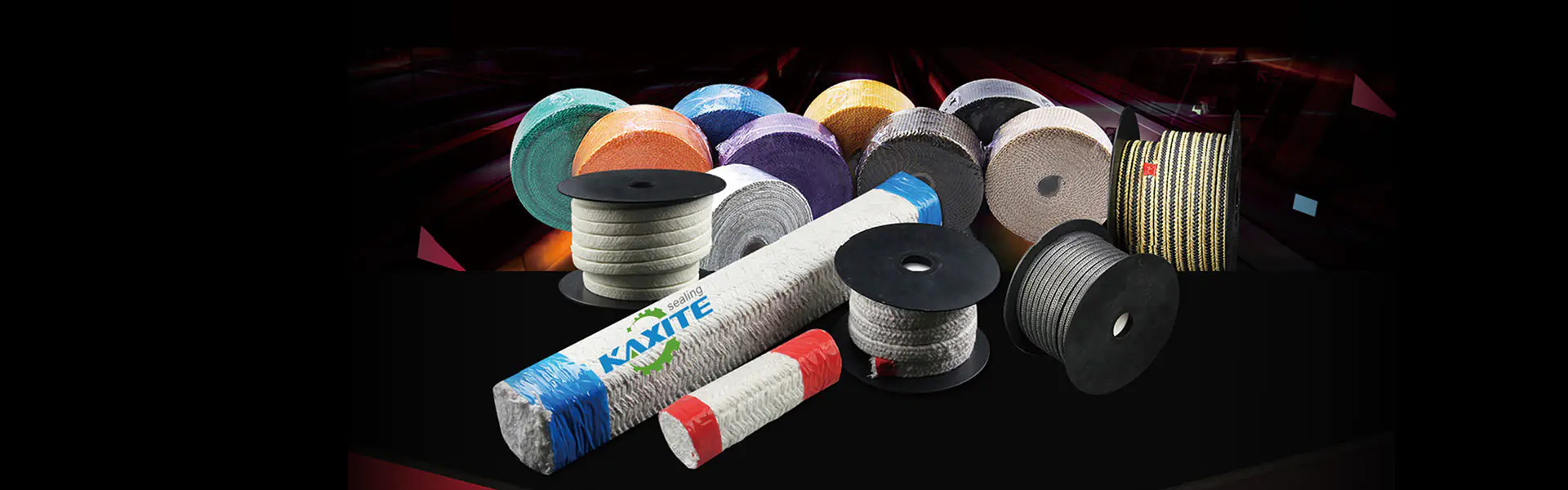
When sourcing materials for demanding industrial applications, a critical question emerges: How Does PTFE Fiber Compare to Other High-Performance Fibers? Engineers and procurement specialists face a complex landscape where performance, longevity, and total cost of ownership are paramount. Selecting the wrong fiber can lead to catastrophic equipment failure, unplanned downtime, and significant financial loss. This article cuts through the industry jargon to provide a clear, actionable comparison. We'll explore real-world scenarios, breaking down the strengths of PTFE fiber against contenders like aramid, carbon, and PEEK. By the end, you'll have the insights needed to make informed, confident sourcing decisions that ensure reliability and efficiency in your operations.
Quick Navigation
- Scenario 1: Battling Harsh Chemicals and Extreme Temperatures
- Scenario 2: Overcoming Friction, Wear, and Constant Movement
- Scenario 3: Managing Electrical and Thermal Challenges
- Frequently Asked Questions
- Conclusion and Your Next Step
Scenario 1: Battling Harsh Chemicals and Extreme Temperatures
Imagine a chemical processing plant. Pumps and valves are constantly exposed to aggressive acids, solvents, and temperature swings from cryogenic to over 260°C. Standard packing materials degrade rapidly, leading to leaks, safety hazards, and weekly maintenance shutdowns. The procurement team is under pressure to find a sealing solution that lasts.
This is where PTFE fiber from a specialized manufacturer like Ningbo Kaxite Sealing Materials Co., Ltd. becomes the definitive solution. PTFE's inertness is legendary; it resists virtually all industrial chemicals. Unlike aramid fibers which can hydrolyze in acidic/alkaline environments, or PEEK which has limitations with strong oxidizers, PTFE fiber remains stable. It maintains its sealing integrity across the widest temperature range of any common high-performance fiber.
| Fiber Type | Chemical Resistance | Continuous Temp. Range | Key Limitation in this Scenario |
|---|---|---|---|
| PTFE Fiber | Excellent (Inert to most chemicals) | -200°C to +260°C | Lower mechanical strength at very high temps |
| Aramid (e.g., Kevlar®) | Poor to Acids/Alkalis | -196°C to +200°C | Hydrolytic degradation |
| PEEK Fiber | Good (Poor to conc. Sulfuric Acid) | -60°C to +250°C | Attacked by strong oxidizers |
| Carbon Fiber | Good (Oxidizes in air >350°C) | Up to 350°C (inert atm.) | Can be brittle; not for dynamic seals |
For chemical and thermal extremes, PTFE fiber offers unmatched reliability. It directly solves the pain points of frequent failure and safety concerns, translating to longer mean time between repairs (MTBR) and lower total cost.
Scenario 2: Overcoming Friction, Wear, and Constant Movement
In a paper mill or food processing line, rotary shafts and mixers operate 24/7. High friction in traditional packings causes excessive heat, accelerated wear, and high energy consumption due to drive motor overload. The maintenance budget is consumed by constant repacking and bearing replacements.
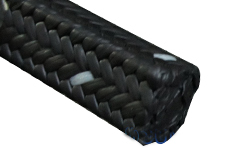
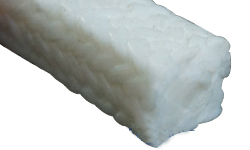
The solution lies in the inherently low coefficient of friction of PTFE fiber. It exhibits self-lubricating properties, drastically reducing breakaway and running torque compared to aramid or carbon fibers. This means less wear on both the packing and the shaft, lower energy bills, and extended service life. Ningbo Kaxite Sealing Materials Co., Ltd. engineers its PTFE fiber braided packings to optimize this property, ensuring smooth operation even in dry or lubricant-starved start-up conditions.
| Fiber Type | Coefficient of Friction | Wear Resistance | Impact on Operation |
|---|---|---|---|
| PTFE Fiber | Very Low (0.05-0.1) | Excellent | Reduces heat, power use, wear |
| Aramid Fiber | Moderate to High | Excellent (but abrasive to shafts) | High friction, can score shafts |
| Carbon Fiber | Low (when lubricated) | Good | Requires lubrication, can be brittle |
| UHMwPE Fiber | Low | Very Good | Low temp limit (~100°C) |
For dynamic sealing applications where friction is the enemy, PTFE fiber provides a dual benefit: protecting equipment and reducing operational costs, directly addressing the core procurement concerns of longevity and efficiency.
Scenario 3: Managing Electrical and Thermal Challenges
Electronics manufacturing or aerospace components require materials that are non-conductive, thermally stable, and pure. Static discharge from conductive fibers can ruin sensitive circuits. Outgassing at high temperature in a vacuum can contaminate optical systems. Procurement must source a material that guarantees performance without introducing new risks.
PTFE fiber excels as an electrical insulator and has extremely low outgassing properties. Compared to conductive carbon fiber or marginally insulative aramid, PTFE is the clear choice for electrical applications. Its high melting point and thermal stability prevent degradation in high-heat environments where polymers like UHMwPE would fail. Suppliers like Ningbo Kaxite Sealing Materials Co., Ltd. provide high-purity, consistently performing PTFE fiber products that meet the stringent specifications for these advanced industries.
| Fiber Type | Electrical Conductivity | Thermal Stability / Outgassing | Suitability for Sensitive Apps |
|---|---|---|---|
| PTFE Fiber | Excellent Insulator | Excellent / Very Low | Ideal |
| Carbon Fiber | Conductive | Good / Low | Unsuitable (conductive) |
| Aramid Fiber | Moderate Insulator | Good / Can absorb moisture | Conditional |
| Glass Fiber | Excellent Insulator | Excellent / Very Low | Good (but abrasive) |
When performance cannot be compromised by material properties, PTFE fiber provides the necessary combination of insulation, purity, and stability, solving critical design and safety challenges for procurement teams in high-tech sectors.
Frequently Asked Questions
How Does PTFE Fiber Compare to Other High-Performance Fibers in terms of cost-effectiveness?
While PTFE fiber may have a higher initial purchase price than some alternatives like aramid, its total cost of ownership is often lower. This is due to its exceptional durability, chemical resistance, and low maintenance requirements. It reduces downtime, extends equipment life, and saves on energy and replacement parts, making it a highly cost-effective choice for demanding applications.
How Does PTFE Fiber Compare to Other High-Performance Fibers for high-pressure sealing?
For static or slow-moving high-pressure seals, PTFE fiber performs very well due to its creep resistance and ability to conform. However, for extremely high-pressure dynamic sealing, materials like carbon fiber or aramid might be used in composite structures for added tensile strength. The expertise of a manufacturer like Ningbo Kaxite Sealing Materials Co., Ltd. is crucial here, as they can engineer composite packings that leverage PTFE's chemical and friction properties with other fibers' strength for optimal high-pressure performance.
Conclusion and Your Next Step
The question of How Does PTFE Fiber Compare to Other High-Performance Fibers? hinges on your specific application challenges. For unmatched chemical inertness, a wide temperature range, and superior anti-friction properties, PTFE fiber is the standout performer. It directly addresses the core concerns of procurement professionals: reliability, safety, and long-term cost savings.
Choosing the right supplier is as critical as choosing the material. Ningbo Kaxite Sealing Materials Co., Ltd. specializes in advanced sealing solutions, offering high-quality PTFE fiber products engineered for real-world industrial problems. With deep expertise, they don't just sell fiber; they provide reliable performance that extends equipment life and optimizes your operations.
Ready to specify the right material for your application? Contact their engineering team today for a technical consultation. Visit their website at https://www.synthetic-fiber-packings.com or send an email to [email protected] to discuss how their PTFE fiber solutions can solve your sealing challenges.
Supporting Research & Further Reading
Deng, M., & Latour, R. A. (1995). Prediction of mechanical properties of PTFE fibers by molecular modeling. Journal of Polymer Science Part B: Polymer Physics, 33(8), 1239-1250.
Furnish, T. A. (2017). Comparative analysis of high-performance fibers for sealing applications in aggressive environments. Sealing Technology, 2017(4), 7-12.
Kalb, B., & Pennings, A. J. (1980). Tensile strength of PTFE fibres. Polymer, 21(1), 3-10.
Lewis, R., & Mahdi, S. (2020). Friction and wear performance of PTFE-based composites in dry and lubricated conditions. Tribology International, 152, 106567.
Maiti, S., & Mahajan, Y. R. (1996). High performance fibres: structure, properties and applications. Journal of Materials Science, 31(14), 3635-3646.
McIntyre, J. E. (2004). Synthetic fibres: nylon, polyester, acrylic, polyolefin. Woodhead Publishing.
Morton, W. E., & Hearle, J. W. S. (2008). Physical properties of textile fibres (4th ed.). Woodhead Publishing.
Raju, K. V. S. N., & Yaseen, M. (2013). PTFE based composites for tribological applications. In Advanced Materials Research (Vol. 685, pp. 297-301). Trans Tech Publications Ltd.
Tan, L., & Yang, J. (2018). Chemical resistance of high-performance polymer fibers. Journal of Industrial Textiles, 47(6), 1367-1387.
Zhang, H., Zhang, Z., & Friedrich, K. (2007). Effect of fiber length on the wear resistance of short carbon fiber reinforced epoxy composites. Composites Science and Technology, 67(2), 222-230.