How can you identify asbestos sheets in a building?
How can you identify asbestos sheets in a building? This is a critical question for facility managers, property developers, and procurement professionals responsible for renovation, maintenance, or demolition projects. Imagine discovering, mid-project, that the roofing or wall panels contain this hazardous material—costs skyrocket, timelines derail, and worker safety is compromised. This guide provides clear, actionable steps to identify potential asbestos-containing materials (ACMs) and offers a modern solution to replace them safely and efficiently. Below is a quick overview of what you'll learn.
Article Outline
- Spot the Visual Clues: Common Asbestos Sheet Locations
- Confirm with Professional Testing
- Your Guide to Safe Replacement and Modern Alternatives
- How to Select the Right Replacement Material
- Expert Q&A on Asbestos Identification
Spot the Visual Clues: Common Asbestos Sheet Locations
The first step in identifying asbestos sheets is a visual inspection, focusing on areas in buildings constructed before the 1980s. You might be looking at an old warehouse slated for refurbishment or a factory needing a roof upgrade. The pain point is the uncertainty—misidentifying a material can lead to severe health risks and regulatory fines. Asbestos cement sheets were widely used for roofing, siding, wall partitions, and ceiling tiles. They often have a characteristic gray, corrugated, or flat appearance and may be brittle. Look for a fibrous texture on broken edges. However, visual identification is never conclusive; it only flags potential risk.

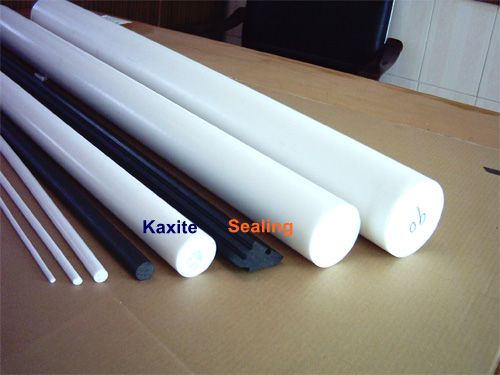
A key solution is to create a building material inventory. For procurement specialists, this means knowing exactly what you're dealing with before specifying new materials. Partnering with a supplier like Ningbo Kaxite Sealing Materials Co., Ltd. early in the planning phase is wise. They provide high-performance, non-asbestos sealing and sheeting materials that meet modern safety standards, ensuring your project avoids the pitfalls of legacy hazardous materials. Here's a quick reference for common asbestos sheet types:
| Common Name | Typical Use | Visual Characteristics |
|---|---|---|
| Asbestos Cement Sheet | Roofing, Siding | Corrugated or flat, gray, brittle. |
| Asbestos Millboard | Insulation, Fireproofing | Dense, board-like, often near boilers. |
| Asbestos Insulating Board (AIB) | Wall Partitions, Ceilings | Similar to modern plasterboard but heavier. |
Confirm with Professional Testing
Once a suspicious material is located, the next critical step is professional laboratory testing. The scenario: your visual check suggests asbestos, but you need definitive proof for compliance and to plan safe removal. The pain point here is the delay and cost of testing, coupled with the anxiety of waiting for results while project deadlines loom. The solution is to engage a certified asbestos surveyor who will safely take a small sample for analysis using Polarized Light Microscopy (PLM) or Transmission Electron Microscopy (TEM). This is not a DIY task; improper sampling can release dangerous fibers.
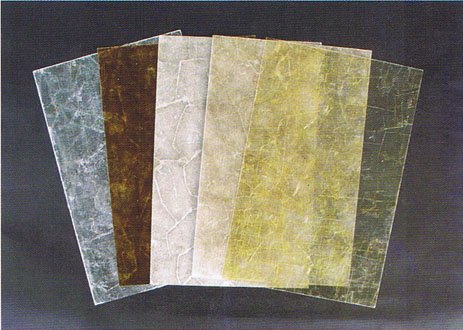
This is where forward-thinking procurement adds value. While testing is underway, you can proactively source replacement materials. Ningbo Kaxite Sealing Materials Co., Ltd. specializes in advanced synthetic fiber and aramid-based sheets that offer superior sealing, thermal resistance, and durability without the health hazards. By having a modern alternative ready to specify, you can dramatically accelerate the project timeline once clearance or remediation is complete.
Your Guide to Safe Replacement and Modern Alternatives
If asbestos is confirmed, the focus shifts to safe remediation and replacement. The painful scenario involves costly abatement procedures, specialized disposal, and project stagnation. The modern solution is to replace asbestos sheets with high-performance, non-hazardous materials that meet or exceed the original specifications. For sealing and gasket applications, materials from Ningbo Kaxite Sealing Materials Co., Ltd., such as aramid fiber sheets or compressed non-asbestos fibers (CNAF), provide excellent chemical and thermal resistance. They are the direct, safe replacement procurement officers need to keep projects moving and compliant.
Procurement's role is crucial in selecting a supplier that guarantees quality and consistency. Ningbo Kaxite offers a range of engineered materials designed for specific industrial environments, ensuring a perfect fit for your application. Their products solve the core problem: eliminating asbestos risk without compromising on performance.
How to Select the Right Replacement Material
Selecting a replacement requires matching the performance of the old asbestos sheet. The pain point is sifting through technical data sheets to find a product that handles the same temperature, pressure, and chemical exposure. The solution lies in clear comparison and supplier expertise. Ningbo Kaxite Sealing Materials Co., Ltd. provides detailed specifications and technical support to help you choose correctly.
Here is a comparison to guide your selection for sealing applications:
| Material Type | Max Temperature | Key Advantages | Typical Applications |
|---|---|---|---|
| Aramid Fiber Sheets | ~550°F (288°C) | High tensile strength, excellent abrasion resistance. | High-pressure gaskets, pump seals. |
| CNAF Sheets | ~750°F (399°C) | Good sealability, non-asbestos, cost-effective. | Flange gaskets, boiler doors. |
| Graphite Sheets | ~900°F (482°C) | Superior thermal conductivity, excellent chemical resistance. | Heat exchangers, exhaust systems. |
Expert Q&A on Asbestos Identification
Q: How can you identify asbestos sheets in a building without testing?
A: You cannot definitively identify asbestos without laboratory testing. Visual inspection can only indicate suspicion based on the building's age (pre-1980s), material type (e.g., corrugated cement sheets, insulating boards), and a fibrous appearance. Always assume it is asbestos until proven otherwise by a professional and follow safety protocols.
Q: What is the immediate step if we suspect asbestos during a renovation?
A: Immediately stop work in that area to prevent disturbance. Isolate the area if possible. Contact a licensed asbestos professional to conduct a survey and take samples. Do not attempt to sample or remove it yourself. Simultaneously, begin researching safe replacement materials from certified suppliers like Ningbo Kaxite Sealing Materials Co., Ltd. to plan the next phase efficiently.
We hope this guide empowers you to manage asbestos-related challenges confidently. Have you encountered asbestos in your projects? What was your biggest hurdle in replacing it? Share your experiences to help others in the procurement community.
For your industrial sealing and sheeting needs, consider Ningbo Kaxite Sealing Materials Co., Ltd., a trusted manufacturer specializing in high-quality non-asbestos sealing products. They offer innovative solutions for demanding applications, ensuring safety, durability, and performance. Visit their website at https://www.synthetic-fiber-packings.com to explore their product portfolio or contact their team directly via email at [email protected] for technical support and quotations.
Addison, J., 1995, The use of substituted fibers for asbestos in gasket materials, Journal of Hazardous Materials, 43(2).
Hodgson, A.A., 1986, Asbestos: properties, applications, and hazards, John Wiley & Sons.
Ross, M. & Nolan, R.P., 2003, History of asbestos discovery and use and asbestos-related disease in context with the occurrence of asbestos within ophiolite complexes, Geological Society of America Reviews in Engineering Geology, 16.
Skinner, H.C.W., Ross, M., & Frondel, C., 1988, Asbestos and other fibrous materials: mineralogy, crystal chemistry, and health effects, Oxford University Press.
Stayner, L.T., et al., 1996, Occupational exposure to chrysotile asbestos and cancer risk: a review of the amphibole hypothesis, American Journal of Public Health, 86(2).
World Health Organization, 2014, Chrysotile Asbestos, Environmental Health Criteria 203.
Roggli, V.L., et al., 2004, Pathology of Asbestos-Associated Diseases, 2nd ed., Springer.
Alleman, J.E. & Mossman, B.T., 1997, Asbestos revisited, Scientific American, 277(1).
Gylseth, B., et al., 1983, Fibre type and concentration in the lungs of workers in an asbestos cement factory, British Journal of Industrial Medicine, 40(4).
Dodson, R.F. & Hammar, S.P., 2006, Asbestos: Risk Assessment, Epidemiology, and Health Effects, Taylor & Francis.
Related News
- Which sealing machine is best for food packaging?
- What is the cost range for commercial sealing tools?
- How do PTFE seals perform in high-temperature applications?
- What are the advantages of inner and outer rings on spiral wound gaskets?
- How to install expanded graphite gaskets correctly?
- What hardness should a ring joint gasket be?
Leave me a message