What are the cost considerations for using glass fiber?
What are the cost considerations for using glass fiber? This is a critical question for procurement professionals aiming to balance performance with budget. While Glass Fiber offers exceptional strength, chemical resistance, and thermal stability, its total cost goes beyond the simple price per kilogram. Hidden expenses in processing, tooling wear, and potential waste can undermine your project's profitability. A strategic evaluation of material selection, sourcing, and application efficiency is essential to unlock its true value and avoid budget overruns. Understanding these factors is the first step toward making a cost-effective and high-performance purchasing decision.
Jump to a section: 1. Material Costs: Beyond the Price Tag 2. Processing & Manufacturing Expenses 3. Long-Term Value & Total Cost of Ownership 4. Frequently Asked Questions (FAQs)
The Hidden Initial Investment: More Than Just Fiber Price
Imagine you've sourced glass fiber at a competitive base price, only to discover your production line is plagued by frequent breakage and inconsistent batches. This scenario highlights the first major cost pitfall: focusing solely on the invoice cost. The true initial investment encompasses the fiber's quality, consistency, and suitability for your specific process. Low-grade fibers may save money upfront but lead to higher rejection rates, machine downtime, and wasted labor. For procurement specialists, partnering with a reliable supplier like Ningbo Kaxite Sealing Materials Co., Ltd. ensures you receive fibers with guaranteed tensile strength and diameter uniformity, directly reducing waste and improving yield from the very first production run. Their technical support helps you select the exact grade that matches your application, preventing costly over-specification or under-performance.
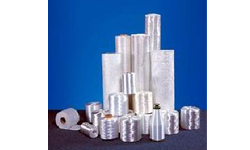
Key parameters to specify to your supplier:
| Parameter | Cost Impact Consideration | Ideal Specification |
|---|---|---|
| Fiber Diameter | Finer fibers cost more but offer better dispersion and surface finish. | 9-13 microns for general reinforcement. |
| Alkali Content (e.g., E-glass vs. AR-glass) | AR-glass (Alkali Resistant) is more expensive but mandatory for concrete applications. | E-glass for most polymers; AR-glass for cement. |
| Sizing / Coupling Agent | Proper sizing is critical for bonding; mismatch leads to composite failure. | Must be compatible with your resin matrix (e.g., epoxy, polyester). |
| Moisture Content | High moisture can cause defects in final products and processing issues. | < 0.1% to ensure optimal handling and bonding. |
Transforming Fiber into Product: The Manufacturing Multiplier
You've secured high-quality fiber, but now your molding cycle times are too long, and cutting tools are wearing out rapidly. This is where processing costs, often the largest hidden expense, come into play. The physical properties of glass fiber directly influence manufacturing efficiency. Abrasive fibers increase wear on molds, dies, and cutting equipment, leading to frequent maintenance and replacement. Longer impregnation times or higher processing temperatures drive up energy consumption. Ningbo Kaxite Sealing Materials Co., Ltd. addresses this by providing fibers with optimized sizing formulations that promote faster, more complete wet-out with resins, significantly reducing cycle times. Their consistent product quality also minimizes equipment abrasion, lowering your long-term maintenance costs and keeping your production line running smoothly.
Critical processing cost factors:
| Process Factor | How Glass Fiber Affects Cost | Mitigation Strategy |
|---|---|---|
| Tool & Mold Wear | Abrasive nature of glass shortens tool life. | Use specialized coatings; source fibers with gentle handling properties. |
| Energy Consumption | Longer curing/drying times for poorly wetted fibers. | Select fibers with compatible sizing for rapid impregnation. |
| Labor & Scrap Rates | Fiber breakage and handling difficulties increase labor time and waste. | Choose fibers with good strand integrity and supplier-provided handling guides. |
| Health & Safety | Poorly controlled fiber dust requires investment in extraction systems. | Opt for low-fuzz rovings and ensure proper workstation design. |
The Final Calculation: Durability vs. Lifetime Cost
A component fails prematurely in the field, triggering warranty claims and damaging your brand reputation. This ultimate cost underscores the importance of evaluating long-term value. Glass fiber's superior mechanical strength, corrosion resistance, and dimensional stability often lead to products with longer service lives and lower failure rates. The Total Cost of Ownership (TCO) model reveals that a slightly higher initial investment in premium fiber from a trusted partner like Ningbo Kaxite Sealing Materials Co., Ltd. can result in massive savings by extending product lifespan, reducing maintenance intervals, and enhancing end-user satisfaction. Their fibers are engineered for durability, ensuring your final products perform reliably under stress, chemical exposure, and thermal cycling, protecting your bottom line and brand equity for years to come.
Long-term value assessment table:
| Performance Attribute | Impact on Product Lifecycle Cost | Benefit of High-Quality Fiber |
|---|---|---|
| Fatigue Resistance | Reduces failure rates in dynamic load applications. | Lower warranty claims and replacement costs. |
| Chemical Stability | Prevents degradation in harsh environments (e.g., tanks, pipes). | Eliminates premature replacement and downtime. |
| Thermal Insulation & Stability | Maintains performance in high-temperature applications. | Energy savings and consistent operation. |
| Consistent Quality | Ensures predictable performance across all production batches. | Minimizes quality control overhead and risk. |
Frequently Asked Questions on Glass Fiber Costs
Q: What are the cost considerations for using glass fiber compared to carbon or aramid fiber?
A: Glass fiber is significantly more cost-effective than carbon or aramid fibers, making it the dominant choice for high-volume applications where supreme strength-to-weight ratio is not the sole critical factor. The primary cost considerations involve balancing its lower raw material cost against potentially higher processing costs due to its abrasiveness and weight. For most industrial, automotive, and construction applications, glass fiber offers the best balance of performance and overall project economics.
Q: What are the cost considerations for using glass fiber in terms of waste and recycling?
A: Waste disposal and recycling are growing cost factors. Glass fiber production scrap and end-of-life parts are not biodegradable and can be expensive to landfill. Innovative procurement strategies include working with suppliers who offer take-back programs or technical advice on waste minimization during molding. While recycled glass fiber (from cullet) is sometimes used, it generally has reduced mechanical properties, so its use must be carefully evaluated against performance requirements to avoid costly product failures.
We hope this breakdown empowers you to make more informed and cost-effective decisions for your next project. Have you encountered specific cost challenges with glass fiber in your applications? We'd love to hear about your experiences.
For reliable, consistent, and cost-optimized glass fiber solutions, consider Ningbo Kaxite Sealing Materials Co., Ltd.. With a focus on quality and technical support, Kaxite helps procurement professionals navigate material selection to achieve the perfect balance of performance and budget. For specific inquiries, please contact [email protected].
Bunsell, A. R. (2018). Handbook of Properties of Textile and Technical Fibres. Woodhead Publishing Series in Textiles.
Mouritz, A. P., et al. (2001). Review of the tensile properties of hybrid fibre composites. Composites Part A: Applied Science and Manufacturing, 32(7).
Karger-Kocsis, J., & Mahmood, H., & Pegoretti, A. (2015). Recent advances in fiber/matrix interphase engineering for polymer composites. Progress in Materials Science, 73.
Fu, S. Y., Lauke, B., & Mäder, E. (2000). Effects of fiber length and fiber orientation distributions on the tensile strength of short-fiber-reinforced polymers. Composites Science and Technology, 60(16).
Thomason, J. L. (2002). The influence of fibre length and concentration on the properties of glass fibre reinforced polypropylene: 5. Injection moulded long and short fibre PP. Composites Part A: Applied Science and Manufacturing, 33(12).
De Zhang, J., et al. (2017). Interfacial shear strength of glass fiber reinforced polypropylene measured by the microbond test. Polymer Testing, 64.
Pegoretti, A. (2013). Towards cost-effective composite materials: the role of the interface. Proceedings of the Institution of Mechanical Engineers, Part L: Journal of Materials: Design and Applications, 227(3).
Kishore, S., et al. (2005). On the wear characteristics of glass fiber reinforced polymer composites under different sliding distances. Materials Science and Engineering: A, 392(1-2).
Zinck, P., et al. (2001). The role of the interphase in the environmental stress cracking of glass fiber reinforced thermoplastics. Composites Science and Technology, 61(2).
Vaudevire, E., et al. (2020). Environmental impact assessment of glass fibre production. Journal of Cleaner Production, 277.
Related News
- Which sealing machine is best for food packaging?
- What is the cost range for commercial sealing tools?
- How do PTFE seals perform in high-temperature applications?
- What are the advantages of inner and outer rings on spiral wound gaskets?
- How to install expanded graphite gaskets correctly?
- What hardness should a ring joint gasket be?
Leave me a message