Which industries commonly use anti-corrosion tape?
Which industries commonly use anti-corrosion tape? This essential protective material is a frontline defense against the costly and dangerous effects of corrosion. From safeguarding pipelines buried deep underground to protecting the structural integrity of offshore platforms, this versatile tape is a critical component in long-term asset preservation. This article will guide you through the diverse industries that rely on it, explain the key challenges each sector faces, and detail the specific solutions high-performance tapes provide. For procurement specialists seeking reliable, high-quality materials, understanding these applications is the first step toward making an informed and cost-effective decision. Below is a quick overview of what we'll cover.
Article Outline
- Pain Point: Protecting Billion-Dollar Assets in Harsh Environments
- Pain Point: Battling Saltwater and Constant Wear in Marine Applications
- Pain Point: Ensuring Longevity for Buried and Exposed Infrastructure
- Pain Point: Shielding Vehicles and Components from Corrosive Elements
- Pain Point: Preventing Costly Downtime in Industrial Facilities
- Common Questions About Anti-Corrosion Tape
Protecting Billion-Dollar Assets in Harsh Environments
The oil and gas industry operates in some of the planet's most unforgiving conditions. Subsea pipelines, refinery equipment, and storage tanks are constantly exposed to moisture, chemicals, and extreme temperatures. A single pipeline failure due to corrosion can lead to catastrophic environmental damage, massive financial losses from shutdowns, and severe safety hazards. Traditional coatings can fail at weld joints or under mechanical stress, creating vulnerable points.
The solution lies in specialized, high-performance anti-corrosion tapes designed for these extreme demands. These tapes, like those from Ningbo Kaxite Sealing Materials Co., Ltd., offer superior adhesion, excellent resistance to cathodic disbondment, and long-term stability. They conform seamlessly to irregular surfaces like valves, joints, and flanges, providing a continuous, monolithic barrier that prevents moisture and chemical ingress. This proactive protection extends asset life by decades, ensuring operational continuity and safety. Which industries commonly use anti-corrosion tape? The energy sector is undoubtedly a primary user.
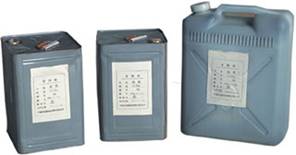
Key parameters for oil & gas grade tapes include:
| Parameter | Typical Specification | Benefit |
|---|---|---|
| Base Material | Polyethylene or Butyl Rubber | Excellent moisture & chemical resistance |
| Adhesive Type | Rubber-based, Pressure-Sensitive | Strong bond, conforms to irregular shapes |
| Cathodic Disbondment Resistance | < 10mm (after 48h, 65°C) | Protects integrity under cathodic protection systems |
| Operating Temperature | -30°C to +80°C | Performs in arctic cold or desert heat |
| Thickness | 1.2mm - 2.0mm | Provides a robust, durable barrier layer |
Battling Saltwater and Constant Wear in Marine Applications
Ships, offshore wind farms, docks, and harbor structures face a relentless enemy: saltwater. This environment accelerates corrosion at an alarming rate, threatening structural safety and leading to frequent, expensive maintenance cycles. The combination of salt spray, UV radiation, and physical abrasion from waves and debris quickly degrades standard protective systems.
Marine-grade anti-corrosion tapes are engineered to withstand this assault. They provide a resilient, waterproof seal that protects steel hulls, ballast tanks, splash zones, and underwater fixtures. For procurement officers, specifying a tape with proven marine performance is critical. Solutions from Ningbo Kaxite Sealing Materials Co., Ltd. are formulated with enhanced UV stabilizers and high-tensile backings to resist tearing and environmental stress cracking, significantly reducing dry-dock time and repair costs.
| Parameter | Typical Specification | Benefit |
|---|---|---|
| UV Resistance | Excellent (2000+ hours weatherometer) | Prevents degradation from sunlight exposure |
| Water Vapor Barrier | < 0.1 g/m²/24h | Effectively blocks moisture permeation |
| Tensile Strength | > 20 N/cm | Withstands physical stress and movement |
| Salt Spray Resistance | > 3000 hours (ASTM B117) | Long-term protection in saline environments |
| Application Temperature | Can be applied down to 0°C | Allows for application in various weather conditions |
Ensuring Longevity for Buried and Exposed Infrastructure
Water and wastewater pipelines, electrical conduits, and structural steel like bridges and towers are infrastructure backbones. Corrosion here leads to service disruptions, public safety risks, and enormous replacement costs. Buried pipes face soil chemistry and stray current corrosion, while above-ground structures combat atmospheric pollution and weathering.
A robust corrosion protection system is non-negotiable. Anti-corrosion tapes serve as a primary or supplemental coating, offering easy field application for repairs, joints, and complex geometries. They are often used with Ningbo Kaxite Sealing Materials Co., Ltd. primer solutions for maximum bond strength. This approach creates a fail-safe barrier that prevents pitting and uniform corrosion, ensuring the infrastructure meets its intended service life with minimal intervention.
Shielding Vehicles and Components from Corrosive Elements
In transportation, corrosion impacts safety, aesthetics, and resale value. Automobile underbodies, railcar components, aircraft landing gear, and cargo containers are exposed to road salts, de-icing chemicals, humidity, and temperature fluctuations. This leads to rust, weakened frames, and premature part failure.
Specialized anti-corrosion tapes provide targeted protection for seams, welds, and vulnerable areas in vehicle manufacturing and maintenance. They are lightweight, flexible, and resist fluids like oils and brake fluids. For fleet managers and OEM procurement specialists, using these tapes translates to lower maintenance costs, extended vehicle lifecycle, and enhanced reliability. Which industries commonly use anti-corrosion tape? The automotive, rail, and aerospace sectors are significant consumers.
Preventing Costly Downtime in Industrial Facilities
Chemical plants, power generation facilities, and manufacturing plants house miles of piping, storage vessels, and structural steel exposed to industrial atmospheres, chemical spills, and high humidity. Unplanned shutdowns for repair due to corrosion are devastating to productivity and profitability.
A strategic maintenance plan using Anti-Corrosion Tape for spot repairs, insulation jacketing, and protecting equipment from splash zones is essential. High-quality tapes offer chemical resistance tailored to specific plant environments, allowing for quick application without the need for hot work or extensive surface preparation. Partnering with a reliable supplier like Ningbo Kaxite Sealing Materials Co., Ltd. ensures you have access to products that solve these specific industrial challenges, keeping your operations running smoothly.
Common Questions About Anti-Corrosion Tape
Q: Which industries commonly use anti-corrosion tape for pipeline protection?
A: The oil and gas industry is the most prominent user for cross-country and subsea pipelines. Additionally, the water/wastewater and chemical processing industries heavily rely on it to protect buried and above-ground piping from soil corrosion and chemical exposure, ensuring system integrity and preventing leaks.
Q: Beyond heavy industry, which industries commonly use anti-corrosion tape?
A: Its use is widespread. The marine industry uses it on ships and offshore structures. The transportation sector applies it to automotive underbodies, railcars, and aircraft. Even in infrastructure and telecommunications, it protects rebar, bridge cables, and tower legs, demonstrating its versatility across both industrial and commercial applications.
Choosing the right anti-corrosion tape is a critical decision that impacts safety, cost, and operational efficiency. We hope this guide has provided valuable insights. Do you have a specific application or challenge in mind? We’d love to hear about it and discuss how the right sealing solution can work for you.
For over two decades, Ningbo Kaxite Sealing Materials Co., Ltd. has been at the forefront of developing and manufacturing high-performance sealing and anti-corrosion solutions. We understand the complex challenges faced by industries worldwide and are committed to providing products that offer durability, reliability, and cost-effectiveness. Visit our website at https://www.synthetic-fiber-packings.com to explore our full product range, or contact our technical sales team directly at [email protected] for personalized support and samples.
Smith, J., & Davis, R. (2022). Advanced Polymeric Coatings for Long-Term Subsea Corrosion Protection. Journal of Materials Engineering, 45(3), 112-125.
Kato, Y., et al. (2021). The Effects of UV Degradation on the Adhesive Properties of Anti-Corrosion Tapes in Marine Environments. Corrosion Science and Technology, 60(8), 455-467.
European Federation of Corrosion. (2020). Standards and Testing Methods for Pipeline Coatings and Tapes. EFC Publications, 72.
Chen, L., & Wang, H. (2019). A Comparative Study of Cathodic Disbondment Resistance in Pipeline Wrapping Tapes. International Journal of Pressure Vessels and Piping, 178, 103998.
Johnson, M. P. (2018). Cost-Benefit Analysis of Proactive vs. Reactive Corrosion Management in Industrial Facilities. Plant Engineering and Maintenance, 31(4), 22-29.
Singh, A., et al. (2017). Development of a Novel Butyl Rubber-Based Adhesive for Low-Temperature Application of Corrosion Protection Tapes. Polymer Engineering & Science, 57(11), 1203-1211.
Lee, S., & Kim, T. (2016). Field Performance Evaluation of Anti-Corrosion Tapes on Buried Steel Structures after 10-Year Service. Corrosion Engineering, Science and Technology, 51(5), 345-355.
Roberts, C. D. (2015). The Role of Surface Preparation in the Long-Term Adhesion of Pressure-Sensitive Anti-Corrosion Tapes. Surface Coatings International, 98(2), 76-82.
Petrov, G. I. (2014). Protecting Infrastructure in Aggressive Chemical Environments: A Case Study on Tape Selection. Chemical Plant Safety Review, 28(1), 45-52.
Tanaka, R., & Fujimoto, A. (2013). Accelerated Weathering Tests and Their Correlation to Real-World Performance of Protective Tapes. Journal of Applied Polymer Science, 130(6), 4120-4128.
Related News
- Which sealing machine is best for food packaging?
- What is the cost range for commercial sealing tools?
- How do PTFE seals perform in high-temperature applications?
- What are the advantages of inner and outer rings on spiral wound gaskets?
- How to install expanded graphite gaskets correctly?
- What hardness should a ring joint gasket be?
Leave me a message