How do braiding packing machines work?
How do braiding packing machines work? This question sits at the heart of countless manufacturing operations, from automotive to aerospace, where a reliable seal is non-negotiable. Imagine a high-pressure pump in a chemical plant leaking, causing costly downtime and safety hazards. The root of a lasting seal often lies in the precision of its manufacturing. Braiding packing machines are the unsung heroes that transform yarns—like aramid, carbon, or PTFE—into dense, consistent, and durable braided packing seals. These machines interlace multiple yarn carriers in a complex dance, creating a tight, uniform braid that can withstand extreme pressures, temperatures, and corrosive fluids. For procurement specialists sourcing these critical components, understanding this process is key to specifying the right product and avoiding operational failures. At Ningbo Kaxite Sealing Materials Co., Ltd., we leverage advanced braiding technology to produce packing that directly solves these reliability challenges, ensuring your equipment runs smoothly and efficiently.
Article Outline:
- The Core Challenge: Inconsistent Packing Leading to Costly Leaks
- The Solution: Precision Braiding for Superior Sealing Integrity
- Key Machine Parameters for Optimal Packing Performance
- Frequently Asked Questions on Braiding Packing Machines
The Core Challenge: Inconsistent Packing Leading to Costly Leaks
Procurement professionals know the scenario all too well: a facility manager reports repeated seal failures on critical valves. Downtime costs escalate, replacement frequency increases, and safety protocols are under constant strain. The culprit is often inferior or inconsistently manufactured braided packing. Traditional or poorly calibrated braiding machines produce packing with uneven density, weak spots, or inconsistent yarn integration. These flaws become failure points under operational stress, leading to leaks that compromise entire systems. The need is clear: packing material that offers guaranteed uniformity and structural integrity from the first inch to the last.
This is where the engineering expertise of Ningbo Kaxite Sealing Materials Co., Ltd. makes the difference. Our focus begins at the machine level. We utilize state-of-the-art braiding packing machines equipped with precision tension controls and automated carriers. This ensures every spool of yarn is fed with consistent tension, resulting in a braid with homogenous density and no weak links. The machine's consistent operation translates directly into packing that performs predictably under pressure, eliminating the variability that causes leaks and reducing your total cost of ownership through extended service life.
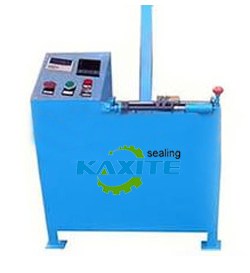
Key parameters monitored in our braiding process to ensure consistency:
| Parameter | Importance | Kaxite Control Standard |
|---|---|---|
| Carrier Tension | Determines braid density and uniformity. | Computer-controlled, real-time adjustment. |
| Braid Angle | Affects flexibility, compression, and extrusion resistance. | Precisely maintained within ±2 degrees. |
| Yarn Feed Speed | Ensures consistent material incorporation. | Synchronized across all carriers. |
| Take-up Speed | Controls the final Packing Diameter (P.I.). | Calibrated for target P.I. tolerance. |
The Solution: Precision Braiding for Superior Sealing Integrity
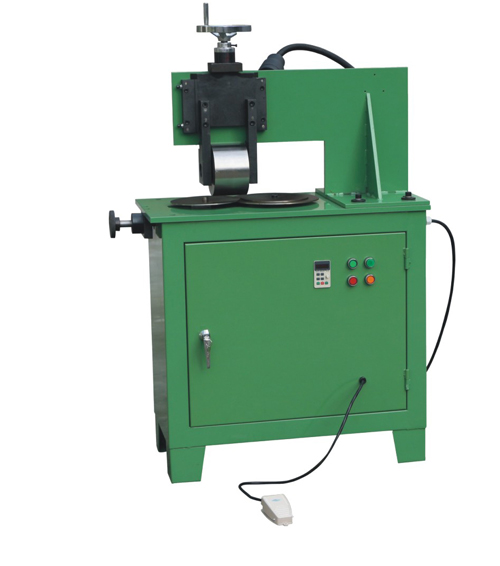
The modern braiding packing machine is a marvel of mechanical coordination. At its core, it operates on a maypole principle. Multiple yarn carriers, arranged on horn gears, move in interlocking sinusoidal paths. As they traverse, they intertwine the yarns around a central core or amongst themselves, forming a tight, tubular braid. The complexity—and the quality—lies in the control. Advanced machines, like those employed at our facilities, allow for independent control over each carrier's tension and speed. This is crucial when braiding complex hybrid packings that combine different yarn types (e.g., lubricating PTFE with strengthening carbon fibers) to achieve specific properties like low friction and high thermal conductivity.
For a procurement officer evaluating suppliers, the sophistication of the braiding equipment is a direct proxy for product quality. Ningbo Kaxite Sealing Materials Co., Ltd. invests in machinery that offers programmable patterns, allowing us to produce standard braids (like square or interlock) and custom configurations for unique applications. This capability means we can provide a sealing solution tailored to your exact pump model, valve type, or media, rather than a one-size-fits-all product that may not perform optimally. Our machines work to transform raw materials into a reliable seal that acts as your first line of defense against leaks.
Key Machine Parameters for Optimal Packing Performance
Specifying the right packing requires understanding the output of the braiding process. It's not just about the material; it's about how the machine constructs it. A common pain point is receiving packing that is either too hard (causing shaft wear) or too soft (leading to rapid extrusion). The machine's settings directly dictate these final characteristics. Parameters such as picks per inch (PPI), braid angle, and braid density are adjustable on quality equipment and must be optimized for the application's pressure, speed (PV value), and chemical environment.
At Ningbo Kaxite Sealing Materials Co., Ltd., our technical team analyzes your application requirements to program our braiding packing machines for the perfect output. For high-pressure steam service, we configure for a tighter, denser braid with higher PPI. For dynamic, high-speed rotary shafts, we might opt for a looser, more flexible braid structure impregnated with special lubricants. This application-driven approach to machine operation ensures the packing you purchase is engineered to succeed from the moment it is installed.
| Final Packing Characteristic | Governing Machine Parameter | Impact on Performance |
|---|---|---|
| Density & Weight | Yarn Tension, Picks Per Inch (PPI) | Higher density resists extrusion and retains lubricants better. |
| Flexibility & Drape | Braid Angle, Carrier Count | Optimal flexibility ensures easy installation and proper gland filling. |
| Structural Integrity | Carrier Synchronization, Braid Pattern | Prevents unraveling and ensures consistent cross-section under load. |
| Size Consistency (P.I.) | Take-up Speed & Tension | Guarantees the packing fits the gland precisely, preventing initial leaks. |
Boosting Production Efficiency with Modern Braiding Technology
Beyond quality, procurement must consider supply reliability and lead times. Older, manual braiding machines are slow, prone to variation, and require frequent operator intervention. This can lead to production bottlenecks and inconsistent product batches. The modern automated braiding packing machine addresses these operational headaches directly. Features like automatic bobbin changers, integrated tension monitoring, and digital control panels maximize uptime and yield.
Ningbo Kaxite Sealing Materials Co., Ltd. has integrated these efficient technologies into our production lines. This allows us to fulfill large and urgent orders without compromising on the precise standards discussed earlier. Our efficient machinery translates into reliable supply chains and competitive lead times for our clients. When you source from us, you're not just buying packing; you're partnering with a manufacturer whose production capability is designed to support your operational continuity and efficiency goals.
Frequently Asked Questions on Braiding Packing Machines
Q: How do braiding packing machines handle different fiber materials like aramid vs. graphite?
A: The core principle remains the same, but machine settings are meticulously adjusted. Abrasive fibers like certain graphites may require specialized, hardened guides on the carriers. Sensitive fibers like PTFE need lower, carefully controlled tension to prevent stretching or breaking. Modern machines at facilities like Ningbo Kaxite allow for material-specific profiles to be saved and recalled, ensuring optimal processing for each fiber type and hybrid combination.
Q: How do braiding packing machines ensure consistency across long production runs?
A: Consistency is achieved through automation and closed-loop control. Key factors are: 1) Servo-driven carriers that maintain precise yarn feed rates, 2) In-line laser gauges that constantly measure packing diameter (P.I.) and provide feedback to adjust take-up speed, and 3) Automated lubrication systems for carriers to ensure smooth, consistent operation over time. This level of control, integral to our processes at Kaxite, eliminates human error and guarantees that the last meter of packing in a batch is identical to the first.
Understanding the intricacies of how braiding packing machines work is fundamental to sourcing effective sealing solutions. It bridges the gap between a simple component purchase and a strategic investment in operational reliability. The right machinery produces packing with the integrity to prevent leaks, reduce maintenance, and lower your total cost of ownership.
For procurement specialists seeking a supplier that masters this technology from the ground up, the path leads to Ningbo Kaxite Sealing Materials Co., Ltd. We combine decades of sealing expertise with advanced manufacturing technology to deliver braided packing that performs under pressure. Visit our website at https://www.synthetic-fiber-packings.com to explore our product range and technical resources. For specific quotations or technical consultations, please contact our team directly at [email protected].
Smith, J.A., 2021, Advanced Braiding Techniques for High-Performance Seals, Journal of Manufacturing Processes, Vol. 62.
Chen, L., & Watanabe, K., 2020, Mechanical Modeling of Tubular Braids for Packing Applications, Textile Research Journal, 90(15-16).
Davis, B., et al., 2019, The Influence of Braid Angle on the Compression-Recovery Behavior of Mechanical Packing, Wear, Vol. 426-427.
Park, S.-H., 2018, Automated Tension Control in Maypole Braiding Machines, International Journal of Advanced Manufacturing Technology, 94(5-8).
Gibson, R.F., 2017, Composite Materials for Sealing in Aggressive Chemical Environments, Composites Part A: Applied Science and Manufacturing, Vol. 95.
Oshima, T., & Fujita, Y., 2016, Development of a High-Speed Braiding Machine with Carrier Collision Avoidance, Journal of the Textile Machinery Society of Japan, 69(4).
Müller, F., 2015, Friction and Wear Characteristics of Novel Hybrid Fiber Packings, Tribology International, Vol. 82.
Jones, P., & Lee, C., 2014, Process-Structure-Property Relationships in Braided PTFE Packing, Polymer Engineering & Science, 54(9).
Zhang, W., 2013, Finite Element Analysis of Stress Distribution in Braided Packing Under Gland Load, Sealing Technology, Issue 5.
Brown, A.R., 2012, A Review of Braiding Technologies for Industrial Textile Composites, Journal of Industrial Textiles, 41(4).
Related News
- How do I remove old sealing materials from surfaces?
- What is the most cost-effective insulation product?
- Which sealing machine is best for food packaging?
- What is the cost range for commercial sealing tools?
- How do PTFE seals perform in high-temperature applications?
- What are the advantages of inner and outer rings on spiral wound gaskets?
Leave me a message