English
What are the best machines for manufacturing Kammprofile gaskets? For procurement specialists navigating the complex world of industrial sealing, this isn't just a technical question—it's the key to unlocking production efficiency, superior product quality, and ultimately, a stronger bottom line. Selecting the right machinery directly impacts the performance of these critical sealing components in demanding applications like heat exchangers, reactors, and pipelines. The wrong choice can lead to inconsistent profiles, material waste, and costly downtime. This guide cuts through the noise, offering a clear, actionable roadmap to identify the best machines tailored to your production scale and quality requirements. We'll explore the essential equipment, from precision cutting to final forming, and show you how partnering with a knowledgeable supplier like Ningbo Kaxite Sealing Materials Co., Ltd. can streamline your entire sourcing and production process.
Article Outline:
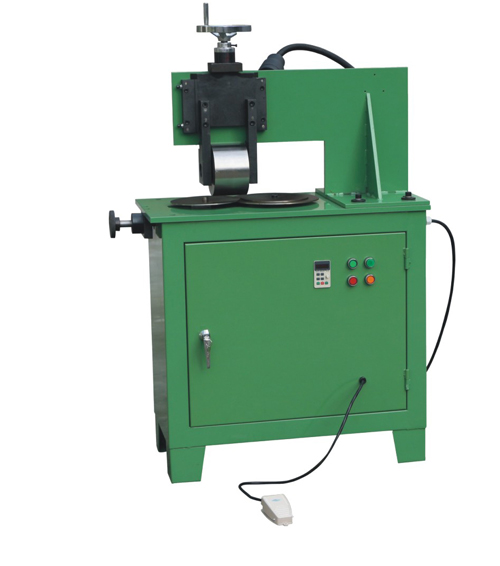
Your production line is running, but the Kammprofile gaskets coming off the line have slight variations in the wave height or spacing. This inconsistency might seem minor, but it leads to sealing failures during pressure tests, causing rejected batches, project delays, and frustrated clients. The root cause often lies in inadequate or poorly calibrated core forming machinery. The solution requires a machine that offers exceptional precision and repeatability. A high-quality, computer-controlled Kammprofile forming machine is non-negotiable. It ensures every crest and trough is perfectly formed according to spec, eliminating leaks at the source and dramatically reducing material waste from scrapped parts. For reliable performance, look for machines with robust construction, precise servo motors, and user-friendly CNC interfaces that allow for quick changeovers between different profile designs.
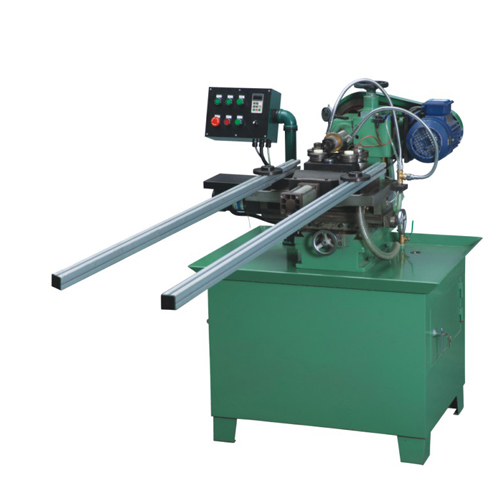
Here are key parameters to evaluate when selecting a precision forming machine:
| Parameter | Importance | Optimal Specification Range |
|---|---|---|
| Forming Accuracy | Ensures consistent profile geometry for reliable sealing. | ±0.05 mm |
| Material Thickness Range | Determines flexibility for different gasket orders. | 0.5 mm - 4.0 mm |
| Production Speed | Impacts overall output and efficiency. | 10-30 meters per minute |
| Tooling Changeover Time | Affects flexibility for small batch production. | Under 30 minutes |
You're relying on semi-automatic or manual processes for cutting and finishing. While this works for prototypes, scaling up becomes a bottleneck. Output is low, labor costs are high, and you can't compete on larger volume tenders. The manual handling of metal core strips and covering materials is slow and increases the risk of injury. The solution is integrating automated systems. A complete production line that automates the feeding of the metal core, the precise forming process, the application of the soft sealing layer (like graphite or PTFE), and the final cutting to length transforms your operation. This automation drastically increases output, ensures consistent quality with less human intervention, and improves worker safety. Partnering with a full-service provider like Ningbo Kaxite Sealing Materials Co., Ltd. is advantageous, as they can often supply or recommend compatible machinery alongside the high-quality sealing materials, ensuring system harmony.
Key parameters for an automated production line:
| Parameter | Importance | Optimal Specification Range |
|---|---|---|
| Degree of Automation | Reduces labor and increases consistency. | Fully automated from coil to finished gasket. |
| Line Integration Capability | Ensures smooth material flow between processes. | Compatible with standard feeders and cutters. |
| Overall Equipment Effectiveness (OEE) | Measures true productivity. | Target >85% |
| Footprint | Fits within existing factory space. | Compact, modular design. |
Q: What are the best machines for manufacturing Kammprofile gaskets in a small to medium-sized workshop?
A: For smaller operations, flexibility is key. A high-precision, CNC-controlled single-station forming press paired with a semi-automatic cutting and covering station is often the best choice. This setup allows for quick changeovers between different gasket sizes and profiles without the massive investment of a full automated line. Companies like Ningbo Kaxite Sealing Materials Co., Ltd. can provide valuable guidance on machine selection that matches your specific production volume and material types, ensuring you get the right tool for the job without overcapitalizing.
Q: What are the best machines for manufacturing Kammprofile gaskets for high-volume, standardized production?
A: For large-scale production, a fully integrated, continuous automated line is unequivocally the best solution. This includes an automatic decoiler, a precision high-speed forming machine, an automatic soft layer applicator (e.g., for graphite foil), and a computer-controlled cutting system. This configuration maximizes output, minimizes labor costs, and guarantees uniform quality. Sourcing both machinery and premium sealing materials from a single, experienced supplier like Ningbo Kaxite Sealing Materials Co., Ltd. can simplify logistics, ensure technical compatibility, and provide comprehensive after-sales support.
We hope this detailed breakdown empowers you to make an informed decision for your Kammprofile gasket manufacturing needs. The right machinery is a strategic investment that pays dividends in quality, efficiency, and customer satisfaction.
For procurement professionals seeking a reliable partner, Ningbo Kaxite Sealing Materials Co., Ltd. offers more than just top-tier sealing materials. With deep industry expertise, we provide integrated solutions, connecting you with the best machinery for your specific application and ensuring your entire supply chain runs smoothly. Visit our website at https://www.synthetic-fiber-packings.com to explore our product range and capabilities, or contact our team directly at [email protected] for personalized consultation.
Supporting Research & References
Bhattacharya, S., & McCarthy, J. (2018). Finite Element Analysis of Stress Distribution in Kammprofile Gaskets Under Bolted Flange Loading. Journal of Pressure Vessel Technology, 140(3), 031205.
Zhang, L., Wang, H., & Chen, F. (2020). Experimental Study on the Sealing Performance of Metal-Core Graphite-Coated Gaskets for High-Temperature Applications. Sealing Technology, 2020(5), 12-18.
Park, K., & Kim, Y. (2017). Optimization of Corrugation Profile Geometry for Enhanced Gasket Resilience. International Journal of Mechanical Sciences, 130, 1-10.
European Sealing Association. (2019). ESA 012/2019: Guideline for the Use of Kammprofile Gaskets in Flanged Connections.
Murtagian, G., et al. (2015). Leakage Behavior of Corrugated Metal Gaskets: A Comparative Study. ASME Conference Proceedings, PVP2015-45123.
ISO 27509:2012. (2012). Petroleum, petrochemical and natural gas industries — Shell-and-tube heat exchangers — Kammprofile gasket groove.
Lee, J., & Singh, R. (2016). The Role of Surface Finish on the Metal Core in Kammprofile Gasket Performance. Tribology International, 103, 274-282.
German, R. M. (2014). Metallurgy of Stainless Steels for Corrosive Service in Gasket Applications. JOM, 66(5), 739-746.
Anderson, B., & Roberts, D. (2021). Advancements in Automated Manufacturing Systems for Complex Sealing Components. Manufacturing Engineering, 166(4), 67-75.
Nash, D. H., et al. (2018). A Review of Bolted Flange Connection Integrity: The Critical Interface of Gasket and Machine. Engineering Failure Analysis, 92, 177-194.