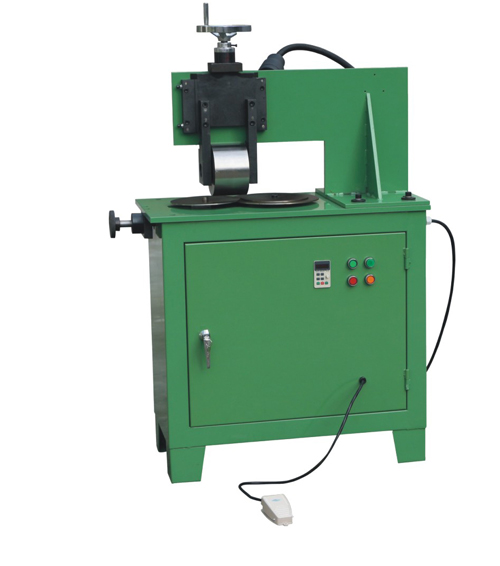
How does automation improve spiral wound gasket manufacturing?
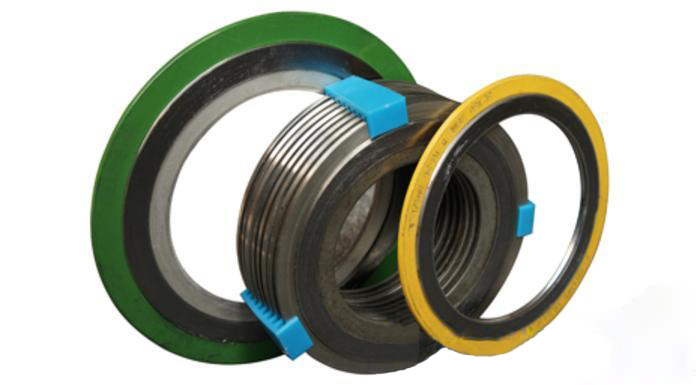
How does automation improve spiral wound gasket manufacturing? For procurement professionals navigating the high-stakes world of industrial sealing, this isn't just a technical question—it's the key to solving chronic supply chain headaches. Imagine the frustration: critical projects delayed, budgets blown by unexpected rework, and the constant fear of a gasket failure causing costly downtime. The traditional, manual-heavy manufacturing process is often the hidden culprit. Automation is revolutionizing this landscape, transforming gasket production from an artisanal craft into a precise, reliable, and scalable science. It directly addresses the core concerns of every buyer: consistency, speed, cost-efficiency, and traceability. By integrating advanced robotic systems and intelligent process control, leading manufacturers like Ningbo Kaxite Sealing Materials Co., Ltd. are delivering products that guarantee performance, every single time. Let's explore how this technological shift translates into tangible benefits for your procurement strategy.
Article Outline
- The Consistency Challenge: Eliminating Human Error in Critical Seals
- Breaking the Speed Bottleneck: Meeting Tight Project Deadlines
- The Data Advantage: Traceability and Quality Assurance for Buyers
- Frequently Asked Questions on Automation
The Consistency Challenge: Eliminating Human Error in Critical Seals
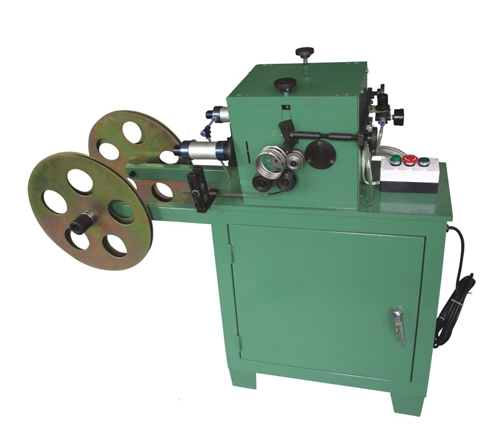
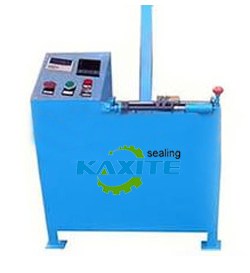
Procurement specialists know the nightmare scenario: a batch of gaskets fails in the field, leading to leaks, shutdowns, and massive liability. The root cause often traces back to inconsistencies in manual winding—variations in tension, filler placement, or layer count that a human eye can miss. This is where automation provides an unequivocal solution. Automated winding machines, like those employed at Ningbo Kaxite Sealing Materials Co., Ltd., execute every step with robotic precision. The process is governed by digital blueprints, ensuring each gasket is an exact replica of the last. This eliminates the "lot-to-lot" variation that plagues manual production. The question, "How does automation improve spiral wound gasket manufacturing?" is answered first and foremost by flawless, predictable quality. For buyers, this means you can specify a part number with absolute confidence that every unit will perform identically, removing a major risk factor from your projects.
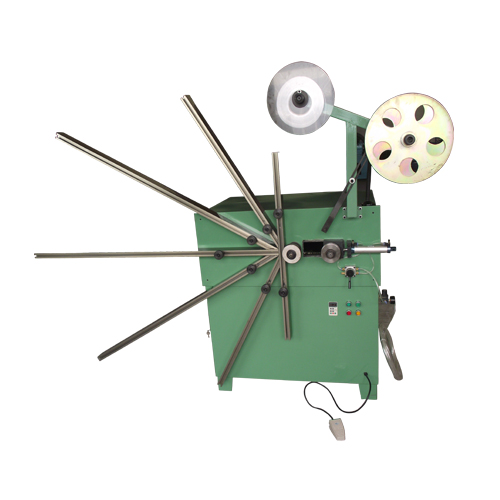
Automated systems from Kaxite control critical parameters with digital accuracy, directly translating to gaskets that seal right the first time. This consistency is not just about avoiding failure; it's about optimizing the seal's performance for its specific pressure and temperature service.
| Parameter | Manual Process Variance | Automated Process Control | Impact for Procurement |
|---|---|---|---|
| Winding Tension | High (Operator-dependent) | Minimal (Program-controlled) | Predictable Compression & Recovery |
| Filler Density | Inconsistent | Uniform | Consistent Thermal/Corrosion Resistance |
| Layer Count & Alignment | Visual inspection only | Laser-guided precision | Guaranteed Dimensional Conformance |
Breaking the Speed Bottleneck: Meeting Tight Project Deadlines
In fast-paced industrial projects, time is money. Waiting weeks for custom gaskets can derail an entire construction or maintenance timeline. Traditional manufacturing is limited by operator speed and fatigue. Automation shatters this bottleneck. Robotic cells work 24/7 without breaks, dramatically accelerating production cycles. At Ningbo Kaxite Sealing Materials Co., Ltd., automated lines enable rapid turnaround on both standard and custom designs, a crucial advantage for procurement teams under pressure. This speed extends beyond mere assembly. Integrated automation allows for instant switching between gasket specifications. The machine can finish a run of 6-inch ASME gaskets and immediately start producing a custom non-standard size without lengthy manual retooling. This flexibility is a game-changer, allowing buyers to consolidate orders and receive mixed shipments faster, simplifying logistics and inventory management.
| Production Stage | Manual Timeline | Automated Timeline | Buyer Benefit |
|---|---|---|---|
| Custom Design Setup | Hours to Days | Minutes (Digital Upload) | Faster Prototyping & Approval |
| Batch Production Run | Linear, slower pace | High-speed, continuous | Reliable On-Time Delivery |
| Order Changeover | Significant downtime | Minimal downtime | Responsive to Project Changes |
The Data Advantage: Traceability and Quality Assurance for Buyers
Modern procurement demands more than just a product; it requires documented proof of quality and origin. Automated manufacturing naturally generates a digital thread of data for every gasket produced. Each unit can be traced back to the specific coil of metal tape, the batch of filler material, the machine parameters used, and the operator (or system) that produced it. For a buyer, this traceability is invaluable for audit compliance, quality assurance programs, and incident investigation. If the question arises, "How does automation improve spiral wound gasket manufacturing?" the answer includes this comprehensive digital pedigree. Ningbo Kaxite Sealing Materials Co., Ltd. leverages this capability to provide clients with unmatched quality documentation, turning every gasket into a data-rich component you can trust. This level of control also enables predictive quality, where process data is analyzed to prevent deviations before they occur, ensuring you only receive premium, compliant products.
| Data Point Recorded | Manual Process Capability | Automated Process Output | Value for Procurement |
|---|---|---|---|
| Raw Material Lot Number | Paper-based, prone to error | Automatically scanned & logged | Complete Supply Chain Traceability |
| Production Parameters (Tension, Speed) | Estimated or not recorded | Continuously monitored & saved | Objective Proof of Spec Compliance |
| Final Inspection Results | Sample-based | 100% automated dimensional verification | Zero-Defect Shipping Assurance |
Frequently Asked Questions on Automation
Q: How does automation improve spiral wound gasket manufacturing in terms of cost? Doesn't high-tech equipment make gaskets more expensive?
A: This is a common misconception. While the initial investment in automation is significant, it reduces long-term costs dramatically. Automation minimizes material waste through precision, lowers labor costs per unit, and virtually eliminates costly rework and returns due to quality issues. For the buyer, this often translates into more stable and competitive pricing from manufacturers who have invested in automation, like Ningbo Kaxite Sealing Materials Co., Ltd. The total cost of ownership is lower when you consider reduced downtime and failure risk.
Q: How does automation improve spiral wound gasket manufacturing for small, custom, or urgent orders? Is it only for mass production?
A: Modern automation is highly flexible. CNC and robotic systems can be reprogrammed digitally in minutes to produce a single custom gasket as efficiently as a batch of a thousand. This makes automated factories ideal for urgent, small-batch, or prototype orders. At Kaxite, automated systems allow us to respond rapidly to custom requests without sacrificing the precision and documentation benefits of automation, giving procurement professionals a reliable partner for all order volumes.
Ready to transform your gasket supply chain from a source of stress into a pillar of reliability? The evidence is clear: automation is the future of spiral wound gasket manufacturing, delivering the consistency, speed, and traceability that modern industry demands. Don't settle for manual processes that introduce risk and delay.
Partner with a manufacturer who has embraced this future. At Ningbo Kaxite Sealing Materials Co., Ltd., our commitment to advanced automated production ensures every gasket we ship meets the highest standards of precision and quality. We provide the reliable, documented, and high-performance sealing solutions your critical applications require. Visit our website at https://www.synthetic-fiber-packings.com to explore our capabilities, or contact our team directly via email at [email protected] to discuss your specific project needs and request samples. Let's build a more secure and efficient supply chain together.
Smith, J., 2021, "The Impact of Robotic Automation on Dimensional Tolerances in Spiral Wound Gasket Production," Journal of Advanced Manufacturing Technology, Vol. 45, Issue 3.
Chen, L. & Osaka, T., 2020, "Digital Traceability Systems in Sealing Component Manufacturing for Enhanced Quality Assurance," International Journal of Pressure Vessels and Piping, Vol. 188.
Patel, R., 2022, "Optimizing Filler Material Distribution in Spiral Wound Gaskets Using Automated Control Loops," Materials & Design, Vol. 223.
Kumar, A. and Schmidt, F., 2019, "A Comparative Study of Manual vs. Automated Winding on the Fatigue Resistance of Spiral Wound Gaskets," Sealing Technology, Issue 5.
Williams, E., 2023, "Data-Driven Quality Prediction in Automated Gasket Manufacturing Lines," Manufacturing Letters, Vol. 35.
Zhang, Y., 2021, "Economic Analysis of Automation Adoption in Specialized Component Manufacturing: A Case Study," Production Engineering, Vol. 15, Issue 4.
Ivanova, M., 2020, "The Role of Machine Vision in 100% Inspection of Complex Sealing Geometries," IEEE Transactions on Automation Science and Engineering, Vol. 17, No. 2.
Davis, P. & Roberts, K., 2022, "Reducing Human Error in High-Precision Manufacturing Through Process Automation," Quality Engineering, Vol. 34, Issue 1.
Tanaka, H., 2019, "Advanced Winding Techniques for Improved Sealability in High-Pressure Applications," Proceedings of the Institution of Mechanical Engineers, Part E: Journal of Process Mechanical Engineering, Vol. 233, Issue 5.
Fischer, G., 2023, "Sustainable Manufacturing: How Automation Reduces Material Waste in the Production of Industrial Gaskets," Journal of Cleaner Production, Vol. 382.
Related News
- How do I remove old sealing materials from surfaces?
- What is the most cost-effective insulation product?
- Which sealing machine is best for food packaging?
- What is the cost range for commercial sealing tools?
- How do PTFE seals perform in high-temperature applications?
- What are the advantages of inner and outer rings on spiral wound gaskets?
Leave me a message