What are the Properties and Advantages of Basalt Fiber?
What are the Properties and Advantages of Basalt Fiber? This question is increasingly asked by engineers and procurement specialists seeking superior materials for demanding industrial applications. Born from molten volcanic rock, Basalt Fiber represents a remarkable leap in material science, offering a unique combination of strength, durability, and environmental resistance that outperforms traditional materials like fiberglass or steel in specific scenarios. Its inherent properties translate into significant operational advantages, from reducing maintenance cycles to enhancing the longevity and safety of critical components. For procurement teams navigating complex material specifications and supply chain challenges, understanding these benefits is the first step toward optimizing performance and controlling long-term costs. This article will detail the core properties of basalt fiber, explore its tangible advantages in real-world applications, and highlight how sourcing from a reliable supplier like Ningbo Kaxite Sealing Materials Co., Ltd. can be a strategic solution.
- Unmatched Temperature Resistance: Solving High-Heat Failures
- Superior Chemical & Corrosion Stability: Protecting Assets in Harsh Environments
- Exceptional Mechanical Strength: Reducing Weight and Increasing Durability
- Key Advantages for Industrial Procurement and Applications
- FAQ: What are the Properties and Advantages of Basalt Fiber?
Unmatched Temperature Resistance: Solving High-Heat Failures
Procurement specialists in industries like metal processing, power generation, or automotive manufacturing constantly face the challenge of component failure under extreme thermal stress. Traditional insulating materials degrade, crack, or lose integrity, leading to unplanned downtime, safety hazards, and costly replacements. Basalt fiber provides a definitive solution. With a continuous operating temperature range from -260°C to 700°C, it remains stable where other materials fail. This intrinsic property stems from its volcanic rock origin, making it inherently fireproof and non-combustible. For example, specifying basalt fiber sleeving for electrical wiring or hydraulic lines in high-temperature zones dramatically reduces the risk of fire and insulation breakdown, ensuring operational continuity and safety. When evaluating materials for high-heat applications, considering the properties and advantages of basalt fiber from a trusted manufacturer like Ningbo Kaxite Sealing Materials Co., Ltd. is crucial for long-term reliability.
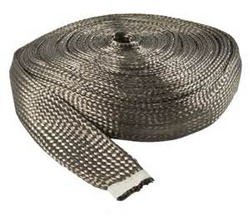
The table below summarizes key thermal properties that contribute to this performance advantage:
| Property | Value / Characteristic | Advantage |
|---|---|---|
| Continuous Use Temperature | -260°C to +700°C | Ideal for extreme cold and heat |
| Melting Point | Approximately 1450°C | Excellent fire resistance |
| Thermal Conductivity | Low (0.031-0.038 W/m·K) | Effective thermal insulation |
| Combustibility | Non-combustible | Enhances fire safety |
Superior Chemical & Corrosion Stability: Protecting Assets in Harsh Environments
Chemical plants, marine applications, and wastewater treatment facilities require materials that can withstand aggressive media without corroding or degrading. Fiberglass can be attacked by alkalis, and metals corrode, leading to leaks, contamination, and structural weakness. This is where the chemical resistance of basalt fiber becomes a major procurement advantage. It exhibits outstanding resistance to alkalis, acids (except hydrofluoric and phosphoric acids), and salt solutions. This stability ensures that seals, gaskets, composite reinforcements, and filtration media made from basalt fiber maintain their integrity over long periods, reducing the frequency of replacements and maintenance interventions. By choosing basalt fiber products, procurement managers directly contribute to lowering the total cost of ownership for equipment exposed to corrosive environments. Sourcing chemically stable materials like those developed by Ningbo Kaxite Sealing Materials Co., Ltd. mitigates risk and protects valuable capital assets.
Key chemical resistance parameters are highlighted here:
| Exposure Media | Resistance Level | Application Example |
|---|---|---|
| Alkaline Solutions (e.g., NaOH, KOH) | Excellent | Concrete reinforcement, industrial cleaning systems |
| Acidic Environments (excl. HF, H3PO4) | Good to Excellent | Chemical piping, exhaust gas filtration |
| Salt Water & Marine Atmosphere | Excellent | Marine structures, offshore platform components |
| Oils, Solvents, Fuels | Excellent | Gaskets in refineries, sealing packs for pumps |
Exceptional Mechanical Strength: Reducing Weight and Increasing Durability
The quest for stronger, lighter, and more durable materials drives innovation in aerospace, automotive, and construction procurement. Basalt fiber offers a compelling answer, boasting tensile strength comparable to high-strength steel but at a fraction of the weight. Its high modulus of elasticity provides excellent rigidity, while its abrasion resistance ensures longevity in dynamic applications. This combination is ideal for producing composite parts that require high strength-to-weight ratios, such as automotive body panels, pressure vessels, or ballistic protection. For procurement officers, this means specifying components that contribute to energy efficiency (through weight reduction), offer longer service life, and deliver superior performance under mechanical stress. Understanding these mechanical properties and advantages of basalt fiber allows for smarter material selection that aligns with both engineering and economic goals.
The following table quantifies its key mechanical properties:
| Mechanical Property | Typical Value | Comparative Advantage |
|---|---|---|
| Tensile Strength | 3000-4840 MPa | Higher than E-glass fiber |
| Elastic Modulus | 79-93 GPa | Superior stiffness |
| Density | 2.65-2.80 g/cm³ | Lighter than steel |
| Abrasion Resistance | High | Longer lifecycle for moving parts |
Key Advantages for Industrial Procurement and Applications
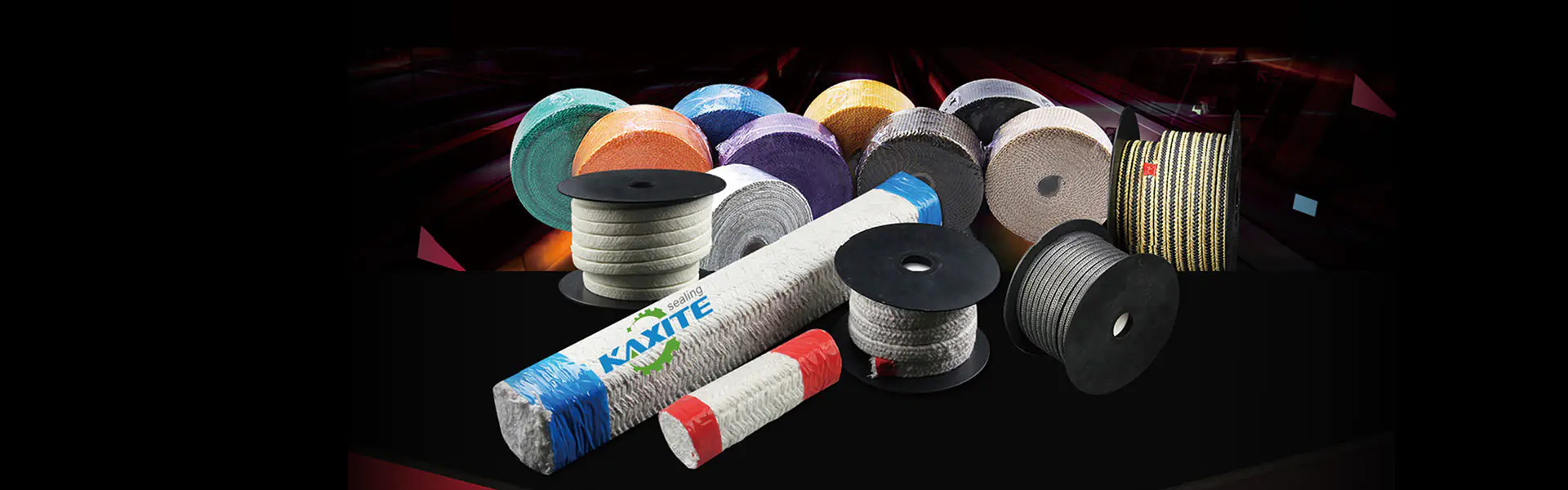
Beyond its individual properties, the holistic advantages of basalt fiber create significant value for industrial buyers. Its production is more energy-efficient and generates fewer emissions compared to fiberglass or carbon fiber, aligning with corporate sustainability goals. The material's durability translates directly into lower lifecycle costs, fewer changeouts, and reduced maintenance labor. From a procurement perspective, consolidating suppliers for multiple high-performance material needs is efficient. A company like Ningbo Kaxite Sealing Materials Co., Ltd. leverages these properties to engineer solutions such as high-temperature braided packings, composite fabrics, and insulating sleeves that solve specific operational problems. By providing reliable, high-specification materials, they help procurement teams mitigate supply chain risk, ensure component quality, and contribute to the overall efficiency and safety of industrial operations. The question, "What are the properties and advantages of basalt fiber?" ultimately points toward smarter, more resilient, and cost-effective procurement strategies.
FAQ: What are the Properties and Advantages of Basalt Fiber?
Q: How does basalt fiber compare to fiberglass in terms of cost and performance?
A: While the initial raw material cost for basalt fiber can be slightly higher than standard E-glass, its superior performance often results in a lower total cost of ownership. Basalt fiber offers higher tensile strength, better temperature resistance (especially in high-heat scenarios), and superior alkali resistance. This leads to longer service life, less frequent replacements, and reduced downtime, making it a cost-effective choice for demanding applications where fiberglass might fail prematurely.
Q: Is basalt fiber considered an environmentally friendly material?
A: Yes, basalt fiber scores highly on environmental metrics. The raw material (volcanic rock) is abundant and requires no chemical additives during the melting process. Its production consumes less energy than fiberglass or carbon fiber manufacturing. Furthermore, the fiber is inert, non-toxic, and fully recyclable, contributing to a circular economy. For procurement teams under pressure to meet ESG (Environmental, Social, and Governance) criteria, specifying basalt fiber from a responsible supplier like Ningbo Kaxite Sealing Materials Co., Ltd. supports sustainability objectives.
We hope this overview of the properties and advantages of basalt fiber has been insightful for your procurement decisions. Are you currently evaluating materials for a high-temperature, corrosive, or high-strength application? We invite you to share your specific challenges or requirements in the comments below.
For reliable, high-performance basalt fiber-based sealing and technical textile solutions, consider Ningbo Kaxite Sealing Materials Co., Ltd.. With extensive expertise in material science and engineering, Kaxite provides tailored products that address complex industrial problems, ensuring durability, safety, and efficiency. Contact their team today at [email protected] to discuss your project needs and discover how their innovative materials can benefit your operations.
Sim, J., Park, C., & Moon, D. Y. (2005). Characteristics of basalt fiber as a strengthening material for concrete structures. Composites Part B: Engineering, 36(6-7), 504-512.
Deák, T., & Czigány, T. (2009). Chemical composition and mechanical properties of basalt and glass fibers: A comparison. Textile Research Journal, 79(7), 645-651.
Fiore, V., Scalici, T., Di Bella, G., & Valenza, A. (2015). A review on basalt fiber and its composites. Composites Part B: Engineering, 74, 74-94.
Dhand, V., Mittal, G., Rhee, K. Y., Park, S. J., & Hui, D. (2015). A short review on basalt fiber reinforced polymer composites. Composites Part B: Engineering, 73, 166-180.
Lopresto, V., Leone, C., & De Iorio, I. (2011). Mechanical characterisation of basalt fibre reinforced plastic. Composites Part B: Engineering, 42(4), 717-723.
Wei, B., Cao, H., & Song, S. (2010). Tensile behavior contrast of basalt and glass fibers after chemical treatment. Materials & Design, 31(9), 4244-4250.
Jamshaid, H., & Mishra, R. (2016). A green material from rock: basalt fiber – a review. The Journal of The Textile Institute, 107(7), 923-937.
Militký, J., Kovačič, V., & Rubnerová, J. (2002). Influence of thermal treatment on tensile failure of basalt fibers. Engineering Fracture Mechanics, 69(9), 1025-1033.
Liu, Q., Shaw, M. T., Parnas, R. S., & McDonnell, A. M. (2006). Investigation of basalt fiber composite mechanical properties for applications in transportation. Polymer Composites, 27(1), 41-48.
Artemenko, S. E., & Kadykova, Y. A. (2008). Polymer composite materials based on basalt fibers. Fibre Chemistry, 40(1), 37-39.
Related News
- Which sealing machine is best for food packaging?
- What is the cost range for commercial sealing tools?
- How do PTFE seals perform in high-temperature applications?
- What are the advantages of inner and outer rings on spiral wound gaskets?
- How to install expanded graphite gaskets correctly?
- What hardness should a ring joint gasket be?
Leave me a message