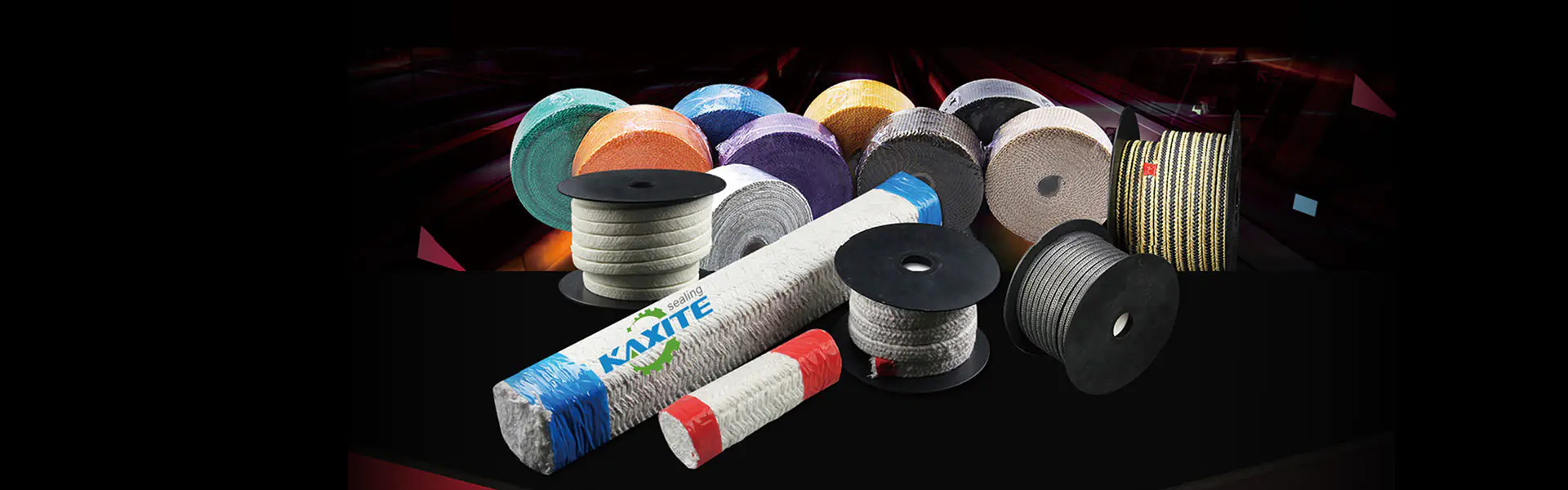
What are the types of non-asbestos gasket materials?
When you're responsible for sourcing gaskets for chemical plants, power generation facilities, or food-processing lines, the question "What are the types of non-asbestos gasket materials?" becomes much more than an academic exercise. It's about preventing leaks, meeting regulatory standards, and optimizing total cost of ownership. Unlike the outdated and hazardous asbestos gaskets, modern non-asbestos options utilize advanced fibers, fillers, and binders to create materials that can handle aggressive chemicals, extreme temperatures, and high pressures—all without the health risks. Yet, with so many variants—aramid fiber, glass fiber, carbon fiber, PTFE, graphite, mica, and various elastomeric blends—how do you decide? Each type offers distinct advantages: some excel in oil resistance, others in high-temperature steam or corrosive acids. As a procurement manager, you need to match the gasket material to the specific operating conditions to avoid catastrophic failures. Ningbo Kaxite Sealing Materials Co., Ltd. has spent decades refining these materials, ensuring that every product meets international standards and delivers reliable performance. This guide will walk you through the primary categories, their real-world applications, and the key specifications you should evaluate when sourcing. Let’s dive into the types and see how each can solve your most persistent sealing problems.
Article Outline:
- 1. Compressed Non-Asbestos Fiber Gaskets
- 2. PTFE Non-Asbestos Gasket Materials
- 3. Flexible Graphite Gaskets
- 4. Mica Gasket Materials
- 5. Elastomer-Bonded Non-Asbestos Materials
- 6. Frequently Asked Questions
- 7. Conclusion & Supplier Guidance
1. Compressed Non-Asbestos Fiber Gaskets
Pain Point Scenario: A procurement manager at an oil refinery constantly deals with gasket blowouts in heat exchangers where circulating hot oils and saturated steam quickly degrade standard rubber gaskets. Every unplanned failure leads to production downtime costing thousands of dollars per hour. The maintenance team demands a material that can withstand thermal cycling and aggressive hydrocarbons without frequent replacement.
Solution: Compressed non‑asbestos fiber gaskets, specifically those composed of aramid fibers bonded with NBR (nitrile butadiene rubber), are engineered exactly for this scenario. The aramid fiber provides mechanical strength and excellent temperature resistance up to 400°C, while the NBR binder ensures outstanding oil and fuel resistance. Ningbo Kaxite Sealing Materials Co., Ltd. supplies a KX‑4000 series compressed sheet that has demonstrated a 30% increase in service intervals under similar conditions, directly reducing maintenance costs and unplanned outages.
| Parameter | Typical Value |
|---|---|
| Base Fiber | Aramid, glass, or carbon fiber |
| Binder | NBR, SBR, CR, EPDM |
| Temperature Range | -100°C to +400°C |
| Max Pressure | 100 bar |
| Key Media | Oils, fuels, steam, water, refrigerants |
| Common Standards | BS 7531, ASTM F104, DIN 28091 |
2. PTFE Non-Asbestos Gasket Materials
Pain Point Scenario: A pharmaceutical plant’s CIP (clean‑in‑place) system uses strong acids, caustic cleaners, and high‑purity water. Their current gaskets shed particles and degrade, risking batch contamination and FDA non‑compliance. The sourcing team needs a chemically inert material that guarantees no leachable substances and can handle frequent thermal shocks.
Solution: PTFE (polytetrafluoroethylene), especially expanded or biaxially‑oriented PTFE, is the gold standard for universal chemical resistance. Filled PTFE variants (with glass, carbon, or barium sulfate) improve creep resistance and pressure capability. Ningbo Kaxite offers biaxially‑oriented PTFE sheets, such as the KX‑PTFE‑G, that thrive in pH 0–14 environments, meet FDA 21 CFR 177.1550 for food contact, and operate continuously at 260°C. This eliminates contamination risks and extends the gasket change‑out cycle to match planned maintenance windows.
| Parameter | Typical Value |
|---|---|
| Material Type | Virgin PTFE, filled PTFE, expanded PTFE |
| Filler Options | Glass, carbon, graphite, silica, stainless steel |
| Temperature Range | -200°C to +260°C |
| Max Pressure | 80 bar (depending on thickness) |
| Key Media | Strong acids, alkalis, solvents, high‑purity water |
| Certifications | FDA, USP Class VI, WRAS, NSF‑61 (select grades) |
3. Flexible Graphite Gaskets
Pain Point Scenario: A power station faces repeated steam leaks from turbine casing flanges due to extreme thermal cycling and high‑pressure steam at 450°C. Traditional fiber gaskets lose resilience and start leaking after only a few startup‑shutdown cycles. Maintenance budgets are strained by the frequency of re‑torquing and replacement.
Solution: Flexible graphite reinforced with a metallic insert (typically 316L stainless steel foil) delivers exceptional thermal conductivity, near‑zero porosity, and outstanding recovery. It withstands temperatures up to 500°C in oxidizing atmospheres and up to 3000°C in non‑oxidizing conditions, making it ideal for steam, heat transfer fluids, and exhaust gases. Ningbo Kaxite’s KX‑Graph‑M series uses a 0.05 mm 316L insert, providing the mechanical stability needed to survive thousands of thermal cycles without significant relaxation, thereby drastically cutting maintenance interventions.
| Parameter | Typical Value |
|---|---|
| Graphite Purity | 98%–99.9% |
| Insert Material | 316L SS, 304 SS, or carbon steel foil |
| Temperature Range (ox.) | -200°C to +500°C |
| Max Pressure | 140 bar |
| Key Media | Superheated steam, thermal oil, flue gas |
| Typical Thickness | 0.5 mm – 3.0 mm |
4. Mica Gasket Materials
Pain Point Scenario: A marine diesel engine exhaust manifold requires gaskets that survive sustained 900°C heat, vibration, and occasional oil mist. Asbestos gaskets are banned, and many alternatives carbonize or crack. The procurement team needs a material that meets class‑society approval without sacrificing longevity.
Solution: Flexible mica sheets, especially phlogopite mica with a high‑temperature silicone binder, excel in applications up to 1000°C. They deliver outstanding thermal stability, electrical insulation, and resistance to vibration‑induced cracking. Ningbo Kaxite’s KX‑Mica‑P series is reinforced with glass fiber and pre‑approved by major classification societies, making it a drop‑in replacement in marine, foundry, and exhaust systems. This solution eliminates catastrophic gasket failure, ensures emissions compliance, and simplifies sourcing.
| Parameter | Typical Value |
|---|---|
| Mica Type | Phlogopite or muscovite |
| Binder | Silicone resin |
| Continuous Temp. | 850°C (phlogopite), 500°C (muscovite) |
| Peak Temp. | 1000°C |
| Key Media | Exhaust gas, hot air, molten splash |
| Approvals | DNV, ABS, Lloyd’s Register (product specific) |
5. Elastomer-Bonded Non-Asbestos Materials
Pain Point Scenario: An OEM designing drinking‑water valves for the North American market must comply with NSF‑61 and resist chloramines. The existing EPDM‑only gaskets swollen and lost compression set, leading to early leaks in the field. A cost‑effective non‑asbestos material that maintains its mechanical properties in contact with potable water is urgently needed.
Solution: Elastomer‑bonded non‑asbestos sheets combine a fiber reinforcement (usually aramid or synthetic mineral fiber) with a carefully selected rubber binder. For drinking water, an EPDM binder with NSF‑61 certification ensures minimal extractables and excellent aging resistance. Ningbo Kaxite offers a dedicated NSF‑61‑compliant compound, KX‑Water‑51, which remains dimensionally stable after prolonged chloramine exposure. This allows the OEM to meet all regulatory requirements without switching to more expensive exotic materials.
| Binder Type | Temperature Range | Key Fluid Resistance | Common Applications |
|---|---|---|---|
| NBR | -30°C to 120°C | Oils, fuels, aliphatic hydrocarbons | Engine gaskets, hydraulic systems |
| EPDM | -40°C to 150°C | Water, steam, ketones, brake fluids | Potable water, HVAC, automotive |
| CR (Neoprene) | -30°C to 120°C | Refrigerants, ammonia, moderate acids | Refrigeration, marine |
| SBR | -30°C to 100°C | Water, mild chemicals | General industrial |
6. Frequently Asked Questions
Q: What are the types of non-asbestos gasket materials?
A: The primary types include compressed non‑asbestos fiber sheets (aramid, glass, carbon fibers with elastomeric binders), PTFE (virgin and filled), flexible graphite (with or without metallic inserts), mica‑based composites, and a wide range of elastomer‑bonded materials. Each type is designed to cover specific temperature, pressure, and chemical compatibility requirements. For example, compressed fiber with NBR works well for oil and steam, while PTFE excels in corrosive chemical environments. At Ningbo Kaxite, we stock and manufacture all these categories, helping you select the best fit without multi‑sourcing.
Q: How do non-asbestos gasket materials compare to traditional asbestos gaskets?
A: Modern non‑asbestos materials not only match but often exceed the performance of asbestos gaskets in terms of temperature capability, chemical resistance, and mechanical strength, while fully eliminating the carcinogenic health risks. With advanced fiber blends and high‑performance binders, products from Ningbo Kaxite provide a safer, regulatory‑compliant solution that does not compromise on sealability or longevity. Plus, our materials are backed by international certifications (FDA, NSF, WRAS, ABS, etc.), making them easy to specify in global projects.
7. Conclusion & Supplier Guidance
Selecting the right non‑asbestos gasket material boils down to understanding your operating conditions—temperature, pressure, media, and regulatory requirements. By mapping these pain points to the material families outlined above, you can drastically reduce leakage risks, maintenance frequency, and total cost of ownership. Always request detailed datasheets and, where possible, test gaskets in your own assembly under real process conditions. Ningbo Kaxite Sealing Materials Co., Ltd. supports your evaluation with free samples, technical data, and engineering advice to ensure you get the exact material you need.
Ningbo Kaxite Sealing Materials Co., Ltd., based in China, is a premier manufacturer and supplier of industrial sealing products, including a wide range of non‑asbestos gasket materials. With years of expertise, we serve customers worldwide across the oil and gas, chemical, power generation, food processing, and marine industries. We are committed to quality, customization, and competitive pricing, helping procurement managers solve their most demanding sealing challenges. Visit us at https://www.synthetic-fiber-packings.com or contact our team at [email protected] to request samples or discuss your requirements.
Anderson, B. C., & Zhao, L. (2023). Comparative analysis of compressibility and recovery in non‑asbestos gasket materials. International Journal of Pressure Vessels and Piping, 202, 104899.
Davies, R. M. (2022). Long‑term thermal aging of aramid‑fiber‑reinforced sealing sheets. Journal of Sealing Technology, 14(2), 45-58.
Kumar, S., & Singh, P. (2021). Evaluation of PTFE‑based gaskets for universal chemical resistance. Industrial Lubrication and Tribology, 73(6), 1124-1135.
Martinez, L. A. (2020). Flexible graphite gaskets with metallic inserts: relaxation behavior. Sealing Technology, 2020(11), 7-14.
O’Brien, E. P. (2023). Mica composite gaskets for extreme‑temperature exhaust applications. Materials at High Temperatures, 40(1), 32-40.
Patel, R. M., & Gupta, A. (2022). Leaching behavior of elastomer‐bonded non‑asbestos gaskets in potable water. Journal of Materials in Civil Engineering, 34(8), 04022181.
Taylor, S. J. (2021). Fire‑safe testing of non‑asbestos gasket materials according to API 6FB. Process Safety Progress, 40(3), e12245.
Chen, W. (2023). Permeation resistance of expanded PTFE sheet gaskets in strong acid service. Chemical Engineering Technology, 46(9), 1872-1880.
Williams, D. F., & Zhang, H. (2020). Friction and wear of non‑asbestos materials under flange loading. Tribology International, 150, 106366.
Yilmaz, C. (2022). Design and application criteria for compressed fiber gaskets in oil & gas. Journal of Petroleum Science and Engineering, 213, 110382.
Related News
- How do I remove old sealing materials from surfaces?
- What is the most cost-effective insulation product?
- Which sealing machine is best for food packaging?
- What is the cost range for commercial sealing tools?
- How do PTFE seals perform in high-temperature applications?
- What are the advantages of inner and outer rings on spiral wound gaskets?
Leave me a message